
loading
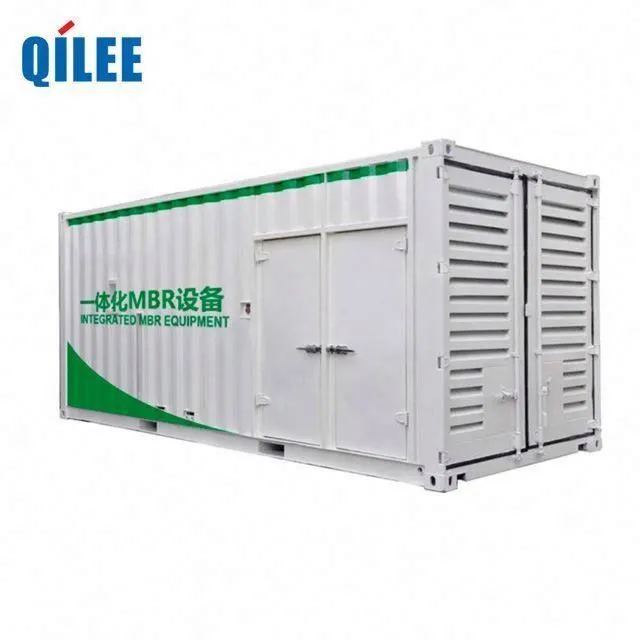
MBBR Containerized Wastewater Plant with Desalination 200L/h 1

MBBR Containerized Wastewater Plant with Desalination 200L/h

Imagine a sleek steel container by the shore, its soft LEDs glowing as waves whisper nearby — a tiny factory of hope. Inside, a smart MBBR system breathes life into wastewater and feeds a compact desalination train that delivers up to 200 L/h of fresh, usable water. Rugged, plug‑and‑play, and space‑saving, it turns tight sites into a reliable oasis for camps, resorts, and emergency relief.

5.0
Shipping:
Support Sea freight
Payments:
L/C,D/A,D/P,T/T,Western Union,MoneyGram,OA
Lead Time:
1-1(units):50(days),>1(units):To be negotiated(days)
Place of Origin:
China
design customization

    oops...!

    no product data.

    Go to homepage
    Occupy Area(m2)
    6.0
    Total Weight(tons)
    5.5
    Disinfection Tank(m3)
    0.6
    Secondary Clarifier Surface Load(m3/m2h)
    1.2
    Contact Oxidation Tank(m3)
    5
    Primary Clarifier
    1.8
    Equipment Nm
    1
    Disposal Capacity(m3/h)
    1
    Processing Type
    Reverse Osmosis, Softening, desalination, Filtration
    Power(W)
    3 kW
    Product name
    compact wastewater treatment plant
    Voltage
    220 V, 380 V
    weight (kg)
    900
    productivity
    200L/Hour
    warranty
    1 Year

    Turnkey Containerized Potable Water 

    Mbr Package Wastewater Treatment containerized MBBR plant with 200L/h desalination delivers high-quality permeate for safe reuse by combining submerged flat-sheet PES membranes and biological treatment to remove BOD, SS and pathogens. Its rugged, modular container shape and compact style enable plug-and-play transport, easy retrofitting into existing sites, and a small footprint that reduces civil works and energy costs. Durable build quality, low-fouling membranes, simple operation with low maintenance needs, and spare parts shipped in standard export cartons ensure fast commissioning, long service life, and minimal downtime.

    1620183233g0e
    1620183233oxz

    MBBR Containerized Desalination Unit

    The containerized MBBR system integrates a compact modular chassis with membrane biological reactor and desalination modules to deliver up to 200L/h of reclaimed water, enabling rapid installation, mobility and space‑saving operation. As an Mbr Package Wastewater Treatment solution it combines submerged flat‑sheet PES membranes and aeration‑driven bioreactor elements to maintain high MLSS, efficiently remove BOD, SS and pathogens, and produce stable, reuse‑ready effluent while lowering energy and labor costs. The stacked element block and dedicated aeration block design reduces fouling, simplifies maintenance and automated cleaning, and provides scalable, reliable treatment for municipal, hospital, livestock and industrial wastewater streams.

    Portable MBBR Desalination Plant 

    This containerized compact MBBR wastewater plant uses Membrane Biological Reactor technology to achieve excellent effluent quality by removing BOD, suspended solids and fecal coliforms, producing permeate suitable for discharge and reuse. The Mbr Package Wastewater Treatment unit employs flat-sheet polyethersulfone (PES) membranes with high flux and low fouling, submerged filtration to retain high MLSS concentrations, and a compact modular design for easy installation or retrofit. Simple operation and low maintenance reduce labor and operating costs, and optional integrated desalination provides up to 200 L/h of additional treated water for municipal, commercial, or industrial applications.


    ◎  

    ◎ 

    ◎ 

    16201832330io
    1620183233rje

    Mobile Efficient Robust Desalination

    Crafted by a seasoned engineering team with decades of wastewater expertise, the MBBR Containerized Wastewater Plant with Desalination 200L/h combines rugged modular construction and strict quality control for reliable, field-ready performance and straightforward transport. Designed for compact on-site operation, the system integrates moving-bed biofilm reactor technology, an efficient membrane desalination stage and standardized controls to provide continuous Mbr Package Wastewater Treatment at a desalination rate of 200L/h. Key features include plug-and-play containerization, low energy consumption, high removal efficiency, easy maintenance and scalable modularity, delivering reduced footprint, rapid deployment and cost-effective, regulatory-compliant effluent quality.

    Material introduction

    The containerized MBBR unit is built with corrosion‑resistant materials such as coated carbon steel or fiber‑reinforced plastic housings and stainless steel internal fittings to ensure a compact, durable enclosure for field use. Internally, the system’s aeration and element blocks house stacked flat‑sheet polyethersulfone (PES) membranes, selected for their hydrophilic surface, even pore distribution, low contact angle, high flux and low‑fouling performance. Combined with chemical dosing components and modular RO/pure‑water elements sized for 200L/h desalination, this materials configuration enhances longevity, ease of maintenance and reliable operation for Mbr Package Wastewater Treatment and water reuse.


    ◎ Containerized Carbon Steel 

    ◎ Advanced Membrane Systems

    ◎ Durable Ancillary Components

    1620183233lpr

    FAQ

    1
    What is the MBBR Containerized Wastewater Plant with Desalination (200 L/h) and what does it do?
    It is a compact, transportable treatment unit housed in a standard container that combines a Moving Bed Biofilm Reactor (MBBR) for biological wastewater treatment with membrane/RO desalination. It treats sewage/graywater or brackish feed, reduces organic load and nutrients, then produces desalinated freshwater at a nominal rate of 200 liters per hour (≈4.8 m3/day). It’s designed for plug-and-play installation where centralized infrastructure is unavailable.
    2
    What types of feedwater and wastewater can this unit handle?
    Typical feeds include domestic sewage, graywater, some industrial wastewater (pre-screened), brackish groundwater and low‑to‑moderate salinity seawater if appropriately pre-treated. High solids, heavy oils, or industrial toxic loads require upstream pre-treatment. The MBBR stage handles biological BOD/COD and nitrification, while the desalination stage handles dissolved salts after adequate filtration and anti-scaling pretreatment.
    3
    Where is this system best applied — what are common usage scenarios?
    Common applications include remote communities and islands, resorts and hotels, construction and mining camps, ships and offshore platforms, emergency and disaster relief sites, military bases, small municipalities, agricultural reuse for irrigation, and temporary or seasonal projects needing potable or non-potable water. It’s also useful where rapid deployment and mobility are priorities.
    4
    How is the system operated and what maintenance does it require?
    The containerized unit is typically delivered pre-configured with a control panel and automation for monitoring. Daily/weekly tasks include checking pumps, flows, media condition, dosing systems, and reviewing alarms. Periodic maintenance covers cleaning or backwashing filters, membrane RO cleaning and replacement as needed, topping up dosing chemicals, and media inspection. A trained technician or contracted service provider can manage routine servicing; remote monitoring is often available.
    5
    What utility connections, footprint and power requirements should I plan for?
    Installation needs: influent and effluent plumbing, brine discharge routing, power supply, and access for ventilation and service. The footprint matches a shipping container (e.g., 10’–20’) plus clearance; minimal civil works are required. Power consumption varies by feed salinity and components but is small for this flow range — typically a few kilowatts peak. Exact electrical and hydraulic requirements should be provided by the manufacturer and assessed for site-specific salinity, recovery rate and pretreatment needs.
    6
    What water quality can be expected from the treated effluent and desalinated product, and how is brine managed?
    After MBBR treatment, effluent typically meets discharge or reuse criteria for BOD, TSS and ammonia (site- and permit-dependent). The desalination/RO stage can reduce TDS to levels suitable for many non-potable uses and, with appropriate polishing (UV, final filtration, remineralization), can meet potable standards depending on regulations. Brine and concentrate must be disposed of per local rules—options include discharge to sewer (if permitted), controlled evaporation ponds, deep-well injection, or dilution/discharge to sea where allowed. Final compliance requires local permits and water-quality testing.
    Tell Us More About Your Project !
    If you have any questions about water treatment systems, please feel free to contact QILEE.
      Stable equipment
      Mature technology
      Automated operation
      Simple operation

    Do You Have any Questions? Welcome to Leave Us a Message.

    Related Products
    no data
    Contact Us

    Tel: +86 13370035529

    Business What's App: +86 13636655908

    E-mail: qilee@qileegroup.com

    Add: No. 351 Wenqu Road, Fengxian District, Shanghai

    Your trusted Water Treatment System Partner
    no data
    Copyright © 2026 Shanghai QILEE Environmental Protection Equipment Co., Ltd | Sitemap
    Customer service
    detect