
loading
Automatic Chlorine Powder & Dry Polymer Dosing System 1
Automatic Chlorine Powder & Dry Polymer Dosing System 2
Automatic Chlorine Powder & Dry Polymer Dosing System 3
Automatic Chlorine Powder & Dry Polymer Dosing System 4
Automatic Chlorine Powder & Dry Polymer Dosing System 5
Automatic Chlorine Powder & Dry Polymer Dosing System 6
Automatic Chlorine Powder & Dry Polymer Dosing System 1
Automatic Chlorine Powder & Dry Polymer Dosing System 2
Automatic Chlorine Powder & Dry Polymer Dosing System 3
Automatic Chlorine Powder & Dry Polymer Dosing System 4
Automatic Chlorine Powder & Dry Polymer Dosing System 5
Automatic Chlorine Powder & Dry Polymer Dosing System 6

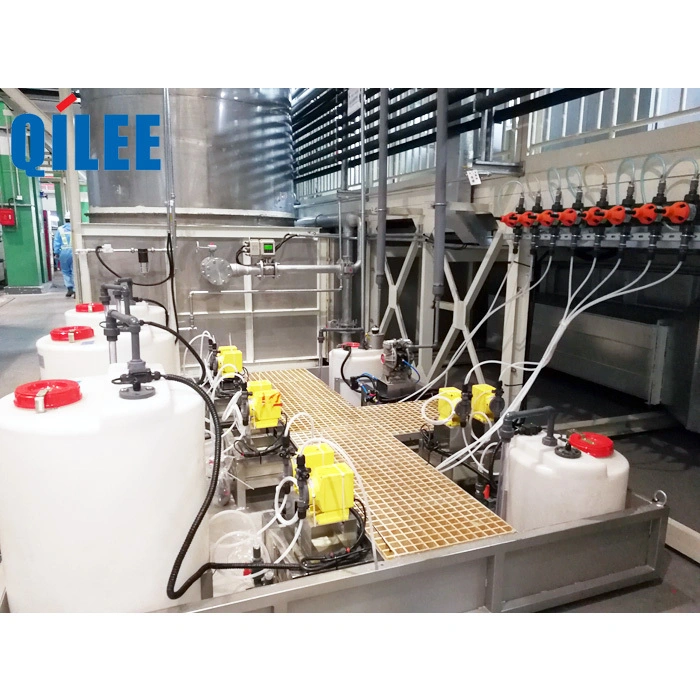
Automatic Chlorine Powder & Dry Polymer Dosing System

At dawn the plant hums as a sleek dosing unit tends the tanks, like a quiet guard in the heart of the site. It drops chlorine powder and dry polymer in dust‑free, exact amounts so water stays clear and the process runs smooth. With smart controls, easy refills and hands‑free use, it brings staff calm and steady, safe flow to every tap.

5.0
brand name:
QILEE
Shipping:
Support Sea freight
Payments:
L/C,D/A,D/P,T/T,Western Union,MoneyGram,OA
Lead Time:
1-30(sets):30(days),>30(sets):To be negotiated(days)
Place of Origin:
China
design customization

    oops...!

    no product data.

    Go to homepage
    Dimensions(mm)
    1200*800*1600
    Circulatory volume
    2000TPH
    Tank
    100L*2
    Metering pump Qty
    2sets
    Metering pump flow(L/H)
    7.6
    Processing Type
    desalination
    Type
    Polymer Dosing System
    Power(W)
    2 kW
    Application
    Metering
    Voltage
    220 V, 380 V
    weight (kg)
    100
    productivity
    1000L/Hour
    warranty
    1 Year
    place of origin
    Shanghai, China

    Precise, Safe, Compact, Durable 

    The QCDS Recycling water dosing system automates precise chlorine powder and dry polymer dosing to maintain scale, corrosion and microbial control in open cooling, closed chilled and central air‑conditioning water loops. Built in a compact modular cabinet style with configurable metering pumps (7.6–45 LPH), tanks (100–500 L) and industrial‑grade components, it features branded meters and valves, wireless remote monitoring of pH/ORP/conductivity/residual chlorine/turbidity and ships in standard export carton packing for secure delivery. Customers benefit from reliable, low‑maintenance operation, scalable models and fast 3–20 day delivery to minimize downtime, chemical waste and on‑site labor.

    1620183233g0e
    1620183233oxz

    Here are five four-word subtitle options (one per perspective):

    The QCDS Recycling water dosing system is an automatic chlorine powder and dry polymer dosing solution engineered for open cooling, closed chilled and large central air‑conditioning systems, with modular pump packs, multiple storage tanks and scalable flow capacities (2,000–20,000 TPH) that ensure continuous, reliable operation. It provides precise, timed dosing of scale inhibitors, corrosion inhibitors, biocides and coagulants with pump redundancy and premium metering instruments to enable automatic blowdown/sewage control, reduced chemical use, and lower maintenance and downtime. Integrated online analyzers for pH, ORP, conductivity, residual chlorine, turbidity and reagent concentration, combined with wireless remote transmission and real‑time status monitoring, deliver actionable data for long‑term stable performance and compliance.

    Automatic Chlorine Polymer Dosing 

    The QCDS Recycling water dosing system is an automatic chlorine powder and dry polymer dosing solution designed for open cooling water, closed chilled water and large water-cooled central air-conditioning systems. It enables automated dosing of scale inhibitors, corrosion inhibitors, fungicides and other treatment agents while offering online measurements of pH, ORP, conductivity, residual chlorine, turbidity and reagent concentration with wireless remote transmission for real-time monitoring. Equipped with internationally branded instruments, metering pumps and valves and available in multiple models and capacities, the system delivers long-term stable operation for industrial production sites and large enterprises.


    ◎ Reliable Automated Dosing 

    ◎ Comprehensive Water Monitoring

    ◎ Modular Scalable Design

    16201832330io
    1620183233rje

    Precise Efficient Safe Dosing

    Built by a team with decades of water-treatment experience, the Automatic Chlorine Powder & Dry Polymer Dosing System was engineered for reliable, low‑maintenance chemical delivery in industrial and municipal recycling applications and is realized in the QCDS Recycling water dosing system. It accurately meters and dispenses powdered chlorine and dry polymer with automatic feed control, dust‑free handling, PLC integration, and real‑time monitoring to maintain safe, consistent dosing while minimizing chemical waste. Key features—corrosion‑resistant hoppers, variable‑speed feeders, sealed feed paths, remote diagnostics, and easy‑access maintenance—deliver lower operating costs, improved treatment efficiency, and enhanced operator safety.

    Material introduction

    The QCDS Recycling water dosing system features chemical-resistant storage tanks and mixing vessels fabricated from high-density polyethylene or fiberglass-reinforced plastics to withstand chlorine powders and dry polymers. Metering pumps, precision valves and wetted components are constructed from corrosion-resistant materials such as SS316, PVDF and PTFE-lined seals to ensure compatibility with oxidizing biocides and polymer slurries. Rigid frames, fasteners and pipework use stainless steel and engineered plastics while international-brand instruments and pump housings further enhance long-term stability and maintenance-friendly performance.


    ◎ Tanks & Frame Materials 

    ◎ Wetted Parts & Metering Pumps

    ◎ Piping, Valves & Enclosures

    1620183233lpr

    FAQ

    1
    What are the typical applications and industries that use an Automatic Chlorine Powder & Dry Polymer Dosing System?
    These systems are commonly used in municipal drinking water treatment, wastewater treatment, industrial process water, swimming pools, aquaculture, papermaking, food and beverage processing, and sludge dewatering. They automate disinfection (chlorine powder) and flocculation/coagulation (dry polymer), improving consistency, safety and chemical efficiency where precise solid dosing is required.
    2
    How is the system normally set up and operated in a plant?
    Installation usually involves mounting the hopper and feeder near a protected feed point, connecting the dosing outlet to a mixer or dissolution tank, and integrating the controller (PLC or local panel) with plant flow or level signals. Operation includes filling the hopper, selecting feed rate (time-based, weight/gravimetric, or flow-proportional), priming the feeder, and starting automated dosing. Typical controls allow manual override, alarms for blockages/low material, and interlocks for safety.
    3
    What safety and handling precautions are required for chlorine powder and dry polymers?
    Use appropriate PPE (gloves, goggles, respirator if dust risk), ensure good ventilation, keep materials dry and sealed to prevent caking or hazardous reactions, and follow material safety data sheets. Install spill containment, dust suppression and local exhaust where needed. For chlorine powders, have emergency wash stations, proper storage separate from organics and acids, and documented emergency response procedures. Regular training for operators is essential.
    4
    How accurate and reliable is the dosing, and what affects dosing performance?
    Modern volumetric or gravimetric feeders achieve consistent dosing suitable for most plant requirements; accuracy depends on feeder type, material properties and maintenance. Typical performance is consistent within a narrow tolerance (system and application dependent). Factors affecting accuracy include powder flowability, humidity/caking, feeder calibration, wear of moving parts, and improper integration with process signals. Regular calibration and housekeeping minimize errors.
    5
    What routine maintenance and troubleshooting should operators expect?
    Daily/shift checks: material level, alarms, and visible dust or leaks. Weekly: inspect feeder screws/augers, agitators, and vibrators. Monthly: clean hopper edges, check seals, and verify calibration. Troubleshoot common issues like clogging (clear and dry the hopper, use vibrators), inaccurate dosing (recalibrate or inspect worn parts), dusting (improve sealing or add dust collection), and material bridging (install hopper inserts or vibrators). Annual: full inspection of electronics, wear components and safety devices.
    6
    Can the dosing system be integrated with plant control systems and remote monitoring?
    Yes. Most systems offer PLC interfaces, analog/digital IO, Modbus/Profibus or other industrial protocols for integration with SCADA. They can support flow-proportional dosing, pH or ORP feedback loops, remote alarms, data logging and recipe control. Remote monitoring and diagnostics help optimize chemical usage and reduce downtime when paired with proper sensors and communications.
    Tell Us More About Your Project !
    If you have any questions about water treatment systems, please feel free to contact QILEE.
      Stable equipment
      Mature technology
      Automated operation
      Simple operation

    Do You Have any Questions? Welcome to Leave Us a Message.

    Related Products
    no data
    Contact Us

    Tel: +86 13370035529

    Business What's App: +86 13636655908

    E-mail: qilee@qileegroup.com

    Add: No. 351 Wenqu Road, Fengxian District, Shanghai

    Your trusted Water Treatment System Partner
    no data
    Copyright © 2026 Shanghai QILEE Environmental Protection Equipment Co., Ltd | Sitemap
    Customer service
    detect