
loading
Olive Waste Oil Centrifuge, 9-Step Vortex Auto Oil Recovery 1

Olive Waste Oil Centrifuge, 9-Step Vortex Auto Oil Recovery

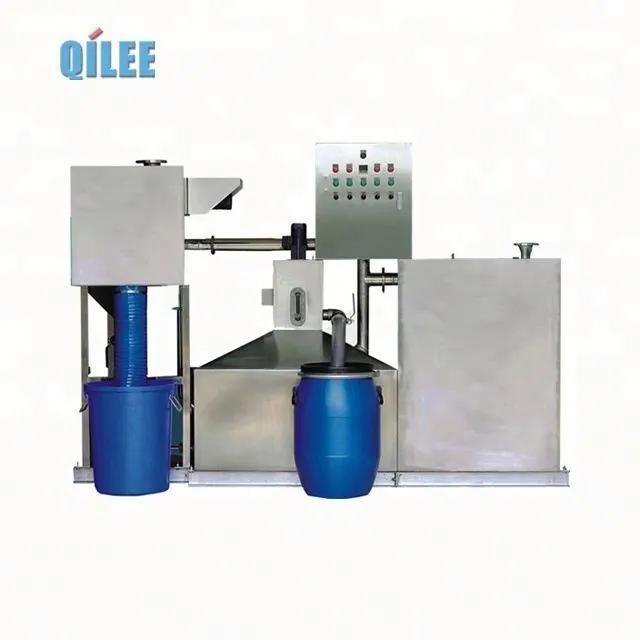
This Olive Waste Oil Centrifuge uses a 9-step vortex auto process to pull oil from olive waste and pomace fast and clean. It gives high oil yield and purity, uses little power, and has auto-clean and easy controls so it needs little work or upkeep. Small, tough build cuts waste costs and boosts profit, making it a smart, eco-friendly choice for mills of any size.

5.0
brand name:
QILEE
Shipping:
Support Sea freight
Payments:
L/C,D/A,D/P,T/T,Western Union,MoneyGram,OA
Lead Time:
1-30(sets):30(days),>30(sets):To be negotiated(days)
Place of Origin:
China
design customization

    oops...!

    no product data.

    Go to homepage
    Net Weight KG
    1500
    Import / export
    150/150 DN/DN
    Treating Capacity
    30-40m3/h
    Installation size
    5000*2500*3500
    power(w)
    1500
    Type
    Separating Plant
    Certification
    CE ISO
    After-sales Service Provided
    Online support, Engineers available to service machinery overseas
    dimension(l*w*h)
    3835*1500*2118
    product type
    Cosmetic
    voltage
    220V/380V
    Power
    1.5kw
    Dimensions
    3835*1500*2118
    Product name
    Waste Oil Separator
    Applicable Industries
    Construction works 
    Condition
    New
    warranty
    1 Year
    place of origin
    Shanghai, China

    Automated Compact Durable Purification 

    The Olive Waste Oil Centrifuge's 9-step vortex Auto Oil Recovery delivers a restaurant-grade Oil Water Separator that automatically extracts oil, expels sludge and ensures compliant discharge. Built from SUS304/316 stainless box for proven quality, its compact shape and sleek industrial style include PLC control, automatic oil guide and easy-maintenance access. With standard export packaging in a carton, customizable dimensions and 3–20 day delivery, the unit comes with installation guidance and after-sales support.

    1620183233g0e
    1620183233oxz

    Precision 9-Step Oil Centrifuge

    The Olive Waste Oil Centrifuge, 9-Step Vortex Auto Oil Recovery is an Oil Water Separator that combines an independent vortex separation–sedimentation method with a nine‑step centrifugal process and SUS304/SUS316 stainless‑steel construction, offering customizable sizing to meet diverse installation needs. Functionally it delivers staged primary filtration with automatic slag removal, rapid three‑to‑five stage solid‑water‑oil separation, six‑level automatic oil guiding and grease collection, plus a siphon‑assisted continuous discharge for efficient, low‑intervention oil recovery. Value and structural attributes include PLC/touch‑screen control with remote communication, optional heating and liquid‑level sensors, modular inlet/outlet and pump interfaces, and scalable, easy‑maintain configurations suited for restaurants, hotels, hospitals and food‑service complexes.

    Efficient 9-Step Vortex Recovery 

    The Olive Waste Oil Centrifuge is a nine-step vortex Oil Water Separator that uses independently developed vortex sedimentation technology to rapidly and automatically separate oil, water, and solids from restaurant and commercial wastewater. It features multi-stage filtration with automatic slag removal, a six-level oil guiding system, siphon-based transfer to a water storage chamber, PLC control, and optional SUS304/316 construction for continuous, standard-compliant discharge. Available in customizable sizes and capacities for hotels, supermarkets, hospitals, and industrial parks, the unit streamlines maintenance with automated sludge discharge, heating, and remote monitoring options.


    ◎ product nicety 1 

    ◎ product nicety 2

    ◎ product nicety 3

    16201832330io
    1620183233rje

    Efficient Automated Vortex Recovery

    Born from a decade of sustainable-engineering experience and olive-processing heritage, the Olive Waste Oil Centrifuge was crafted with precision machining, food-grade materials, and rigorous quality control to ensure reliable, low‑maintenance operation. As an advanced Oil Water Separator with a 9-step vortex auto oil recovery system, it rapidly extracts high-yield, low‑moisture oil while continuously removing solids and water in a single automated cycle. Key features and advantages include fast automatic recovery, adjustable flow rates, energy‑efficient motor, easy‑clean rotor, corrosion‑resistant components, and a compact footprint that reduces processing time and operating costs.

    Material introduction

    The Olive Waste Oil Centrifuge is constructed from corrosion-resistant stainless steel, featuring a standard SUS304 box at 2mm thickness with an optional SUS316 upgrade at 3mm for harsher environments. Core modules of the Oil Water Separator — including the fully automatic slag removal and oil isolation systems — are fabricated in SUS304, and stainless-steel liquid level sensors and hygienic contact surfaces ensure non-reactive handling of oil and wastewater. Robust welded construction, modular PLC controls and optional 360° heating deliver durable, easy-to-clean materials that support continuous industrial operation and straightforward maintenance.


    ◎ Main Enclosure & Structure 

    ◎ material introduction 2

    ◎ Critical Subsystems & Mechanicals

    1620183233lpr

    FAQ

    1
    What is the Olive Waste Oil Centrifuge and how does its "9‑Step Vortex Auto Oil Recovery" process work?
    The Olive Waste Oil Centrifuge is a mechanical separator that recovers usable oil from olive processing or used cooking oil streams by combining centrifugal separation, staged dewatering, and filtration. The “9‑Step Vortex Auto Oil Recovery” describes a programmed sequence of operations that automatically breaks emulsions, separates solids, removes water, polishes oil and discharges residues. In practice the machine feeds the waste stream into a rapidly spinning rotor, uses controlled flow and vortex stages to concentrate and separate phases, then routes separated oil, water and solids to their respective outlets in a repeatable cycle to maximize oil yield and quality.
    2
    What kinds of feedstock can this centrifuge process and what should I avoid feeding it?
    It is intended for olive mill waste, olive pomace washings, and used cooking oils (including olive-based frying oil) that contain solids, water and food residues. Acceptable feedstock are vegetable-based oils and emulsions. Avoid solvents, strong acids/bases, highly viscous non‑vegetable oils, large unpopped stones or metal debris, and flammable contaminants not specified by the manufacturer. Very thick sludge, frozen material, or streams with very high inorganic sand content may require pre‑treatment or a different model.
    3
    How do I operate the centrifuge—what are the typical usage steps and pre‑treatment requirements?
    Typical operation workflow: - Pre‑screen: Remove large debris (stones, large food pieces) with a coarse strainer. - Pre‑settle or coarse filtration: Let heavy solids settle or pass the stream through a coarse filter to reduce load on the rotor. - Load and select program: Fill or pump the feed to the inlet, select the automatic 9‑step program suited to your feed (oil‑heavy, water‑heavy, high‑solids). - Run: The machine executes vortex stages—emulsion breaking, solids concentrating, water separation, oil polishing—automatically. - Collect outputs: Retrieve separated oil from the oil outlet, drain wastewater to the water outlet, and remove solids from the sludge discharge. - Post‑treatment: If needed, pass recovered oil through a polishing filter or drying stage before storage. Follow the manufacturer’s recommended fill rates, temperature range, and rotor speed settings. Do not overload the unit.
    4
    In what application scenarios is this centrifuge most useful?
    Common scenarios: - Olive mills recovering oil from pomace wash water and processing residues. - Restaurants, catering centers and hotel kitchens recovering frying oil to extend product life or for recycling. - Small biodiesel or fuel producers reclaiming vegetable oil feedstock. - Food processors handling oil‑containing waste streams to reduce disposal costs and recover value. - Farms or cooperatives consolidating used oil for resale or on‑site use. The unit is useful wherever mixed oil/water/solid waste streams exist and on‑site recovery reduces cost or environmental impact.
    5
    How should I maintain and clean the centrifuge to ensure reliable long‑term performance?
    Maintenance basics: - Daily: Rinse rotor and feed lines after use; remove and empty sludge tray. - Weekly: Inspect seals, gaskets and screens for wear or clogging; check drain lines and outlets. - Monthly: Lubricate bearings and inspect belts/motors per the manual; tighten fittings. - Periodically: Deep clean rotor and chambers with warm water and mild detergent; remove scale or biofilm deposits. Avoid harsh abrasives or solvents unless manufacturer allows. - Replace wear parts (seals, o‑rings, filters) on the schedule recommended in the manual. Always follow lockout/tagout and allow the rotor to come to a complete stop before servicing. Keep a log of runs, maintenance and any abnormal noises or vibrations.
    6
    What troubleshooting tips should I use if oil recovery or quality is poor, and how should I handle recovered oil and residues?
    Troubleshooting tips: - Low oil yield: Check for excessive water or very fine emulsions—use a pre‑demulsification step, warm the feed slightly, or adjust program settings. Ensure you are not exceeding feed rate limits. - Poor oil clarity: Run a polishing filter post‑centrifuge, reduce solids load, or check rotor balance and speed. - Excess vibration or noise: Stop the unit and inspect for unbalanced load, large debris in the rotor, or worn bearings. - Frequent clogging: Increase coarse pre‑filtration and clean inlet screens more often. Handling outputs: - Recovered oil: Store in clean, sealed containers, label with date and quality notes, and, if for consumption, follow local food safety regulations and do any required testing (free fatty acids, moisture). - Wastewater: Direct to appropriate drainage or waste treatment per local environmental rules; do not discharge untreated high‑oil effluent. - Solids/sludge: Collect and dispose or compost according to regulations or use as biomass for energy if permitted. If problems persist, consult the manufacturer’s service support.
    Tell Us More About Your Project !
    If you have any questions about water treatment systems, please feel free to contact QILEE.
      Stable equipment
      Mature technology
      Automated operation
      Simple operation

    Do You Have any Questions? Welcome to Leave Us a Message.

    Related Products
    no data
    Contact Us

    Tel: +86 13370035529

    Business What's App: +86 13636655908

    E-mail: qilee@qileegroup.com

    Add: No. 351 Wenqu Road, Fengxian District, Shanghai

    Your trusted Water Treatment System Partner
    no data
    Copyright © 2026 Shanghai QILEE Environmental Protection Equipment Co., Ltd | Sitemap
    Customer service
    detect