
loading
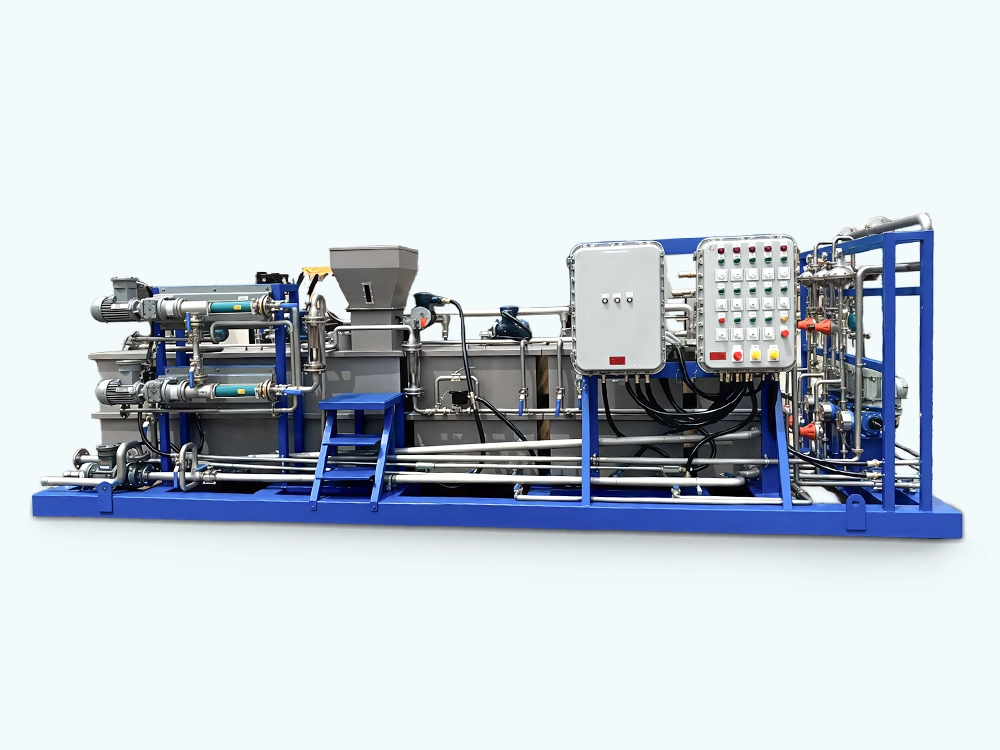
Chemical Dosing System for Oil & Gas Industry 1
Chemical Dosing System for Oil & Gas Industry 2
Chemical Dosing System for Oil & Gas Industry 3
Chemical Dosing System for Oil & Gas Industry 1
Chemical Dosing System for Oil & Gas Industry 2
Chemical Dosing System for Oil & Gas Industry 3

Chemical Dosing System for Oil & Gas Industry

The Industrial Process Dosing System for Oil & Gas Industry is a fully automatic, high-reliability integrated dosing equipment specifically developed to address the water treatment and process optimization needs of the oil and gas industry. It is engineered to precisely and stably inject targeted chemical agents into key industrial processes such as oil and gas extraction, pipeline transportation, and refinery operations. By effectively controlling emulsion formation, pipeline corrosion, foam generation, and oil-containing wastewater pollution, the system enhances process efficiency, extends equipment service life, ensures operational safety, and complies with environmental discharge standards.

5.0
design customization

    oops...!

    no product data.

    Go to homepage

    Product Overview

    Featuring a modular design and intelligent control architecture, the system can be flexibly customized to adapt to the harsh working conditions of the oil and gas industry-including high pressure, high temperature, and high salinity environments. It integrates high-precision dosing components, real-time monitoring devices, and robust control systems to solve the pain points of traditional manual dosing, such as inconsistent dosing accuracy, delayed response to process changes, and high operational labor intensity. It is a core supporting equipment for modern oil and gas production processes.

    主图 拷贝 (10)

    Application Scenarios

    1 (29)
    Oil & Gas Extraction
    Suitable for onshore and offshore oil wells, gas wells, and associated production facilities. It is mainly used in the crude oil dehydration process and produced water treatment link. By adding demulsifiers to break the stable oil-water emulsion, it improves the efficiency of oil-water separation; meanwhile, adding flocculants to treat produced water reduces oil content and suspended solids, laying the foundation for water recycling or qualified discharge.
    2 (17)
    Oil & Gas Transportation Pipelines
    Applicable to long-distance crude oil, natural gas, and refined oil transportation pipelines, as well as gathering and transferring pipelines. The core function is to inject corrosion inhibitors into the pipeline to form a protective film on the inner wall of the pipeline, preventing electrochemical corrosion and erosion corrosion caused by crude oil, natural gas, and associated water. It also can add drag reducers (optional) to reduce the energy consumption of pipeline transportation.
    3 (27)
    Oil Refineries
    Used in key units of refineries such as crude oil distillation, catalytic cracking, and oil-water separation. It provides targeted dosing solutions for different process links: adding demulsifiers to enhance crude oil dehydration efficiency in the distillation unit; injecting defoamers to suppress excessive foam generation in the catalytic cracking process and avoid process fluctuations; and dosing flocculants in the oily wastewater treatment system to improve the separation effect of oil and suspended solids.

    Core Working Principle

    The system adopts a "real-time monitoring - intelligent calculation - precise dosing - dynamic feedback" closed-loop control mode to ensure that the dosing amount matches the actual process needs. The specific working mechanism is as follows:

    humidity
    Process Parameter Monitoring
    According to different application scenarios, dedicated on-line sensors collect key process parameters in real time. For oil extraction, parameters include crude oil flow rate, water content, and temperature; for pipeline transportation, they include pipeline pressure, medium flow rate, and corrosion rate (optional); for refineries, they include foam height, wastewater flow rate, and oil content. All data are transmitted to the PLC control system with a frequency of 1 time/second.
    settings
    Adaptive Dosing Calculation
    The PLC controller pre-stores scenario-specific dosing models (e.g., crude oil water content-dosing amount model, pipeline flow rate-corrosion inhibitor dosage model). It compares the real-time monitoring data with the preset process indicators (e.g., target crude oil water content ≤ 0.5%, pipeline corrosion rate ≤ 0.076 mm/a) and calculates the optimal dosing amount through PID (Proportional-Integral-Derivative) algorithm and fuzzy control logic.
    CHEMIC~1
    Precise Dosing Execution
    The frequency conversion plunger dosing pump (or diaphragm dosing pump) adjusts the output flow steplessly according to the control signal from the PLC. The agent is delivered from the corrosion-resistant storage tank to the designated dosing point (e.g., oil well wellhead, pipeline inlet, reactor feed port) through high-pressure-resistant pipelines. The pulsation damper and backpressure valve ensure stable dosing pressure and avoid flow fluctuations caused by pump reciprocation.
    blockage
    Dynamic Feedback Adjustment
    The system continuously monitors the post-dosing process indicators (e.g., separated water oil content, pipeline corrosion status). If deviations occur (e.g., oil content exceeds the standard due to increased crude oil water content), the PLC automatically corrects the dosing amount within 2-5 seconds to maintain process stability. In case of abnormal parameters, the system triggers an alarm and switches to backup dosing mode if necessary.

    Dosing Types & Functions

    Dosing Type Core Functions Key Application Scenarios Typical Chemical Agents
    Demulsifier Break the stable oil-water emulsion formed during oil extraction by reducing the interfacial tension between oil and water phases, promoting the aggregation and sedimentation of water droplets, and improving the oil-water separation efficiency. The oil content in the separated water can be reduced to less than 50 mg/L, and the water content in the crude oil can be controlled below 0.5%. Oil & gas extraction (crude oil dehydration), refineries (crude oil distillation unit) Polyoxyethylene polyoxypropylene alkyl phenol ether, polyamide polyamine, polyether demulsifier
    Corrosion Inhibitor Adsorb on the inner surface of pipelines or equipment to form a dense and durable protective film, isolate the metal matrix from corrosive media (such as H₂S, CO₂, chloride ions), and inhibit electrochemical corrosion and pitting corrosion. The corrosion rate of pipeline steel can be reduced by more than 90%. Oil & gas transportation pipelines, refinery process equipment, wellbore completion Imidazoline derivatives, quaternary ammonium salt, phosphate ester, thiourea derivatives
    Defoamer Quickly eliminate the foam generated in the production process by destroying the stability of the foam film, preventing foam overflow, reducing equipment load, and avoiding process interruption caused by foam. It has good thermal stability and can adapt to the high-temperature environment of refinery units (up to 200℃). Refineries (catalytic cracking, delayed coking units), oil well cementing operations Silicone oil defoamer, polyether defoamer, mineral oil defoamer, polypropylene glycol
    Flocculant Neutralize the charge of oil droplets and suspended solid particles in oily wastewater, promote their aggregation into large flocs, and realize solid-liquid separation through sedimentation or filtration. The oil removal rate can reach more than 95%, and the suspended solid (SS) removal rate is over 90%. Oil & gas extraction (produced water treatment), refineries (oily wastewater treatment) Polyacrylamide (PAM), polyaluminum chloride (PAC), polyferric sulfate (PFS), aluminum sulfate

    Core Modules & Technical Advantages

    Chemical Dosing System for Oil & Gas Industry 12
    Core Modules
    Chemical Dosing System for Oil & Gas Industry 13
    Technical Advantages
    check
    Agent Storage & Supply Module
    Composed of corrosion-resistant storage tanks (316L stainless steel, FRP, or carbon steel with anti-corrosion lining), ultrasonic liquid level sensors, and automatic feed pumps. The tank capacity ranges from 100L to 20,000L, and the liquid level sensor monitors the agent level in real time with an accuracy of ±1mm. High-level and low-level alarms prevent agent overflow and shortage. For viscous agents (e.g., some demulsifiers), a jacketed heating and stirring device is optional to ensure fluidity.
    administrator
    Precision Dosing Module
    Equipped with frequency conversion dosing pumps (plunger type for high pressure, diaphragm type for corrosion resistance), pulsation dampers, Y-type filters (100-mesh filter screen), and electromagnetic flowmeters. The dosing accuracy is up to ±0.3%, and the pump can operate stably under high pressure (up to 40 MPa) and high temperature (up to 120℃) environments. The filter prevents impurities from entering the pump and causing wear, while the flowmeter realizes real-time dosing flow monitoring and feedback.
    helpdesk
    Intelligent Control Module
    Intelligent Control Module: Integrates PLC program and communication module. It supports automatic/manual switching, process parameter setting, It provides a reliable control interface for fault diagnosis and parameter adjustment, ensuring precise control of the dosing process.
    humidity
    Monitoring & Sensing Module
    Configured with scenario-specific high-precision sensors, such as crude oil water content analyzers (measurement range 0-100%, accuracy ±0.1%), corrosion rate monitors (electrochemical method, accuracy ±0.001 mm/a), foam height sensors (ultrasonic type, measurement range 0-2000mm), and oily wastewater analyzers (measurement range 0-1000 mg/L, accuracy ±1 mg/L). All sensors have explosion-proof certification (ATEX Zone 1 or Class I Div 1) to adapt to hazardous areas in the oil and gas industry.
    主图 拷贝 - 副本 (2)

    Installation & Maintenance Requirements

    Chemical Dosing System for Oil & Gas Industry 25
    Installation Requirements
    Chemical Dosing System for Oil & Gas Industry 26
    Routine Maintenance
    check
    Site Requirements
    The installation site should be flat and solid, with a bearing capacity ≥2 times the net weight of the equipment. For outdoor installation (e.g., oil well sites), rainproof, snowproof, and windproof shelters should be installed. The distance from flammable and explosive materials should be ≥5 meters, and a fire extinguisher should be equipped nearby.
    administrator
    Power Supply
    The power supply voltage should be stable within ±5%, and an independent power distribution cabinet with leakage protection and overcurrent protection functions should be configured. The grounding resistance of the equipment is ≤4Ω to ensure electrical safety. For offshore platforms, marine-grade power supply components are optional.
    helpdesk
    Pipeline Connection
    The dosing pipeline should use high-pressure seamless steel pipes or stainless steel pipes, and the connection method should be flange or thread (complying with API standards). A check valve should be installed at the dosing point to prevent medium backflow. For corrosive agents, PTFE-lined pipelines are recommended.
    humidity
    Explosion-Proof Requirements
    All electrical components (motors, sensors, control cabinets) must have explosion-proof certification matching the on-site hazard level. The wiring should use explosion-proof cable glands and conduits to avoid electrical sparks.

    After-Sales Service & Warranty

    Warranty Period: 1 years for the whole system, include core components (dosing pump, PLC controller, explosion-proof sensors). During the warranty period, free replacement of defective components and on-site maintenance services are provided.

    Technical Support: Provide 24-hour response technical support via email, phone, and video call. A professional technical team is available to solve operational and maintenance problems. For complex projects, on-site technical guidance during commissioning is provided.

    On-Site Service: For faults that cannot be solved remotely, on-site service will be arranged within 48 hours for domestic customers and 72 hours for overseas customers (in major oil and gas producing regions). Emergency spare parts can be delivered by air for urgent needs.

    图片20 (2)
    图片20 (2)
    Tell Us More About Your Project !
    If you have any questions about water treatment systems, please feel free to contact QILEE.
      Stable equipment
      Mature technology
      Automated operation
      Simple operation

    Do You Have any Questions? Welcome to Leave Us a Message.

    Related Products
    no data
    Contact Us

    Tel: +86 13370035529

    Business What's App: +86 13636655908

    E-mail: qilee@qileegroup.com

    Add: No. 351 Wenqu Road, Fengxian District, Shanghai

    Your trusted Water Treatment System Partner
    no data
    Copyright © 2025 Shanghai QILEE Environmental Protection Equipment Co., Ltd | Sitemap
    Customer service
    detect