
loading
Chemical Volumetric Ammonia Dosing System - Screw/Diaphragm 1
Chemical Volumetric Ammonia Dosing System - Screw/Diaphragm 2
Chemical Volumetric Ammonia Dosing System - Screw/Diaphragm 3
Chemical Volumetric Ammonia Dosing System - Screw/Diaphragm 4
Chemical Volumetric Ammonia Dosing System - Screw/Diaphragm 5
Chemical Volumetric Ammonia Dosing System - Screw/Diaphragm 6
Chemical Volumetric Ammonia Dosing System - Screw/Diaphragm 1
Chemical Volumetric Ammonia Dosing System - Screw/Diaphragm 2
Chemical Volumetric Ammonia Dosing System - Screw/Diaphragm 3
Chemical Volumetric Ammonia Dosing System - Screw/Diaphragm 4
Chemical Volumetric Ammonia Dosing System - Screw/Diaphragm 5
Chemical Volumetric Ammonia Dosing System - Screw/Diaphragm 6

Chemical Volumetric Ammonia Dosing System - Screw/Diaphragm

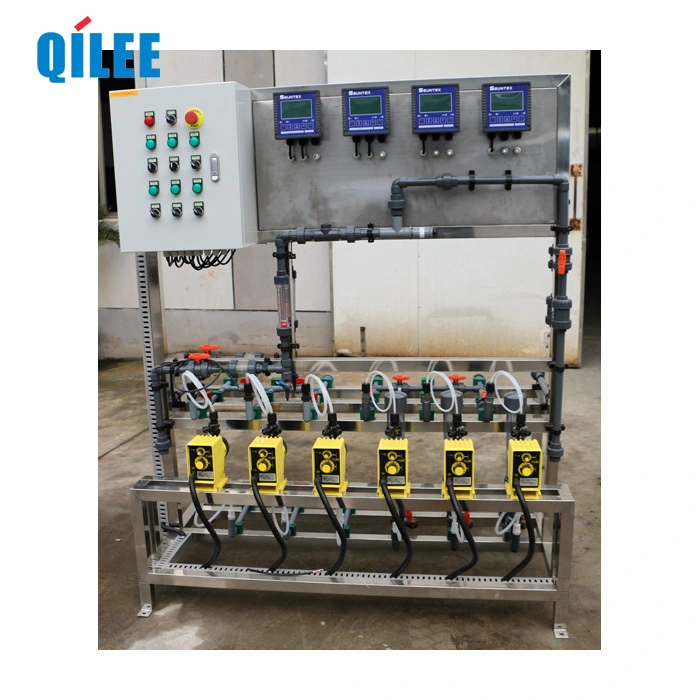
The Chemical Volumetric Ammonia Dosing System - Screw/Diaphragm is a compact metering unit that delivers precise amounts of aqueous ammonia by volume. The screw version moves a fixed volume per shaft turn for steady, continuous flow and low pulsation. The diaphragm version displaces a fixed volume with each stroke for leak-free, high-pressure, and chemically safe dosing. Both types offer adjustable flow, electronic control inputs, and corrosion-resistant wetted parts for reliable, repeatable dosing. They make handling and adding ammonia safer, cut chemical waste, and keep process chemistry steady.

Usage scenarios:

- Municipal wastewater plants for dosing ammonia to balance nitrification/denitrification, control pH, or adjust nutrient levels.

- Power plants and industrial flue-gas systems for controlled ammonia injection used in NOx reduction (SCR/SNCR) processes.

- Chemical, fertilizer, food and general process industries for precise neutralization, buffering, or as a reactant where accurate, safe ammonia feed is needed.

5.0
brand name:
QILEE
Shipping:
Support Sea freight
Payments:
L/C,D/A,D/P,T/T,Western Union,MoneyGram,OA
Lead Time:
1-1(sets):60(days),>1(sets):To be negotiated(days)
Place of Origin:
China
design customization

    oops...!

    no product data.

    Go to homepage
    size
    2000*1000*1700
    Suitable for medicament
    12
    Electronic control
    0,1
    Maximum number of instruments
    4
    Pump type
    Diaphragm pump
    Pump qty
    4sets
    Maximum flow rate
    1000LPH
    Processing Type
    desalination
    Power(W)
    2 kW
    Product name
    Ammonia Dosing System
    Voltage
    220 V, 380 V
    weight (kg)
    100
    productivity
    500L/Hour
    warranty
    1 Year
    place of origin
    Shanghai, China
    core components
    Motor
    machinery test report
    Provided
    video outgoing-inspection
    Provided

    Accurate Leakproof Compact Construction 

    This Chemical Volumetric Ammonia Dosing System delivers precise, automatic dosing and real-time control of pH, residual chlorine, DO, suspended solids and sludge concentration to stabilize wastewater processes. Available as screw- or diaphragm-pump styles with imported-brand pumps, built-in safety components (back-pressure and safety valves, filters, diaphragm gauges) and compact modular frames for easy site integration. The QWDS Polymer dosing system comes in multiple capacity options (1000–2000 LPH per pump, up to six sets), is packed in standard export cartons, and ensures reliable, low‑maintenance chemical addition for coagulation, flocculation and dewatering.

    1620183233g0e
    1620183233oxz

    Volumetric Screw Diaphragm Dosing

    The QWDS Polymer dosing system is a chemical volumetric ammonia dosing solution available with imported screw or diaphragm metering pumps in modular configurations (2/4/6 sets), delivering precise, adjustable flows up to 2000 L/h per pump with compact, site-ready cabinet dimensions. Designed for wastewater regulation, coagulation and sludge dewatering, it performs automatic metering and pump switching for acids, alkalis, PAC, PAM, carbon sources and demulsifiers while integrating safety features like back-pressure and safety valves, filters, diaphragm pressure gauges and cleaning pipelines. Its value lies in online water quality testing and DCS linkage for automatic dosage matching to total flow and concentration, ensuring stable, efficient chemical use, reduced waste and reliable plant automation.

    Precise Volumetric Ammonia Dosing 

    The QWDS Polymer dosing system is a chemical volumetric ammonia dosing solution for wastewater treatment, widely used in regulation, coagulation and sludge dewatering processes. It enables automatic addition of acids, alkalis, PAC, PAM, carbon sources, nutrients, reducing agents and demulsifiers with selectable imported screw or diaphragm metering pumps, automatic pump switching, online monitoring of pH, residual chlorine, DO and suspended solids, and standard safety items such as back-pressure and safety valves, filters and diaphragm pressure gauges. Designed for seamless DCS integration, the modular units offer multiple models with pump flows up to 2000 L/h per set to automatically match total water volume and process concentration for reliable, stable dosing.


    ◎  

    ◎ 

    ◎ 

    16201832330io
    1620183233rje

    Precise Reliable Efficient Dosing

    Built by a specialist manufacturer with decades of water-chemistry experience, the QWDS Polymer dosing system is a Chemical Volumetric Ammonia Dosing System offered in screw and diaphragm pump configurations and engineered for precise low‑flow metering with a corrosion‑resistant, long‑life design. It combines smart PLC control, proportional dosing tied to process flow signals, and adjustable stroke/speed or screw drive settings to deliver repeatable, low‑pulsation feed with leak detection and fast replacement parts for minimal downtime. Key features and advantages include volumetric accuracy, chemical‑resistant materials, compact footprint, simple calibration and maintenance, safety interlocks, and modular scalability for multi‑point applications.

    Material introduction

    The QWDS Polymer dosing system combines corrosion-resistant structural components such as 304/316 stainless steel frames and chemically inert piping (PVC, HDPE or PVDF) to ensure long-term durability in harsh wastewater environments. Critical wetted parts — metering diaphragms, seals and gaskets — are fabricated from PTFE, EPDM or Viton elastomers while back-pressure and safety valves, filters and cleaning pipelines use chemically compatible materials to prevent contamination and wear. Depending on the configuration, imported screw pumps feature alloy rotors and sealed housings while diaphragm pump variants employ reinforced elastomer diaphragms and precision components for accurate, stable dosing of PAC, PAM, ammonia and other reagents.


    ◎ Stainless Steel Housings 

    ◎ PTFE EPDM Diaphragms

    ◎ PVDF PTFE HDPE

    1620183233lpr

    FAQ

    1
    What is a Chemical Volumetric Ammonia Dosing System (Screw/Diaphragm) and where is it typically used?
    It is a metering system that delivers controlled volumes of aqueous ammonia (ammonium hydroxide) for process and environmental control. Common applications include wastewater pH control and neutralization, nutrient (ammonia) addition in biological treatment, boiler water treatment, cooling tower chemistry, flue gas conditioning (where aqueous ammonia is used), aquaculture nutrient management, and industrial/chemical process dosing. The system is used wherever precise, repeatable ammonia addition is needed to control pH, ammonia concentration, or chemical reactions.
    2
    How do the screw (progressive cavity) and diaphragm pump options differ, and how do I choose between them?
    Screw (progressive cavity) pumps are volumetric, low-pulsation, and handle higher flows and higher viscosities well; they are good for continuous, higher-capacity ammonia dosing and for fluids with some solids or viscosity. Diaphragm pumps excel at high-pressure, pulse-tolerant dosing with very good chemical isolation and are often chosen for intermittent dosing, precise small flows, or when barrier sealing is required. Choose screw pumps for larger continuous feed rates and where smooth flow matters; choose diaphragm pumps for higher pressures, compact intermittent dosing, or when maximum chemical containment is required.
    3
    What dosing accuracy and operating ranges can I expect in real-world applications?
    Volumetric systems are designed for repeatable, proportional dosing—typical practical accuracy is within a few percent of setpoint when properly installed and maintained. They can be configured for very low intermittent flows (milliliters per hour) up to multiple liters per minute depending on pump size and drive. In application scenarios, accuracy depends on factors like suction lift, discharge pressure, fluid temperature and concentration, and whether closed-loop control (pH/flow feedback) is used. For high-precision needs, combine the pump with a flowmeter or pH feedback loop.
    4
    How is the ammonia dosing system integrated into process controls and real-world operation?
    The system can be operated manually, via a local controller, or integrated into plant PLC/SCADA. Common integration modes: continuous proportional dosing based on process flow, feedback control from pH/ORP/conductivity sensors, timed/intermittent dosing for batch processes, or event-driven dosing triggered by alarms or measurements. Remote monitoring and alarms (fault, low chemical level, pump failure) are typically supported to suit plant automation and safety needs.
    5
    What are the main installation, site, and safety considerations for ammonia dosing systems?
    Install the dosing unit on a stable, level base near the chemical storage with secondary containment (drip trays), proper ventilation, and upright mounting for suction lines. Use compatible materials for wetted parts (e.g., stainless steel, PVDF, PTFE elastomers) to resist ammonia corrosion. Provide chemical feed lines of appropriate pressure rating and accessible isolation valves and injection fittings. Safety: ammonia vapors are hazardous—ensure good ventilation, gas detection if concentrations could accumulate, appropriate PPE for handling ammonia solutions, and emergency eyewash/neutralization provisions. Follow local regulations for chemical storage, spill containment, and signage.
    6
    What routine maintenance and troubleshooting should be expected during normal operation?
    Routine tasks include visual inspection for leaks, checking and refilling chemical tanks, verifying injection point and strainer cleanliness, and periodic calibration against a known volume or flowmeter. Diaphragm pumps require scheduled diaphragm and valve plate replacement per manufacturer intervals; screw pumps need inspection of stator/rotor wear and seal condition. Common issues: loss of prime (check suction lines and valves), pulsation or flow variation (check pump speed and coupling, consider dampeners), blockages at injection point (clean strainers), and drift in control readings (recalibrate sensors). Keep critical spare parts (diaphragms, O-rings, check valves) and documented maintenance procedures for fast recovery.
    Tell Us More About Your Project !
    If you have any questions about water treatment systems, please feel free to contact QILEE.
      Stable equipment
      Mature technology
      Automated operation
      Simple operation

    Do You Have any Questions? Welcome to Leave Us a Message.

    Related Products
    no data
    Contact Us

    Tel: +86 13370035529

    Business What's App: +86 13636655908

    E-mail: qilee@qileegroup.com

    Add: No. 351 Wenqu Road, Fengxian District, Shanghai

    Your trusted Water Treatment System Partner
    no data
    Copyright © 2026 Shanghai QILEE Environmental Protection Equipment Co., Ltd | Sitemap
    Customer service
    detect