
loading
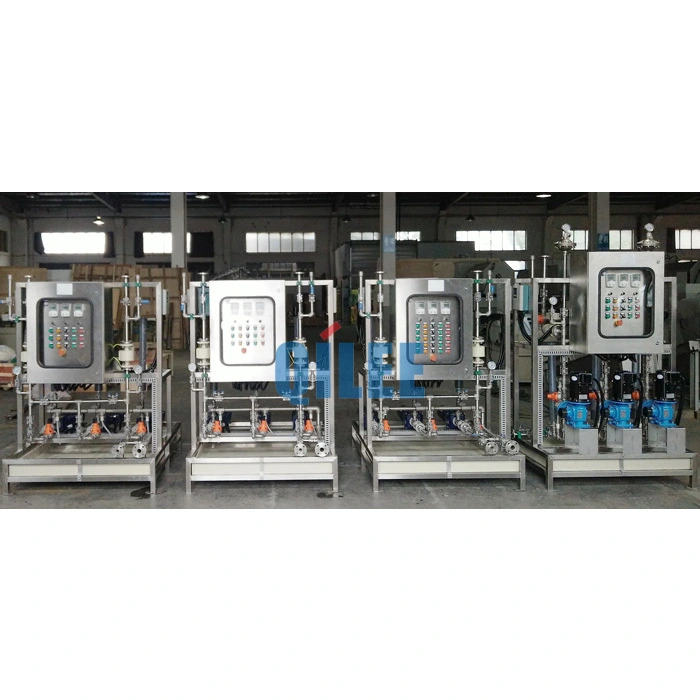
Automatic Coagulant/Acid Mixing Dosing System for Effluent 1
Automatic Coagulant/Acid Mixing Dosing System for Effluent 2
Automatic Coagulant/Acid Mixing Dosing System for Effluent 3
Automatic Coagulant/Acid Mixing Dosing System for Effluent 4
Automatic Coagulant/Acid Mixing Dosing System for Effluent 5
Automatic Coagulant/Acid Mixing Dosing System for Effluent 6
Automatic Coagulant/Acid Mixing Dosing System for Effluent 1
Automatic Coagulant/Acid Mixing Dosing System for Effluent 2
Automatic Coagulant/Acid Mixing Dosing System for Effluent 3
Automatic Coagulant/Acid Mixing Dosing System for Effluent 4
Automatic Coagulant/Acid Mixing Dosing System for Effluent 5
Automatic Coagulant/Acid Mixing Dosing System for Effluent 6

Automatic Coagulant/Acid Mixing Dosing System for Effluent

Automatic Coagulant/Acid Mixing Dosing System for Effluent

This system mixes and injects coagulants and acids into wastewater to help remove solids and adjust pH. It uses tanks, metering pumps, mixers, sensors, and a controller to measure conditions and dose chemicals automatically. The system keeps doses steady, lowers manual work, and improves safety by reducing direct chemical handling. It helps plants meet discharge limits and cuts chemical waste by dosing only what is needed. Built-in alarms and logging make it easy to track performance and troubleshoot issues.

Usage scenarios (about 3 sentences)

- Municipal wastewater plants use it to control turbidity and settleable solids before secondary treatment.

- Industrial sites like food, textile, and paper mills use it to adjust pH and remove suspended solids in their effluent.

- Small treatment facilities and construction dewatering operations use it for fast, automatic dosing to meet local discharge rules.

5.0
brand name:
QILEE
Shipping:
Support Sea freight
Payments:
L/C,D/A,D/P,T/T,Western Union,MoneyGram,OA
Lead Time:
1-1(sets):30(days),>1(sets):To be negotiated(days)
Place of Origin:
China
design customization

    oops...!

    no product data.

    Go to homepage
    size
    2000*1000*1700
    Suitable for medicament
    12
    Electronic control
    0,1
    Maximum number of instruments
    4
    Pump type
    Diaphragm pump
    Pump qty
    4sets
    Maximum flow rate
    1000LPH
    Processing Type
    desalination
    Power(W)
    2 kW
    Product name
    Effluent Treatment Dosing System
    Voltage
    220 V, 380 V
    weight (kg)
    100
    productivity
    500L/Hour
    warranty
    1 Year
    place of origin
    Shanghai, China
    core components
    Motor
    machinery test report
    Provided
    video outgoing-inspection
    Provided

    Accurate, Automated, Compact, Durable 

    The QWDS Polymer dosing system delivers automated coagulant and acid mixing with precise online pH/DO/SS monitoring and automatic pump switching to stabilize wastewater treatment, cut chemical use, and improve sludge dewatering efficiency. Built as a compact, skid-mounted modular cabinet with selectable screw or diaphragm metering pumps, imported-brand components, safety valves, filters and cleaning pipelines, it provides industrial-grade quality, easy DCS integration and low-maintenance operation. Supplied in standard export carton packing with configurable sizes and 3–20 day delivery, its space-saving shape and robust construction ensure predictable dosing performance and simple on-site installation.

    1620183233g0e
    1620183233oxz

    Automated Coagulant Acid Dosing

    The QWDS Polymer dosing system is an automatic coagulant/acid mixing and dosing solution featuring modular screw- or diaphragm-pump configurations (up to six pump sets and 2000 L/h per pump), integrated back-pressure and safety valves, filters, diaphragm gauges and cleaning pipelines to ensure stable, safe operation. Core functions include automatic metering and pump switching for acids, alkalis, PAC, PAM and other reagents, online monitoring of pH, residual chlorine, DO and suspended solids, and seamless integration with site DCS for real-time dosage matching to flow and process concentration. By combining precise dosing, automated controls and standard safety features, it delivers improved coagulation efficiency, reduced chemical waste, lower operator intervention and reliable sludge dewatering performance for wastewater treatment.

    Automated Coagulant Acid Dosing 

    The QWDS Polymer dosing system is an automatic coagulant and acid mixing dosing solution for effluent treatment, enabling precise addition of PAC, PAM, acid, alkali and other reagents for coagulation, regulation and sludge dewatering. It offers options for imported screw or diaphragm metering pumps, online monitoring of pH, residual chlorine, DO and suspended solids, automatic pump switching, and safety components such as back-pressure and safety valves, filters and diaphragm pressure gauges. Designed for integration with on-site DCS, the modular units support multiple pump configurations and dosing calibrated to total water volume and process concentration for stable, safe and accurate chemical handling.


    ◎ product nicety 1 

    ◎ product nicety 2

    ◎ product nicety 3

    16201832330io
    1620183233rje

    Precision Automated Coagulant/Acid Dosing

    Built on years of industrial water‑treatment R&D and field‑proven manufacturing expertise, the QWDS Polymer dosing system combines precision mechanics and robust materials to deliver dependable performance in effluent coagulant and acid dosing. It automatically mixes and meters coagulants and acids with high accuracy, provides real‑time monitoring and self‑cleaning cycles, and optimizes chemical usage to enhance flocculation and lower operating costs. Key features and advantages include modular skid‑mounted construction for rapid deployment, corrosion‑resistant metering pumps and controllers for long service life, programmable dosing strategies and safety alarms for regulatory compliance, and easy maintenance access to minimize downtime.

    Material introduction

    The QWDS Polymer dosing system is constructed from chemical-resistant materials such as 304/316 stainless steel for tanks and skids, PTFE-lined valves and fittings, and HDPE or PVC piping to withstand acids, alkalis, PAC and PAM. Pumps and wetted components utilize imported-brand screw pumps or diaphragm metering pumps with EPDM or Viton diaphragms and stainless steel shafts, while filters, back-pressure and safety valves are specified in corrosion-resistant alloys and durable elastomers. All contact surfaces and cleaning pipelines are material-matched for polymer and coagulant compatibility, with structural frames finished by anti-corrosion coatings to ensure long-term stability and safe integration with site DCS control.


    ◎ Durable Stainless Construction 

    ◎ Chemically Compatible Piping

    ◎ Industrial Grade Metering & Safety

    1620183233lpr

    FAQ

    1
    What is an Automatic Coagulant/Acid Mixing Dosing System for effluent and what does it do?
    It is an automated chemical handling platform that prepares, mixes and doses coagulants (e.g., ferric chloride, alum, polymers) and acids (e.g., hydrochloric, sulfuric) into wastewater streams. Its purpose is to neutralize pH, promote flocculation, remove suspended solids, reduce turbidity, precipitate phosphates or metals, and generally improve downstream clarification and sludge dewatering. The system automates metering, mixing, and feedback control to keep treatment consistent and reduce manual handling.
    2
    Where is this system typically used—what application scenarios suit it best?
    Typical applications include municipal wastewater treatment (primary/secondary clarifier feed, sludge treatment), industrial effluent (textile/dyeing, pulp & paper, food & beverage, chemical, metal finishing), stormwater and runoff treatment, and process water polishing. It’s used wherever precise pH control, coagulation/flocculation, phosphate removal or heavy-metal precipitation is required to meet discharge limits or to improve downstream solids handling.
    3
    How is dosing controlled and tuned for different effluent conditions?
    Modern systems offer multiple control strategies: flow-proportional dosing (dosing rate scaled to influent flow), continuous setpoint control (fixed ml/L), and closed-loop feedback using sensors (pH, turbidity, conductivity) with PID control. You can program batching or on-demand dosing and integrate alarms for overrides. Typical tuning involves a jar-test to determine dose/concentration, then adjustments using real-time sensor feedback and process trends.
    4
    Which chemicals can be used and what materials of construction are important?
    Common coagulants: ferric chloride, ferric sulfate, aluminum sulfate (alum), polyaluminum chloride, and liquid polymers (cationic/anionic). Acids: HCl or H2SO4 for pH adjustment. Materials must resist corrosive chemicals—common choices are HDPE/PP/FRP tanks, PVC or PTFE-lined piping, and stainless steels (SS316L) where compatible. Metering pumps typically are PVDF, PTFE or ceramic wetted materials. Check chemical compatibility charts and supplier recommendations before selection.
    5
    What routine operation and maintenance tasks keep the system reliable?
    Key tasks: daily visual checks of levels, pumps and alarms; weekly/biweekly calibration of pH/turbidity sensors; periodic pump calibration and head/tube replacement (per manufacturer interval); cleaning mixers, strainers and suction filters; verifying secondary containment and leak detection; replenishing reagents and safely disposing of residues/sludge. Keep a log of doses, sensor readings and alarm events to detect drift early.
    6
    What safety, environmental and compliance measures should be followed when using the system?
    Implement PPE (gloves, goggles, acid-resistant clothing), emergency eyewash/showers, and spill containment/secondary bunds around chemical tanks. Use automatic shut-off and leak/alarm systems and train operators on emergency neutralization and spill response. Ensure proper labeling and SDSs for all chemicals, and store acids and alkalis separately. Monitor residuals to meet discharge permits; handle and dispose of generated sludge according to regulations. Integrate treatment records with plant SCADA for audit and compliance reporting.
    Tell Us More About Your Project !
    If you have any questions about water treatment systems, please feel free to contact QILEE.
      Stable equipment
      Mature technology
      Automated operation
      Simple operation

    Do You Have any Questions? Welcome to Leave Us a Message.

    Related Products
    no data
    Contact Us

    Tel: +86 13370035529

    Business What's App: +86 13636655908

    E-mail: qilee@qileegroup.com

    Add: No. 351 Wenqu Road, Fengxian District, Shanghai

    Your trusted Water Treatment System Partner
    no data
    Copyright © 2026 Shanghai QILEE Environmental Protection Equipment Co., Ltd | Sitemap
    Customer service
    detect