
loading
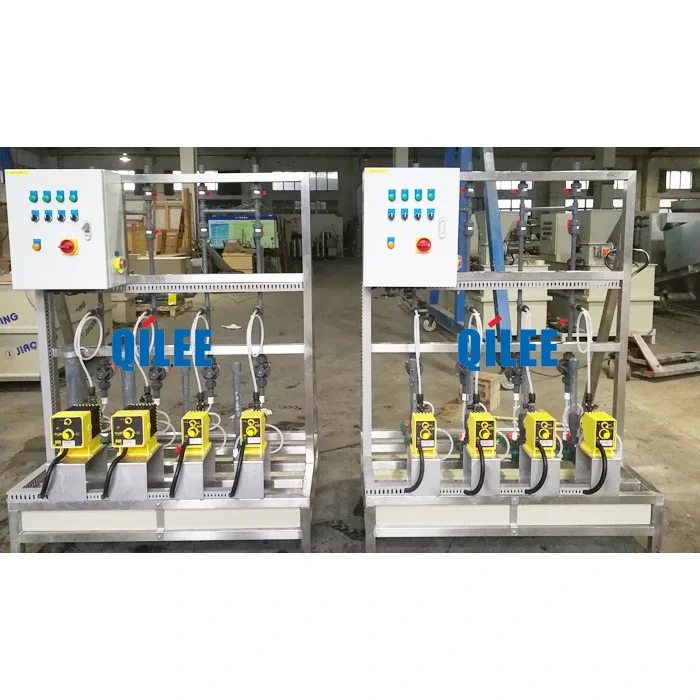
Electrolyte Effluent Treatment Microdosing System, DCS 1
Electrolyte Effluent Treatment Microdosing System, DCS 2
Electrolyte Effluent Treatment Microdosing System, DCS 3
Electrolyte Effluent Treatment Microdosing System, DCS 4
Electrolyte Effluent Treatment Microdosing System, DCS 5
Electrolyte Effluent Treatment Microdosing System, DCS 6
Electrolyte Effluent Treatment Microdosing System, DCS 1
Electrolyte Effluent Treatment Microdosing System, DCS 2
Electrolyte Effluent Treatment Microdosing System, DCS 3
Electrolyte Effluent Treatment Microdosing System, DCS 4
Electrolyte Effluent Treatment Microdosing System, DCS 5
Electrolyte Effluent Treatment Microdosing System, DCS 6

Electrolyte Effluent Treatment Microdosing System, DCS

At dawn in a quiet plant, the Electrolyte Effluent Treatment Microdosing System, DCS, wakes to tame harsh waste with care. With tiny, exact drops it calms and blends the outflow, cutting waste and risk with smart, silent control. The result: clear, safe discharge, smooth runs, and bright peace of mind for your team and town.

5.0
brand name:
QILEE
Shipping:
Support Sea freight
Payments:
L/C,D/A,D/P,T/T,Western Union,MoneyGram,OA
Lead Time:
1-1(sets):30(days),>1(sets):To be negotiated(days)
Place of Origin:
China
design customization

    oops...!

    no product data.

    Go to homepage
    size
    2000*1000*1700
    Suitable for medicament
    12
    Electronic control
    0,1
    Maximum number of instruments
    4
    Pump type
    Diaphragm pump
    Pump qty
    4sets
    Maximum flow rate
    1000LPH
    Processing Type
    desalination
    Power(W)
    2 kW
    Product name
    Micro Dosing System
    Voltage
    220 V, 380 V
    weight (kg)
    100
    productivity
    500L/Hour
    warranty
    1 Year
    place of origin
    Shanghai, China
    core components
    Motor
    machinery test report
    Provided
    video outgoing-inspection
    Provided

    Precise Compact Robust Treatment 

    The QWDS Polymer dosing system delivers automated, DCS-compatible microdosing for coagulation, pH control and sludge dewatering, cutting chemical waste and ensuring stable process control with online monitoring of pH, residual chlorine, DO and suspended solids. Built as a compact modular skid in an industrial stainless‑steel cabinet with imported screw or diaphragm metering pumps, safety valves, back‑pressure valves, filters and cleaning pipelines, it offers robust quality, low maintenance and consistent flocculation with PAC, PAM and other reagents. Packed in standard export cartons for quick 3–20 day delivery, configurable sizes and automatic pump switching let you match dosing to total flow and process concentration for optimized performance and minimal downtime.

    1620183233g0e
    1620183233oxz

    Integrated Automated Effluent Microdosing

    The QWDS Polymer dosing system is an automated electrolyte effluent microdosing skid engineered for coagulation, pH adjustment and sludge dewatering, enabling precise addition of acids, alkalis, PAC, PAM and other reagents while supporting online monitoring of pH, residual chlorine, DO, suspended solids and sludge concentration. With selectable imported screw or diaphragm metering pumps, integrated safety accessories (back‑pressure and safety valves, filters, diaphragm pressure gauges and cleaning pipelines) and automatic pump switching, it delivers stable, safe dosing that reduces chemical use and improves settling and dewatering performance. Offered in modular 2/4/6‑pump configurations with compact skid dimensions, electronic control and DCS connectivity, the unit provides scalable, instrument‑integrated automatic control tailored to diverse wastewater treatment processes.

    Precision Electrolyte Effluent Dosing 

    The QWDS Polymer dosing system delivers precise micro-dosing for electrolyte effluent treatment, enabling automatic addition of PAC, PAM, acids, alkalis, carbon sources, nutrients, reducers and demulsifiers for coagulation, regulation and sludge dewatering. It uses selectable screw or diaphragm metering pumps with standard safety components—back pressure and safety valves, filters and diaphragm pressure gauges—and supports online monitoring of pH, residual chlorine, DO, suspended solids and sludge concentration. Seamless DCS integration allows automatic dosage matching to total flow and process concentration, with pump switching and pipeline cleaning to ensure stable, efficient operation.


    ◎  

    ◎ 

    ◎ 

    16201832330io
    1620183233rje

    Precise Efficient Reliable Treatment

    Born from extensive industrial wastewater research, the Electrolyte Effluent Treatment Microdosing System, DCS combines precision engineering and DCS-grade automation to deliver consistent, low-maintenance performance in demanding environments. The QWDS Polymer dosing system ensures accurate microdosing of flocculants and coagulants with real-time monitoring and adaptive feedback to minimize chemical usage and stabilize effluent quality. Compact modular construction, corrosion-resistant components, programmable dosing profiles, and simplified servicing lower downtime and operating costs while meeting stringent regulatory targets.

    Material introduction

    The QWDS Polymer dosing system is built with corrosion-resistant stainless steel frames and housings combined with chemical-resistant polymers for tanks, piping and seals to withstand acids, alkalis and polymer flocculants. Precision screw or diaphragm pumps use engineered alloys and elastomers for reliable metering, while back-pressure valves, safety valves, filters and diaphragm pressure gauges are specified in durable materials to resist particulate and chemical wear. Wetted parts and control interfaces are selected for broad chemical compatibility and reliable integration with on-site DCS and online monitoring instruments.


    ◎ Corrosion Resistant Skid 

    ◎ Chemical Grade Tanks

    ◎ Wetted Component Materials

    1620183233lpr

    FAQ

    1
    What is the Electrolyte Effluent Treatment Microdosing System, DCS, and how does it work?
    The system is a compact, industrial microdosing package designed to treat electrolyte-bearing wastewater from electrochemical processes. It meters very small, precisely controlled amounts of neutralizing agents, coagulants, precipitants, or complexing agents directly into effluent streams. Control logic (local PLC/DCS interface) uses inputs such as flow, pH, ORP, or conductivity to modulate dosing in real time so the effluent chemistry is adjusted continuously to meet discharge or recycle targets.
    2
    In which usage and application scenarios is this system typically deployed?
    Typical scenarios include metal finishing and electroplating rinse water, battery and electrode manufacturing effluent, anodizing and surface treatment baths, electrochemical synthesis and pilot plants, and lab-to-production scale-up where precise reagent addition prevents overdosing. It’s also used where small reagent volumes are needed to remove residual metal ions, adjust pH, precipitate contaminants, or condition wastewater for downstream treatment or reuse.
    3
    How does the DCS integration and control work in normal operation?
    The microdosing unit is designed for seamless integration with plant DCS/PLC systems. It accepts analog (4–20 mA), digital (Modbus, Ethernet/IP), or discrete signals for start/stop, flow rate, and feedback sensors (pH, ORP, conductivity). Control strategies include feedforward (flow-proportional) dosing and closed-loop feedback (sensor-guided) dosing. Alarms, status, and historical dosing logs are available to the DCS for operator monitoring and regulatory reporting.
    4
    What level of dosing precision and adaptability can I expect, and how does the system handle variable effluent conditions?
    The system provides high-precision microdosing suitable for ppm-level control. It combines precision metering pumps or syringe dispensers with real-time sensor feedback to adapt dosing as flow rates and effluent composition change. Typical deployment uses flow-proportional base dosing with pH/ORP fine-tuning to avoid under- or over-treatment. For rapid or large excursions, the DCS can trigger buffered setpoint adjustments or safety interlocks.
    5
    What are the installation, routine maintenance, and consumable requirements?
    Installation typically requires mounting near the treatment point, connections to power, signal wiring to the DCS, chemical supply lines, and effluent sensor inputs. Routine maintenance includes inspection and replacement of metering pump heads/tubing, filter checks, periodic calibration of pH/ORP sensors, and verification of dosing accuracy. Consumables are chemical reagents, tubing, seals, and occasionally pump cartridges. A regular preventative service schedule (monthly to quarterly depending on load) keeps performance reliable.
    6
    What safety, regulatory, and troubleshooting considerations should users be aware of?
    Safety: follow chemical handling rules for reagents (PPE, secondary containment, spill kits) and ensure ventilation for volatile chemistries. Regulatory: configure dosing and monitoring to meet local discharge permits; retain dosing logs for audits. Troubleshooting: common issues include clogged tubing, air in lines, sensor drift, or incorrect DCS setpoints—check pump priming, replace worn tubing, recalibrate sensors, and review control logic. The system supports alarm outputs for low chemical level, pump fault, sensor failure, and high/low dosing rates to prompt corrective action.
    Tell Us More About Your Project !
    If you have any questions about water treatment systems, please feel free to contact QILEE.
      Stable equipment
      Mature technology
      Automated operation
      Simple operation

    Do You Have any Questions? Welcome to Leave Us a Message.

    Related Products
    no data
    Contact Us

    Tel: +86 13370035529

    Business What's App: +86 13636655908

    E-mail: qilee@qileegroup.com

    Add: No. 351 Wenqu Road, Fengxian District, Shanghai

    Your trusted Water Treatment System Partner
    no data
    Copyright © 2026 Shanghai QILEE Environmental Protection Equipment Co., Ltd | Sitemap
    Customer service
    detect