
loading
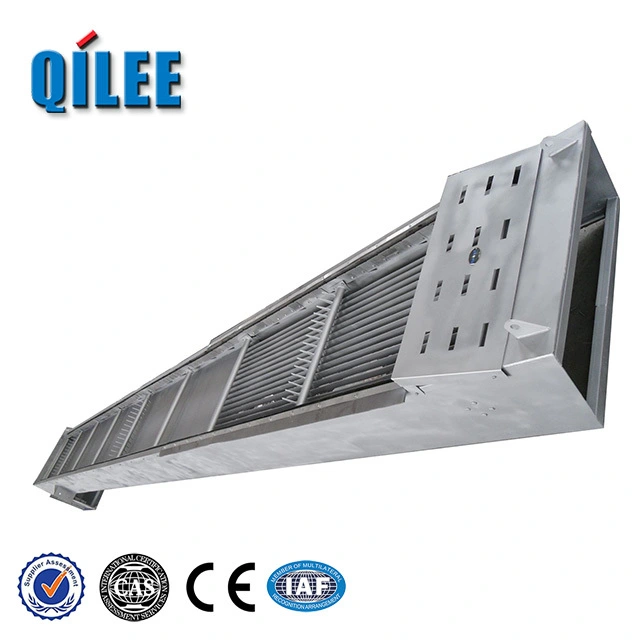
QLHP Manual Rotary Toothed-Rake Bar Screen (Sewage) 1
QLHP Manual Rotary Toothed-Rake Bar Screen (Sewage) 2
QLHP Manual Rotary Toothed-Rake Bar Screen (Sewage) 3
QLHP Manual Rotary Toothed-Rake Bar Screen (Sewage) 4
QLHP Manual Rotary Toothed-Rake Bar Screen (Sewage) 5
QLHP Manual Rotary Toothed-Rake Bar Screen (Sewage) 1
QLHP Manual Rotary Toothed-Rake Bar Screen (Sewage) 2
QLHP Manual Rotary Toothed-Rake Bar Screen (Sewage) 3
QLHP Manual Rotary Toothed-Rake Bar Screen (Sewage) 4
QLHP Manual Rotary Toothed-Rake Bar Screen (Sewage) 5

QLHP Manual Rotary Toothed-Rake Bar Screen (Sewage)

The QLHP Manual Rotary Toothed-Rake Bar Screen is a compact, mechanical sewer screen that uses a rotating, toothed rake to pull out rags, leaves and coarse solids from wastewater. Its manual drive and robust toothed-rake design give reliable, low-energy operation with high debris-capture and minimal maintenance—great for remote or power-limited sites. Made from corrosion-resistant materials with adjustable bar spacing and easy access for cleaning, it protects downstream equipment, cuts downtime, and offers a simple, cost-effective screening solution.

5.0
brand name:
QILEE
Shipping:
Support Sea freight
Payments:
L/C,D/A,D/P,T/T,Western Union,MoneyGram,OA
Lead Time:
1-1(sets):30(days),>1(sets):To be negotiated(days)
Place of Origin:
China
design customization

    oops...!

    no product data.

    Go to homepage
    Slag discharge, high(mm)
    400~1200(The order is not specified by 800)
    Setting angle a( ° )
    60°,65°,70°,75°,80°(The order is not specified by 75°)
    Rake the tooth movement speed(mm)
    4m/min
    Article gate interval(mm)
    10,15,20,30,40,50,60,80,100
    Device width(mm)
    700
    Depth of channel(mm)
    800
    Processing Type
    desalination
    Power(W)
    1 kW
    Product name
    Rotary Bar Screen
    Voltage
    220 V, 380 V
    weight (kg)
    100
    productivity
    500L/Hour
    warranty
    1 Year
    place of origin
    Shanghai, China

    Compact Robust Low-Maintenance Screening 

    The QLHP Manual Rotary Toothed-Rake Bar Screen reliably intercepts and removes debris in sewage and water treatment plants, protecting downstream equipment with high cleaning efficiency and overload protection for continuous operation. Its compact, durable toothed-rake shape with middle-mounted bars, multi-toothed harrows, and variable-speed drive delivers thorough, clog-free screening, easy maintenance, and optional automated control. Packaged in standard export cartons, the unit is available in customizable channel widths, bar spacings and gate heights, with typical delivery in 3–20 days to match site requirements.

    1620183233g0e
    1620183233oxz

    Toothed Rotary Manual Screen

    The QLHP Manual Rotary Toothed-Rake Bar Screen combines a robust, compact frame with middle-mounted bars, multi-toothed rotary rakes and a traction chain to provide high-efficiency debris interception and continuous automatic cleaning. Equipped with a variable-speed drive, overload protection, selectable channel widths, depths and bar spacing, it minimizes downstream blockages, reduces maintenance downtime and delivers customizable value for sewage plants, pumping stations and waterworks. Its gated inlet, toothed harrow movement and adjustable discharge height enable reliable capture and automatic flip-and-dump slag removal, simplifying maintenance and ensuring long-term, dependable operation.

    Manual Rotary Sewage Screen 

    The QLHP Manual Rotary Toothed-Rake Bar Screen is a compact, reliable screening unit for sewage plants, pumping stations and waterworks that captures debris to protect downstream equipment and maintain continuous operation. Mid-mounted bars and a chain-driven, variable-speed rotary rake with multi-toothed harrows and overload protection lift and flip solids into a discharge conveyor or hopper while allowing water to pass through the bar gaps. Available in multiple QLHP models with selectable bar spacing, setting angles and motor powers (typically 0.75–3 kW), the unit supports optional automated control, requires customers to specify material and key parameters when ordering, and ships in approximately 3–20 days.


    ◎ product nicety 1 

    ◎ product nicety 2

    ◎ product nicety 3

    16201832330io
    1620183233rje

    Efficient Durable Reliable Low-Maintenance

    Built by QLHP with durable materials and precision machining, the Manual Rotary Toothed-Rake Bar Screen delivers long service life and low maintenance for demanding sewage applications. The Bar Screen uses a self-cleaning toothed-rake mechanism and manual rotary drive to efficiently remove coarse solids, reduce downstream clogging, and simplify operation in compact installations. Key features include robust stainless-steel bars and frame, adjustable rake spacing, easy-to-service bearings and seals, and energy-saving manual operation, offering reliable performance, reduced downtime, and cost-effective maintenance.

    Material introduction

    The QLHP Bar Screen’s structural components are typically fabricated from corrosion-resistant stainless steel or epoxy-coated carbon steel to withstand continuous sewage exposure and minimize maintenance. Wear parts like the rotary toothed rakes, chains and sprockets are made from high-strength, heat-treated alloy or high-manganese steel to deliver abrasion resistance and reliable overload protection. Customers can specify main-body materials and surface treatments—such as SS304/316, galvanization or special coatings—so the unit matches site conditions and extends service life.


    ◎ Marine-grade stainless steel 

    ◎ material introduction 2

    ◎ Coated carbon steel

    1620183233lpr

    FAQ

    1
    What is the primary purpose of the QLHP Manual Rotary Toothed-Rake Bar Screen in sewage applications?
    The QLHP manual rotary toothed-rake bar screen is designed to remove coarse solids and debris (rags, sticks, plastics, leaves, and other large particulates) from wastewater flows. By intercepting and extracting these materials, it protects downstream equipment — pumps, grinders, and biological treatment units — reducing blockages, wear, and maintenance needs.
    2
    In which application scenarios is a manual rotary toothed-rake bar screen most appropriate?
    This manual unit is ideal for small-to-medium sewage treatment plants, rural or remote pump stations with limited power, emergency or bypass channels, combined sewer overflow pre-screening, and industrial drains where coarse debris is expected but automated systems are not justified. It works well where flow rates are moderate and manual cleaning is operationally acceptable.
    3
    How should I choose the correct bar spacing and installation location for effective screening?
    Select bar spacing based on the size of debris you need to retain (smaller spacing retains finer solids but increases cleaning frequency). Install the screen at the channel or influent to the unit where debris is most concentrated and where it can be safely removed. Consider orientation and slope to ensure gravity flow into the screen and allow easy access for manual operation and removal of collected material.
    4
    How do I operate the manual rotary toothed-rake screen safely and effectively?
    Operate the hand crank or manual drive in smooth, steady motions so the toothed rake traverses the bars and lifts accumulated debris to the discharge point. Stop operation if excessive resistance or jamming occurs and inspect before resuming. Always follow lockout/tagout procedures for upstream equipment when performing manual cleaning or maintenance, and use appropriate PPE (gloves, eye protection, and protective clothing).
    5
    What routine maintenance is required to ensure reliable performance?
    Regularly inspect the rake teeth, bearings, shafts, and drive components for wear, corrosion, and alignment. Lubricate moving parts per the manufacturer’s guidelines, clear collected material from the discharge chute, and check frame anchors and seals. Establish an inspection frequency based on debris load and operating hours — more frequent checks during high-flow/storm seasons.
    6
    What should I do if the screen becomes blocked or the rake cannot clear heavy or fibrous debris?
    If the rake jams or cannot remove accumulated material, stop manual operation and remove the obstruction safely. For persistent fibrous or large blockages, consider upstream trash removal measures, adjust bar spacing, or install a finer screening stage or comminutor downstream as appropriate. If blockages are frequent, review flow conditions and debris sources and consult with the supplier about retrofit options or a powered/automatic screening solution.
    Tell Us More About Your Project !
    If you have any questions about water treatment systems, please feel free to contact QILEE.
      Stable equipment
      Mature technology
      Automated operation
      Simple operation

    Do You Have any Questions? Welcome to Leave Us a Message.

    Related Products
    no data
    Contact Us

    Tel: +86 13370035529

    Business What's App: +86 13636655908

    E-mail: qilee@qileegroup.com

    Add: No. 351 Wenqu Road, Fengxian District, Shanghai

    Your trusted Water Treatment System Partner
    no data
    Copyright © 2026 Shanghai QILEE Environmental Protection Equipment Co., Ltd | Sitemap
    Customer service
    detect