
loading
Water Separation Oil Skimmer Belt - Directional Flocking 1
Water Separation Oil Skimmer Belt - Directional Flocking 2
Water Separation Oil Skimmer Belt - Directional Flocking 3
Water Separation Oil Skimmer Belt - Directional Flocking 4
Water Separation Oil Skimmer Belt - Directional Flocking 5
Water Separation Oil Skimmer Belt - Directional Flocking 6
Water Separation Oil Skimmer Belt - Directional Flocking 1
Water Separation Oil Skimmer Belt - Directional Flocking 2
Water Separation Oil Skimmer Belt - Directional Flocking 3
Water Separation Oil Skimmer Belt - Directional Flocking 4
Water Separation Oil Skimmer Belt - Directional Flocking 5
Water Separation Oil Skimmer Belt - Directional Flocking 6

Water Separation Oil Skimmer Belt - Directional Flocking

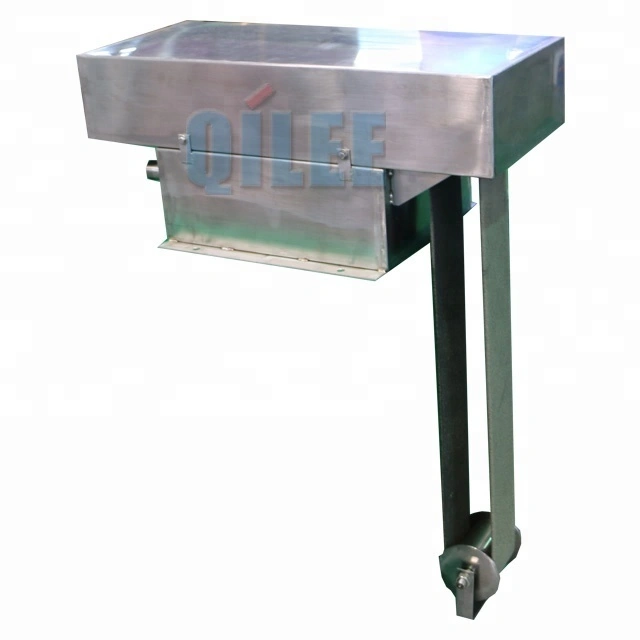
At dawn, the Water Separation Oil Skimmer Belt with directional flocking slides over the still pond, pulling oil like a calm tide. Tiny lined fibers act as one-way paths, steering each slick straight into the belt and away from the water. Strong and easy to clean, it tames the mess fast and leaves shore and ship neat.

5.0
shipping:
Ocean freight
brand name:
QILEE
model number:
QL-OS-20
Payments:
L/C,D/A,D/P,T/T,Western Union,MoneyGram,OA
Place of Origin:
China
design customization

    oops...!

    no product data.

    Go to homepage
    Powder(w)
    55
    Belt width(mm)
    200
    Recycling Capacity(L/h)
    90-270
    External Dimensions(mm)
    450*608*380
    Materials
    SUS304
    Application
    Oil removal reservoir with floating oil
    Product name
    Oil skimmer belt
    place of origin
    Shanghai, China

    Efficient Recovery, Durable Design 

    Directional-flocking Oil Skimmer belt offers fast, high-efficiency oil recovery—measured at roughly four times the yield of equivalent steel belts—and a secondary separation stage that boosts recycled oil purity for immediate reuse. Made with anti-abrasion, anti-corrosion fibres and SUS304 components, its long-short fibre construction creates deep oil-holding capillaries so scrapers avoid direct wear, delivering extended service life and low maintenance. Available in compact, modular belt widths and ready-to-install packaged units for reservoirs, cooling systems, flotation pools and machine-tool sumps, this belt-style solution reduces disposal costs and simplifies on-site installation.

    1620183233g0e
    1620183233oxz

    Directional Flocking Skimmer Belt

    The directional flocking Water Separation Oil Skimmer belt uses long and short fibers with abundant inter-fiber space to store and transport oil, delivering a measured recycling capacity roughly four times that of a same-length steel belt while its anti-abrasion, anti-corrosion construction extends service life. Functionally it provides continuous, low-maintenance oil recovery for oil removal reservoirs, cooling and flotation pools and machine tool cutting-fluid tanks, and its design keeps the scraper from directly contacting the belt to minimize wear. Value and performance are further enhanced by a floating oil-slick secondary separation stage and stainless components (SUS304), yielding higher-purity reclaimed oil, lower disposal costs and broad industrial applicability.

    Directional Flocking Oil Separation 

    The Water Separation Oil Skimmer Belt uses a directional flocking fibre belt made of long and short fibres that create ample storage space for oil, delivering about four times the recycling capacity of a same-length steel belt. Its anti-abrasion, anti-corrosion construction and indirect scraping design extend service life while a floating oil slick processor provides secondary separation to greatly improve recovered oil purity. Suitable for oil removal and recycling in reservoirs, cooling and flotation tanks, machine cleaning and metalworking fluid pools, this Oil Skimmer is offered in multiple widths and capacities for industrial applications.


    ◎  

    ◎ 

    ◎ 

    16201832330io
    1620183233rje

    Directional Flocking Efficient Separation

    Built by a precision-engineering brand focused on sustainable fluid management, the Water Separation Oil Skimmer Belt with directional flocking is crafted from a multi-layer composite substrate and micro-directed fibers that optimize oil capture while resisting wear. Directional flocking creates one-way capillary channels that selectively attract and transport oil films while shedding water, producing fast separation rates, high recovery efficiency, and minimal carryover. As an Oil Skimmer component, it features a hydrophobic flocked surface, corrosion-resistant backing and modular belt design for easy cleaning, reduced downtime, improved recovered-oil purity, energy savings, and longer equipment life.

    Material introduction

    The Oil Skimmer's directional flocking fibre belt is made from interwoven long and short synthetic fibres that create abundant inter-fibre spaces for oil storage, delivering about four times the recycling capacity of an equal-length steel belt. The fibre material is anti-abrasion and anti-corrosion, and the belt’s design keeps the scraper from directly contacting the fibres so wear is negligible and service life is extended. Structural and moving parts are typically fabricated from SUS304 stainless steel to provide strength and corrosion resistance in industrial water separation environments.


    ◎ Standard Directional Flocking 

    ◎ High-Capacity Directional Flocking

    ◎ Chemical-Grade Directional Flocking

    1620183233lpr

    FAQ

    1
    What is a Water Separation Oil Skimmer Belt with directional flocking and how does it work?
    It’s a conveyor-style skimmer belt with a surface covered in short, aligned synthetic fibers (flocking) specifically oriented to pick up and transport oil while shedding water. The directional fibers increase surface area contact with oil, help coalesce thin sheens, and channel collected oil in the preferred transport direction so less water is carried over to the discharge point.
    2
    In which application scenarios is a directionally flocked skimmer belt most useful?
    Typical uses include industrial wastewater treatment, metalworking coolant recovery, petrochemical and refinery oil/water separation, stormwater or runoff oil recovery, bilge and marina cleanup, separator polishers and lagoons, and any site where free-phase and light hydrocarbon sheens must be skimmed from a water surface.
    3
    How do I choose the right belt for my process (material, flock orientation, and flock density)?
    Select belt base material (PU, PVC, neoprene, etc.) for chemical and temperature compatibility with your fluids. Choose directional flocking with fibers oriented from the water side toward the discharge to ensure oil transport. Flock density and fiber length affect pickup vs. drainage — higher density/longer fibers for thin sheens, lower density for thicker oils. Always confirm viscosity range and chemical resistance with the manufacturer for best match.
    4
    What are the key operating parameters and installation tips?
    Install the belt so the flock direction points toward the oil discharge head. Maintain proper belt tension and alignment to avoid edge wear. Operate at speeds that allow oil pickup and drainage — slower speeds for thin films, moderate speeds for heavier oils. Use appropriate scrapers or gravity drains at the discharge point, and ensure skimmer geometry keeps the belt in consistent contact with the oil layer.
    5
    What maintenance is required and how long do these belts typically last?
    Regularly inspect for wear, contamination, or broken flock fibers and clean with compatible solvents or high-pressure rinsing as recommended. Remove entrained solids that can abrade fibers. Lifespan depends on operating conditions (chemicals, abrasion, temperature) but proper selection and routine maintenance can provide months to years of service. Replace when pickup efficiency noticeably declines or physical damage is evident.
    6
    What performance can I expect and what are the limitations?
    Directional flocked belts excel at removing free-phase oils and thin sheens with minimal water carryover, improving oil concentration for recovery or disposal. They are less effective on stable emulsions (requires coalescers or chemical treatment) and on very heavy, highly viscous tars unless a suitable flock and slower speed are used. For reliable performance figures (separation efficiency, throughput, oil viscosity range), consult the supplier with your fluid analysis and flow conditions.
    Tell Us More About Your Project !
    If you have any questions about water treatment systems, please feel free to contact QILEE.
      Stable equipment
      Mature technology
      Automated operation
      Simple operation

    Do You Have any Questions? Welcome to Leave Us a Message.

    Related Products
    no data
    Contact Us

    Tel: +86 13370035529

    Business What's App: +86 13636655908

    E-mail: qilee@qileegroup.com

    Add: No. 351 Wenqu Road, Fengxian District, Shanghai

    Your trusted Water Treatment System Partner
    no data
    Copyright © 2026 Shanghai QILEE Environmental Protection Equipment Co., Ltd | Sitemap
    Customer service
    detect