
loading
Automatic Electronic Chemical Dosing System for Wastewater 1
Automatic Electronic Chemical Dosing System for Wastewater 2
Automatic Electronic Chemical Dosing System for Wastewater 3
Automatic Electronic Chemical Dosing System for Wastewater 4
Automatic Electronic Chemical Dosing System for Wastewater 5
Automatic Electronic Chemical Dosing System for Wastewater 6
Automatic Electronic Chemical Dosing System for Wastewater 1
Automatic Electronic Chemical Dosing System for Wastewater 2
Automatic Electronic Chemical Dosing System for Wastewater 3
Automatic Electronic Chemical Dosing System for Wastewater 4
Automatic Electronic Chemical Dosing System for Wastewater 5
Automatic Electronic Chemical Dosing System for Wastewater 6

Automatic Electronic Chemical Dosing System for Wastewater

At dawn the plant wakes to a soft hum as the Automatic Electronic Chemical Dosing System scans the water like a careful guardian, ready to act. Tiny pumps and smart sensors dose just the right amount of chemicals, keeping the flow clear, safe, and cost-effective without wasting a drop. Operators relax while real-time alerts and easy controls deliver reliable, 24/7 water care that protects people and the planet.

5.0
brand name:
QILEE
Shipping:
Support Sea freight
Payments:
L/C,D/A,D/P,T/T,Western Union,MoneyGram,OA
Place of Origin:
China
design customization

    oops...!

    no product data.

    Go to homepage
    Suitable for medicament
    12
    Electronic control
    0,1
    Maximum number of instruments
    4
    Pump type
    Diaphragm pump
    Pump qty
    4sets
    Maximum flow rate
    1000LPH
    Size
    2000*1000*1700
    Local Service Location
    Malaysia
    After Warranty Service
    Online support
    After-sales Service Provided
    Online support
    Power
    Non-standard
    Product name
    Electronic Dosing System
    Warranty of core components
    1 Year
    Marketing Type
    Ordinary Product
    Showroom Location
    Malaysia
    Applicable Industries
    Construction works 
    Condition
    New
    Weight
    Non-standard
    productivity
    500L/Hour
    warranty
    1 Year
    place of origin
    Shanghai, China
    core components
    Motor
    machinery test report
    Provided
    video outgoing-inspection
    Provided

    Compact Corrosion-Resistant Precise Reliable 

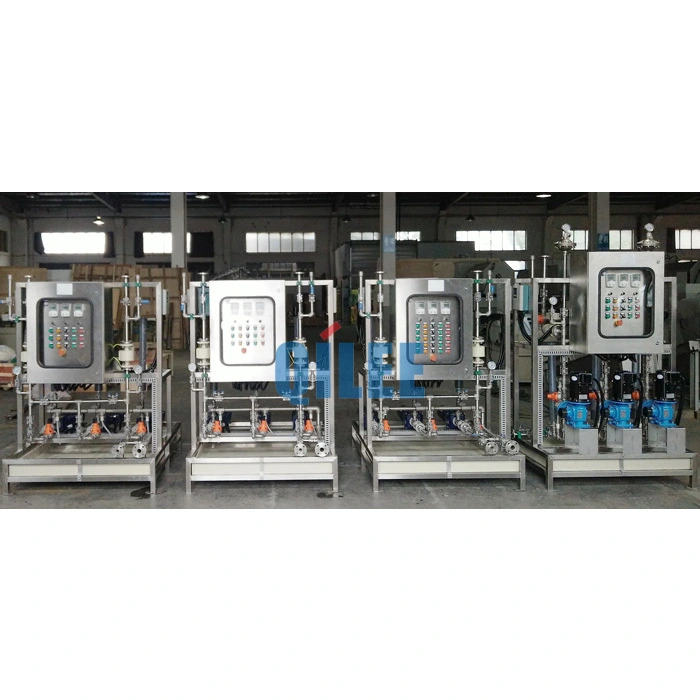
    The QWDS Polymer dosing system delivers precise, automated chemical dosing for wastewater treatment, ensuring consistent coagulation, optimized sludge dewatering and reduced chemical use through online monitoring of pH, residual chlorine, DO and suspended solids and seamless DCS integration. Built as a compact, modular skid with selectable screw or diaphragm metering pumps (1,000–2,000 LPH modules, 2–6 pump sets), imported-brand pumps, stainless piping, back-pressure and safety valves, filters, diaphragm gauges and cleaning lines, it provides rugged quality, safe operation and easy on-site installation. Packaged in standard export cartons with configurable sizes and 3–20 day lead times, the system’s automated pump switching, dosing algorithms and compatibility with PAC, PAM, acids/alkalis and nutrients cut labor, lower operating costs and simplify maintenance for plant operators.

    1620183233g0e
    1620183233oxz

    Here are five 4-word subtitle options, one for each perspective:

    The QWDS Polymer dosing system is an automatic electronic chemical dosing solution for wastewater that delivers core attributes of precise, automated addition of acids, alkalis, PAC, PAM, carbon sources, nutrients and demulsifiers for regulation, coagulation and sludge dewatering while supporting online monitoring of pH, residual chlorine, DO, suspended solids and sludge concentration. Extended and value attributes include selectable imported screw or diaphragm metering pumps with automatic pump switching, standard safety and maintenance items (back pressure and safety valves, filters, diaphragm pressure gauges and cleaning pipelines), and DCS linkage to match dosage to total flow and process concentration, reducing chemical waste and labor. Functionally and structurally the system is modular and scalable—available in 2–6 pump set models with up to 2000 LPH per screw pump, configurable instrument counts and compact cabinet sizes—enabling reliable, continuous metering tailored to site needs.

    Automated Electronic Wastewater Dosing 

    The QWDS Polymer dosing system is an automatic electronic chemical dosing solution for wastewater treatment, designed for regulation, coagulation and sludge dewatering with modular pump configurations. It provides automatic metering of acids, alkalis, PAC, PAM and other additives with options for imported screw or diaphragm metering pumps, built-in safety components such as back pressure and safety valves, filters and diaphragm pressure gauges, and online monitoring of pH, residual chlorine, DO, suspended solids and sludge concentration. With automatic pump switching and DCS linkage to match dosage to total water volume and process concentration, multiple models offer different flow rates and pump counts for stable, efficient industrial wastewater dosing.


    ◎  

    ◎ 

    ◎ 

    16201832330io
    1620183233rje

    Precise, Automated, Reliable, Economical

    Born from decades of wastewater treatment expertise and rigorous R&D, the QWDS Polymer dosing system combines industrial-grade components with intelligent control algorithms to deliver reliable automatic electronic chemical dosing for municipal and industrial effluents. Its functions include precise metering, PLC-based timing, real-time flow-proportional feedback, remote monitoring, and adaptive dosing that optimize polymer consumption and improve flocculation and sludge dewatering performance. Key features and advantages include a modular scalable design, corrosion-resistant pumps and piping, an intuitive HMI with alarm diagnostics, low maintenance and easy chemical replacement, regulatory compliance support, and measurable reductions in operational costs and environmental footprint.

    Material introduction

    The QWDS Polymer dosing system uses corrosion-resistant wetted parts such as PVDF/PVC housings, PTFE diaphragms and EPDM/FFKM seals along with 304/316 stainless steel frames to handle acids, alkalis, PAC, PAM, carbon suspensions and lime emulsions. Pump modules employ imported screw or diaphragm pumps with chemical-resistant HDPE/PVC pipelines, stainless back-pressure and safety valves, filters and diaphragm pressure gauges as standard to ensure safety and stability. These material choices deliver durable, low-maintenance performance and ensure compatibility with online sensors and DCS linkage for automatic dosing in coagulation, sludge dewatering and other wastewater processes.


    ◎ Corrosion Resistant Metering 

    ◎ Precision Flow Control

    ◎ Integrated Sensor Compatibility

    1620183233lpr

    FAQ

    1
    What is an Automatic Electronic Chemical Dosing System for wastewater and how is it used?
    An Automatic Electronic Chemical Dosing System is a pump-and-control solution that meters precise amounts of treatment chemicals into wastewater streams. It typically includes metering pumps, chemical storage, flow or level sensors, a controller (PLC or microcontroller), and safety devices. It is used to automate additions such as coagulants, flocculants, pH adjusters, oxidizers, biocides, and antiscalants to achieve consistent treatment results, reduce chemical waste, and maintain required water quality targets without manual, continual adjustments.
    2
    In which wastewater treatment scenarios is this system typically applied?
    These systems are widely used across municipal and industrial wastewater contexts: primary and secondary municipal plants (coagulation, pH control, sludge conditioning), industrial effluents (chemical, textile, pharmaceutical, food & beverage, pulp & paper), cooling towers and boiler feedwater (antiscalant and biocide dosing), sewage lift stations (odor control and corrosion inhibition), and stormwater or tertiary filtration processes (disinfection and nutrient removal). They are useful wherever precise, repeatable chemical addition is needed to meet discharge limits or process requirements.
    3
    How does the system determine how much chemical to add and how is it controlled?
    Control methods include time-based metering, manual setpoints, flow-proportional dosing (using flow meters to dose per unit volume), level-triggered dosing (for tanks or sumps), and feedback control from online analyzers (pH, ORP, turbidity, residual chlorine, ammonia). Modern controllers allow schedules, dose curves, alarm thresholds, and remote monitoring via SCADA, Modbus, or wireless telemetry. The choice depends on process variability and regulatory targets—flow-proportional or analyzer feedback is preferred for variable loads.
    4
    Which chemicals are compatible and what safety or material considerations should be observed?
    Common chemicals: coagulants (aluminum sulfate, ferric chloride), polymers/flocculants, acids/bases (HCl, H2SO4, NaOH) for pH control, oxidizers/disinfectants (sodium hypochlorite, chlorine dioxide), antiscalants, and biocides. Materials of construction (pump wetted parts, tubing, valves, storage) must be compatible with each chemical (e.g., PVDF, PTFE, Hastelloy, SS316L or polyethylene tanks as appropriate). Safety measures include secondary containment for storage, spill/vent management, chemical feed backflow prevention, gas detection (for chlorine), PPE for operators, and adherence to MSDS handling and local regulations.
    5
    What are typical maintenance tasks and common troubleshooting steps?
    Routine maintenance: inspect and clean suction strainers and injection points, check pump tubing/diaphragms/valves for wear, calibrate flow meters and sensors, verify controller settings and alarms, replace chemical filters, and ensure containment and ventilation are intact. Troubleshooting: if underdosing check suction lift/air leaks, clogged lines, pump stroke settings, and chemical concentration; if overdosing verify controller outputs, stuck valves, or faulty sensors; address alarms for low chemical levels, pump faults, or analyzer drift. Keep a maintenance log and spare parts kit for quick repairs.
    6
    How does using an automatic dosing system benefit operations and help meet environmental compliance?
    Benefits include improved dosing accuracy and repeatability, reduced chemical consumption and costs, lower operator exposure and labor, faster response to process changes, and better documentation for regulatory reporting (alarms, dosing history, and remote logs). By enabling precise control (flow-proportional or analyzer feedback dosing), these systems help maintain consistent effluent quality to meet discharge limits, reduce the risk of permit violations, and optimize downstream treatment performance (e.g., improved solids removal or reduced chlorine residuals).
    Tell Us More About Your Project !
    If you have any questions about water treatment systems, please feel free to contact QILEE.
      Stable equipment
      Mature technology
      Automated operation
      Simple operation

    Do You Have any Questions? Welcome to Leave Us a Message.

    Related Products
    no data
    Contact Us

    Tel: +86 13370035529

    Business What's App: +86 13636655908

    E-mail: qilee@qileegroup.com

    Add: No. 351 Wenqu Road, Fengxian District, Shanghai

    Your trusted Water Treatment System Partner
    no data
    Copyright © 2026 Shanghai QILEE Environmental Protection Equipment Co., Ltd | Sitemap
    Customer service
    detect