
loading
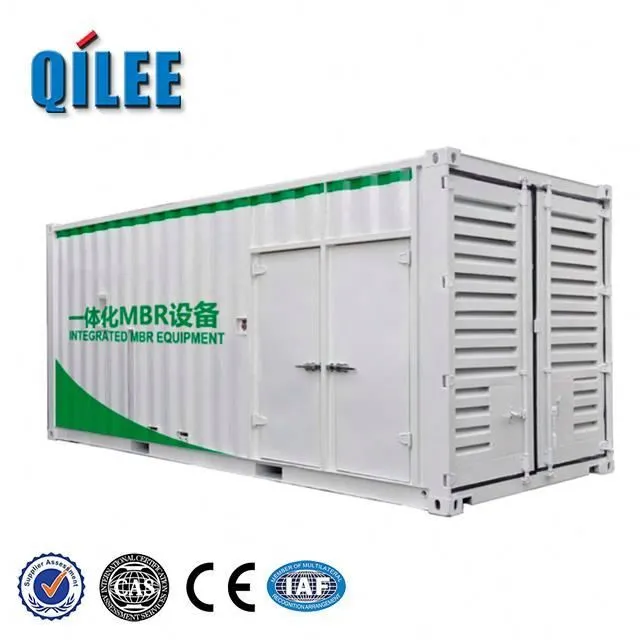
MBR Reactor Module Sewage Treatment Plant 1
MBR Reactor Module Sewage Treatment Plant 2
MBR Reactor Module Sewage Treatment Plant 3
MBR Reactor Module Sewage Treatment Plant 4
MBR Reactor Module Sewage Treatment Plant 5
MBR Reactor Module Sewage Treatment Plant 6
MBR Reactor Module Sewage Treatment Plant 1
MBR Reactor Module Sewage Treatment Plant 2
MBR Reactor Module Sewage Treatment Plant 3
MBR Reactor Module Sewage Treatment Plant 4
MBR Reactor Module Sewage Treatment Plant 5
MBR Reactor Module Sewage Treatment Plant 6

MBR Reactor Module Sewage Treatment Plant

The MBR Reactor Module Sewage Treatment Plant combines biological treatment with fine membrane filtration to produce clear, high-quality effluent in a compact, modular unit. It is easy to scale, runs with automated controls, and generates low sludge for simpler maintenance. Selling points: reusable-grade effluent that meets strict standards, small footprint and fast installation, energy- and cost-efficient operation, long membrane life, and quiet, low-odor performance.

5.0
Shipping:
Support Sea freight
Payments:
L/C,D/A,D/P,T/T,Western Union,MoneyGram,OA
Lead Time:
1-1(units):50(days),>1(units):To be negotiated(days)
Place of Origin:
China
design customization

    oops...!

    no product data.

    Go to homepage
    Occupy Area(m2)
    6.0
    Total Weight(tons)
    5.5
    Disinfection Tank(m3)
    0.6
    Secondary Clarifier Surface Load(m3/m2h)
    1.2
    Contact Oxidation Tank(m3)
    5
    Primary Clarifier
    1.8
    Equipment Nm
    1
    Disposal Capacity(m3/h)
    1
    Processing Type
    Reverse Osmosis, Softening, desalination, Filtration
    Power(W)
    3 kW
    Product name
    Mbr Sewage Treatment Plant
    Voltage
    220 V, 380 V
    weight (kg)
    900
    productivity
    200L/Hour
    warranty
    1 Year

    Compact Modular Energy-Efficient Durable 

    Mbr Package Wastewater Treatment delivers high-quality permeate suitable for reuse and discharge by removing BOD, SS and pathogens with high-flux, low-fouling PES flat-sheet membranes that lower operating costs. The compact modular shape and integrated reactor/aeration element style minimize footprint and simplify installation and maintenance, while durable construction and standard export carton packaging ensure secure delivery and long service life. Customers gain stable, regulatory-compliant performance, easy operation with reduced manpower, and lower energy use thanks to the system’s simple design and premium membrane quality.

    1620183233g0e
    1620183233oxz

    Compact Modular Membrane Purification

    The Mbr Package Wastewater Treatment reactor module combines membrane biological reactor technology with submerged flat-sheet polyethersulfone (PES) membranes to deliver consistent, reuse-grade effluent by retaining activated sludge at high MLSS and filtering out BOD, SS and pathogens. Core and extended attributes—compact integrated element-and-aeration blocks, high-flux low-fouling membranes, and simple process control—translate into a smaller footprint, reduced energy and manpower requirements, and flexible adaptation to municipal, commercial, hospital and industrial waste streams. Structural features such as stacked flat-sheet membrane elements, air-scour cleaning, permeate headers and modular construction enable easy maintenance, scalability and seamless integration with pretreatment, chemical dosing and sludge dewatering systems.

    Efficient Modular Wastewater Treatment 

    The MBR Reactor Module is a compact Membrane Biological Reactor that delivers highly efficient Mbr Package Wastewater Treatment by combining submerged flat-sheet PES membranes with activated sludge to remove BOD, SS, and pathogens for reuse or safe discharge. Its polyethersulfone flat-sheet membranes provide high flux, low fouling and consistent effluent quality even at elevated MLSS, reducing footprint and simplifying retrofits. The integrated element and aeration blocks make the system easy to operate and maintain, lowering manpower and operating costs for municipal, commercial and industrial wastewater applications.


    ◎ Compact Filtration Solution 

    ◎ High Quality Permeate

    ◎ Proven Versatile Performance

    16201832330io
    1620183233rje

    Efficient Compact Reliable Treatment

    Crafted by a specialist engineering brand with decades of wastewater experience, the MBR Reactor Module Sewage Treatment Plant offers modular, skid-mounted Mbr Package Wastewater Treatment that accelerates installation while ensuring consistent build quality and regulatory compliance. It combines advanced membrane bioreactor technology, automated PLC controls, and optimized aeration to deliver high-efficiency biological treatment, ultrafiltration-grade effluent, low sludge production, and reduced energy consumption. Key advantages include scalable modules, compact footprint, corrosion-resistant materials, remote monitoring, easy maintenance and rapid commissioning—making it ideal for municipal, industrial and decentralized applications.

    Material introduction

    The Reactor Module for Mbr Package Wastewater Treatment uses hydrophilic polyethersulfone (PES) flat-sheet membranes that deliver high flux, even pore distribution and a low contact angle to minimize fouling. The element block stacks these flat sheets with spacers and routes permeate through sealed tubes to a permeate header while an aeration block provides upward air cleaning for surface scouring and stable operation at high MLSS. These material choices and module design yield durable, easy-to-maintain performance with a compact footprint and consistently high-quality effluent suitable for reuse.


    ◎ material introduction 1 

    ◎ Polyethersulfone Flat Membrane

    ◎ Corrosion Resistant Module

    1620183233lpr

    FAQ

    1
    What is an MBR Reactor Module Sewage Treatment Plant and how does it work?
    An MBR (Membrane Bioreactor) Reactor Module Sewage Treatment Plant combines biological treatment (activated sludge or attached growth) with membrane filtration (microfiltration or ultrafiltration). Wastewater is biologically degraded in the reactor and then passed through membrane modules that physically separate solids and bacteria, producing high-quality effluent. The modular design allows multiple membrane units to be added or removed to match flow or treatment needs.
    2
    Where is an MBR Reactor Module best applied?
    MBR systems are suited for scenarios needing compact footprint and high effluent quality: small towns, decentralized or modular municipal plants, hotels/resorts, hospitals, campuses, industrial wastewater with biodegradable organics, water reuse for irrigation or process water, and retrofits where upgrading existing plants is required. They are also used where stringent discharge standards or limited discharge options exist.
    3
    What operational advantages and limitations should I expect in real-world use?
    Advantages: consistently high effluent clarity and low suspended solids, smaller footprint than conventional activated sludge, easier upgrade/expansion due to modularity, reduced sludge production, and enhanced pathogen removal. Limitations: higher energy use (air scouring and pumps), need for routine membrane maintenance and periodic cleaning, sensitivity to certain industrial chemicals or severe temperature swings, and higher capital cost vs basic conventional systems.
    4
    How do I size an MBR Reactor Module for a particular application?
    Sizing depends on peak and average flow, influent characteristics (BOD, TSS, ammonia), target effluent quality, and required redundancy. Designers select biological reactor volume based on required hydraulic and solids retention times (HRT and SRT) and choose membrane area according to permissible flux (typical design flux ranges vary by membrane type and local conditions). For modular systems, select enough modules for average load plus spare capacity for maintenance and peak flows. Engage a vendor or engineer to model loads and provide a tailored configuration.
    5
    What routine maintenance and membrane cleaning are required on-site?
    Routine tasks include monitoring transmembrane pressure (TMP), air scouring systems, permeate flow and quality, and cleaning chemical dosing. Regular daily/weekly inspections, periodic backwashing and relaxation cycles, and scheduled chemical cleanings (CIP) are typical. Preventive actions include controlling influent solids and fats, oils & grease, protecting membranes from harsh chemicals, and replacing membranes at end of life (often multiple years depending on operation). Follow the manufacturer’s recommended cleaning intervals and procedures.
    6
    What common operational problems occur and how can they be resolved?
    Common issues: membrane fouling (treated by optimized air scouring, backwash, and chemical cleaning), high TMP (incremental cleaning or reducing flux), excessive foam or bulking sludge (adjust aeration, return activated sludge control, or add selectors), and variable influent causing shock loads (use equalization or bypass staging). For unusual contaminants or persistent issues, perform influent characterization, consult the membrane supplier for tailored cleaning regimes, and consider pre-treatment (screening, grease traps, chemical dosing) to protect the membranes.
    Tell Us More About Your Project !
    If you have any questions about water treatment systems, please feel free to contact QILEE.
      Stable equipment
      Mature technology
      Automated operation
      Simple operation

    Do You Have any Questions? Welcome to Leave Us a Message.

    Related Products
    no data
    Contact Us

    Tel: +86 13370035529

    Business What's App: +86 13636655908

    E-mail: qilee@qileegroup.com

    Add: No. 351 Wenqu Road, Fengxian District, Shanghai

    Your trusted Water Treatment System Partner
    no data
    Copyright © 2026 Shanghai QILEE Environmental Protection Equipment Co., Ltd | Sitemap
    Customer service
    detect