
loading
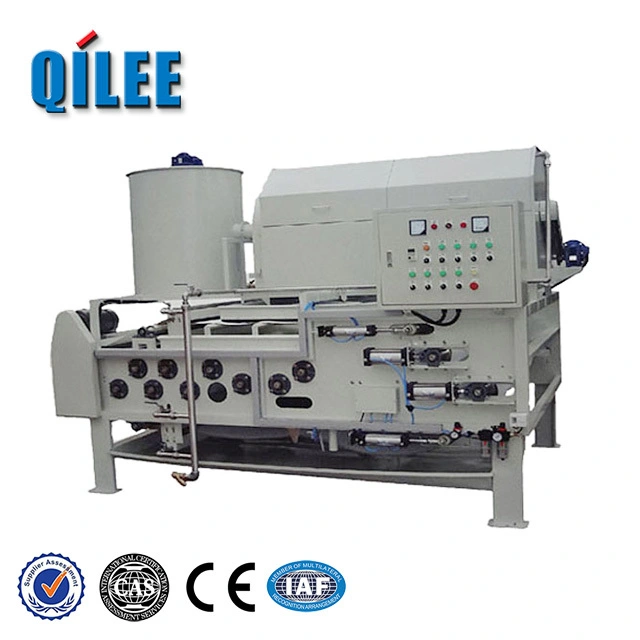
Industrial Wastewater Sludge Dewatering w/ PLC & Motor 1
Industrial Wastewater Sludge Dewatering w/ PLC & Motor 2
Industrial Wastewater Sludge Dewatering w/ PLC & Motor 3
Industrial Wastewater Sludge Dewatering w/ PLC & Motor 4
Industrial Wastewater Sludge Dewatering w/ PLC & Motor 5
Industrial Wastewater Sludge Dewatering w/ PLC & Motor 6
Industrial Wastewater Sludge Dewatering w/ PLC & Motor 1
Industrial Wastewater Sludge Dewatering w/ PLC & Motor 2
Industrial Wastewater Sludge Dewatering w/ PLC & Motor 3
Industrial Wastewater Sludge Dewatering w/ PLC & Motor 4
Industrial Wastewater Sludge Dewatering w/ PLC & Motor 5
Industrial Wastewater Sludge Dewatering w/ PLC & Motor 6

Industrial Wastewater Sludge Dewatering w/ PLC & Motor

Industrial wastewater sludge dewatering with PLC and motor is an automated process that separates water from sludge to produce a drier solid “cake” and clearer effluent. A motor drives the mechanical dewatering unit (belt press, centrifuge, screw press, etc.), while a PLC controls timing, pressures, speeds, and safety interlocks for consistent, efficient operation. This combination reduces disposal volume and costs, improves compliance with discharge limits, and enables remote monitoring and easy adjustments for changing sludge conditions.

Usage scenarios (about 3 sentences):

- Municipal wastewater plants use PLC-driven dewatering to reduce biosolid volume before transport or land application.

- Food, chemical, textile, and pulp & paper industries apply it to treat process sludges and lower disposal or incineration expenses.

- Mining, oil & gas, and construction sites deploy dewatering systems for tailings and site cleanup to improve handling and meet environmental rules.

5.0
brand name:
QILEE
Shipping:
Support Sea freight
Payments:
L/C,D/A,D/P,T/T,Western Union,MoneyGram,OA
Lead Time:
1-1(sets):15(days),>1(sets):To be negotiated(days)
Place of Origin:
China
design customization

    oops...!

    no product data.

    Go to homepage
    Reference Weight(kg)
    1420~3150
    Powder Consumption(kw)
    1100~2800
    Water Content's Rate(%)
    75~85
    Inlet Consistency(%)
    s.s.0.4~0.8%
    Dried Sludge(kg/hr)
    84~450
    Treating Capacity(kg/h)
    13.5~49
    Processing Type
    desalination
    Power(W)
    1 kW
    Product name
    Sludge Dewatering Equipment
    Voltage
    220 V, 380 V
    weight (kg)
    1420
    productivity
    13.5~49
    warranty
    1 Year
    place of origin
    Shanghai, China
    core components
    Motor, PLC
    machinery test report
    Provided
    video outgoing-inspection
    Provided

    Here are concise 4-word subtitle options: 

    The QTBH sludge dewatering machine delivers high-efficiency, low-energy separation with PLC-controlled automation and robust motors to produce low‑moisture sludge cakes and reliable, low-noise operation. Built from SUS304 stainless steel with Swiss filter cloth and an air‑chamber cloth‑correction system, its compact footprint and durable construction ensure long service life, stable running and easy maintenance. Shipped in standard export cartons with modular styling and multiple belt-width models, the QTBH sludge dewatering machine offers flexible capacity choices, simple installation and reduced operating costs for industrial and municipal wastewater applications.

    1620183233g0e
    1620183233oxz

    Automated Precision Sludge Dewatering

    Built around a SUS304 stainless-steel frame with Swiss-import filter cloth, air-chamber automatic deviation correction and PLC-driven motor controls, the QTBH sludge dewatering machine ensures structural robustness, stable belt operation and configurable belt widths/drum-thickener options. Functionally it delivers high-efficiency solid–liquid separation with low energy consumption, low noise (≤75 dB(A)), automated safety monitoring and automatic stop, producing low‑moisture cake, flexible operation and reduced maintenance. Suited for industrial, municipal, food and chemical wastewater streams, the model range (QTBH-1000 to QTBH-2000) and compatible ancillaries (pumps, dosing systems) maximize throughput and operational value.

    PLC Motorized Sludge Dewatering 

    The QTBH sludge dewatering machine features a stainless steel frame, Swiss-imported filter cloth, and an air-chamber automatic deviation correction device to ensure durable, stable operation and efficient solids separation. Designed for low energy consumption, high efficiency and quiet running (≤75 dB(A)), it produces low-moisture cake with flexible operation while integrated safety monitors and automatic stops protect the working environment. Available in multiple belt widths and models for industrial, municipal, food and agricultural wastewater, the unit works with standard auxiliaries like sludge pumps, polymer dosing pumps and washing pumps for complete dewatering solutions.


    ◎ Automated PLC Control 

    ◎ Durable Stainless Construction

    ◎ Efficient Sludge Dewatering

    16201832330io
    1620183233rje

    Efficient Reliable Automated Dewatering

    Built by a proven industrial equipment brand with decades of wastewater expertise, the QTBH sludge dewatering machine combines robust PLC control and high-efficiency motors to deliver reliable, low-maintenance operation in municipal and industrial settings. Its automated PLC-driven process, adjustable cake dryness, corrosion-resistant frames, and modular drive components enable consistent solids recovery, reduced disposal costs, and easy integration into existing treatment lines. Compact footprint, user-friendly HMI, energy-saving motor profiles, and straightforward maintenance plans make the QTBH sludge dewatering machine a cost-effective, scalable solution that improves throughput and minimizes environmental impact.

    Material introduction

    Built largely from SUS304 stainless steel, the QTBH sludge dewatering machine features a corrosion‑resistant, high‑strength frame suited for harsh industrial wastewater conditions. Its filtration elements use imported Swiss filter cloth for superior performance and long service life, paired with an air‑chamber automatic deviation correction device and robust drive motors with PLC control. These corrosion‑resistant materials and precision components ensure low maintenance, low energy consumption, and reliable, rust‑free operation.


    ◎ SUS304 Stainless Steel 

    ◎ Imported Swiss Filter Cloth

    ◎ Corrosion-Resistant Motor Enclosures

    1620183233lpr

    FAQ

    1
    What kinds of industrial wastewater sludge can the PLC‑controlled dewatering system handle?
    These systems are designed for a wide range of sludges: municipal secondary/primary sludge, activated/sludge from biological treatment, industrial sludges from food & beverage, textile, pulp & paper, petrochemical, mining, and general process waste. Performance depends on feed solids concentration, particle size, oil/grease content and chemistry; some sludges (very fibrous or high oil) may require pre‑thickening, screening or chemical conditioning (polymer/flocculant) for best results.
    2
    How does the PLC and motor control improve the dewatering process compared with manual systems?
    The PLC provides automated control of motor speeds, feed pumps, polymer dosing, interlocks and alarm handling. Typical benefits include consistent cake dryness via recipe and torque setpoints, automatic start/stop and fault response, energy savings through variable speed drives, data logging for performance optimization, and easier integration into plant SCADA for remote monitoring and control. This reduces operator intervention and improves uptime and repeatable results.
    3
    What throughput and cake solids can I expect from a typical industrial dewatering unit?
    Expected throughput and cake solids vary by technology (screw press, belt filter, filter press) and sludge properties. Typical ranges: throughput from a few hundred kilograms to several tonnes of dry solids per hour; cake solids commonly 15–45% for belt/screw systems and up to 50–80% for plate-and-frame or chamber filter presses after efficient conditioning. Final performance depends on feed solids concentration, polymer dose, retention time and temperature.
    4
    What site and utility requirements should I plan for during installation?
    Plan for a stable foundation or skid mounting, adequate floor space and maintenance access, inlet piping and buffer/holding tank, polymer make‑up and dosing area, electrical supply sized for the motor and drives (including VFDs), proper earthing and overload protection, control cabinet location with environmental protection, drainage for washdown, and conveyors/containers for dewatered cake. Consider ventilation, lighting and safety barriers. Local codes may require bunding or secondary containment for chemical storage.
    5
    How can this dewatering system be integrated into an existing treatment plant?
    Integration typically involves placing the unit downstream of thickeners or clarifiers, adding a polymer dosing and mixing station, and providing a feed pump or gravity feed. The PLC can be connected to the plant SCADA via common protocols (Modbus TCP/RTU, Ethernet/IP, Profibus) to exchange start/stop commands, status, alarms and process variables. Define interlocks (e.g., no feed if polymer tank empty) and coordinate with sludge handling (conveyors, hoppers, disposed cake routing).
    6
    What routine maintenance and troubleshooting should operators expect?
    Routine tasks: inspect and tension belts/screws, check wear parts and replace liners, lubricate bearings and gearboxes per schedule, verify motor and VFD parameters, calibrate flow meters and polymer dosing pumps, back up PLC programs, and keep the area clean. Common issues and responses: low cake solids — check polymer type/dose and feed concentration; frequent motor overload trips — inspect mechanical blockage or adjust speed/torque settings; PLC alarms — review fault logs and sensor wiring. Always follow lockout/tagout and manufacturer maintenance instructions.
    Tell Us More About Your Project !
    If you have any questions about water treatment systems, please feel free to contact QILEE.
      Stable equipment
      Mature technology
      Automated operation
      Simple operation

    Do You Have any Questions? Welcome to Leave Us a Message.

    Related Products
    no data
    Contact Us

    Tel: +86 13370035529

    Business What's App: +86 13636655908

    E-mail: qilee@qileegroup.com

    Add: No. 351 Wenqu Road, Fengxian District, Shanghai

    Your trusted Water Treatment System Partner
    no data
    Copyright © 2026 Shanghai QILEE Environmental Protection Equipment Co., Ltd | Sitemap
    Customer service
    detect