
loading
Compact Cavitation Air Flotation Plant for Jelly Wastewater 1
Compact Cavitation Air Flotation Plant for Jelly Wastewater 2
Compact Cavitation Air Flotation Plant for Jelly Wastewater 3
Compact Cavitation Air Flotation Plant for Jelly Wastewater 4
Compact Cavitation Air Flotation Plant for Jelly Wastewater 5
Compact Cavitation Air Flotation Plant for Jelly Wastewater 6
Compact Cavitation Air Flotation Plant for Jelly Wastewater 7
Compact Cavitation Air Flotation Plant for Jelly Wastewater 1
Compact Cavitation Air Flotation Plant for Jelly Wastewater 2
Compact Cavitation Air Flotation Plant for Jelly Wastewater 3
Compact Cavitation Air Flotation Plant for Jelly Wastewater 4
Compact Cavitation Air Flotation Plant for Jelly Wastewater 5
Compact Cavitation Air Flotation Plant for Jelly Wastewater 6
Compact Cavitation Air Flotation Plant for Jelly Wastewater 7

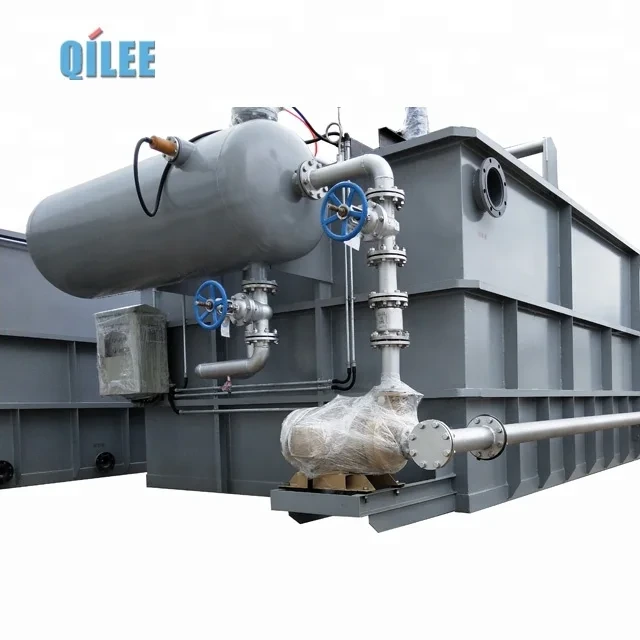
Compact Cavitation Air Flotation Plant for Jelly Wastewater

In a small jelly plant at dawn, sticky wastewater hangs in the air like fog. A compact cavitation air flotation plant steps in — a slim, quiet unit that makes tiny bubbles and uses cavitation to lift oil and bits, turning murky mix into clear, bright water. It fits tight spots, runs with low fuss, and makes clean-up fast, so the team breathes easy and the place looks proud.

5.0
brand name:
QILEE
Shipping:
Support Sea freight
Payments:
L/C,D/A,D/P,T/T,Western Union,MoneyGram,OA
Lead Time:
1-1(sets):60(days),>1(sets):To be negotiated(days)
Place of Origin:
China
design customization

    oops...!

    no product data.

    Go to homepage
    Total power(kw)
    2.57
    Scum skimmer(kw)
    0.37
    Aerator(kw)
    2.2
    Tank depth(m)
    1.3
    Tank width(m)
    1.2
    Tank length(m)
    5
    Treatment flow(m3/h)
    20
    Processing Type
    desalination
    Power(W)
    1 kW
    Product name
    cavitation air flotation
    Voltage
    220 V, 380 V
    weight (kg)
    100
    productivity
    500L/Hour
    warranty
    1 Year
    place of origin
    Shanghai, China

    Compact, Sleek, Hygienic, Efficient 

    Compact Cavitation Air Flotation Plant uses Dissolved Air Flotation principles to rapidly separate grease, jelly and suspended solids, lowering sludge load and cutting treatment time. Its compact, slim tank and stainless-steel aerator deliver industrial-grade quality and a space-saving shape, shipped in sturdy standard export carton packing for secure delivery. By eliminating circulating pumps, compressors and pressure vessels, the system minimizes investment, maintenance and footprint while backed by fast delivery and professional after-sales support.

    1620183233g0e
    1620183233oxz

    Compact Cavitation Flotation Clarifier

    This compact Cavitation Air Flotation plant for jelly wastewater uses a high-speed bulk-air impeller aerator to generate 30–100 µm micro-bubbles without air compressors, pressure vessels or circulating pumps, delivering a simple, space-saving and low-maintenance alternative to traditional Dissolved Air Flotation systems. Designed for efficient solid–liquid separation of grease, jelly and suspended solids, the integrated aerator, flotation tank and skimmer attach bubbles to flocculated particles and reliably lift scum to the surface for mechanical removal, cutting operating costs and downstream sludge load. Available in multiple flow-capacity models with modest power requirements, its stainless-steel impeller-driven aeration, compact tank geometry and straightforward electrical controls enable easy installation, minimal footprint and consistent performance in industrial oily and food-processing effluents.

    Efficient Jelly Wastewater Treatment 

    The Compact Cavitation Air Flotation (CAF) plant provides an advanced solution for jelly and oily wastewater by using a specially designed bulk gas impeller to generate micro-bubbles that attach to suspended solids for efficient separation. Unlike traditional Dissolved Air Flotation systems, the CAF requires no circulating pump, air compressor, or pressure vessel, reducing footprint, maintenance and operating costs. Available in multiple treatment capacities, the compact unit integrates an aerator, flotation tank and skimmer to produce 30–100um bubbles that lift grease, jelly and suspended solids for rapid skimming.


    ◎  

    ◎ 

    ◎ 

    16201832330io
    1620183233rje

    Efficient Compact Jelly Clarifier

    Developed by a specialized environmental engineering team, this compact cavitation air flotation plant was engineered to treat viscous jelly wastewater using high‑energy cavitation preconditioning and precision flow control to enhance floc formation and maximize contaminant release. By combining cavitation with proven Dissolved Air Flotation technology, the skid‑mounted unit delivers rapid separation of fats, oils and suspended solids with low chemical demand, minimal footprint and energy‑efficient operation. Key features and advantages include modular compact design for quick installation, automated controls and remote monitoring, corrosion‑resistant materials for long service life, easy maintenance and high removal efficiencies that reduce downstream processing costs.

    Material introduction

    The Compact Cavitation Air Flotation Plant for jelly wastewater is built with corrosion‑resistant stainless steel wetted parts—most notably a perforated stainless bulk air impeller—and robust coated structural steel or optional all‑stainless tanks to handle oily and acidic effluents. Mechanical elements such as high‑speed impellers, skimmers, shafts and bearings use heat‑treated alloys and wear‑resistant seals to ensure long service life and low maintenance during Dissolved Air Flotation operation. Motors and control cabinets are housed in powder‑coated or stainless enclosures with chemical‑resistant gaskets, and optional food‑grade or anti‑corrosion surface treatments make the unit suitable for grease‑ and suspension‑laden industrial streams.


    ◎ Aerator Perforated Impeller 

    ◎ Flotation Tank Skimmer

    ◎ Frames Seals Enclosures

    1620183233lpr

    FAQ

    1
    What is a Compact Cavitation Air Flotation Plant and how is it suitable for jelly wastewater?
    It is an integrated unit that uses hydrodynamic or acoustic cavitation to generate microbubbles and condition viscous/jelly-like effluent, combined with air flotation to separate and remove suspended solids, fats, oils, and colloids. Cavitation reduces viscosity and breaks gel structures, improving bubble-particle contact and making flotation much more effective for gelatinous or high-organic-content waste.
    2
    In what application scenarios for jelly wastewater does this system work best?
    Typical scenarios include food and confectionery processing (gelatin, jelly, jams, fruit preparations), gelatin manufacturing, dessert and sauce production lines, and labs or pilot plants producing viscous organic effluent. It works well as primary clarification for high-solids loads, as a pretreatment to biological systems, or as a polishing step after coarse screening and equalization.
    3
    What pretreatment and post-treatment steps are recommended when using this plant?
    Pretreatment: coarse screening or grit removal and an equalization tank to moderate flow and concentration spikes. pH adjustment and provision for coagulation/flocculation dosing are often required for best removal. Post-treatment: dewatering and disposal or digestion of concentrated sludge; biological treatment or polishing filters if further COD/BOD reduction is required.
    4
    What performance and operating expectations can users typically expect?
    Removal rates depend on influent characteristics and conditioning, but typical outcomes for properly configured systems are high TSS removal (often 80–98%) and substantial reductions in oils/fats and turbidity; COD/BOD reductions commonly improve when followed by biological treatment. Units are available in compact, modular capacities ranging from small pilot systems (a few m3/day) to larger units handling multiple m3/hr—select based on peak flow and load. Energy and chemical usage are generally lower than conventional DAF when cavitation is optimized.
    5
    What are the key maintenance, safety and operational considerations?
    Routine tasks include clearing screens and inlets, periodic inspection and cleaning of the cavitation reactor and flotation tank, checking/coordinating coagulant/flocculant dosing systems, and scheduled sludge removal or dewatering. Safety: handle chemicals with PPE, follow electrical and mechanical lockout/tagout, and ensure proper ventilation if gases are present. Maintain accessible sampling points for monitoring pH, suspended solids and flow rates.
    6
    What common problems occur in practice and how can they be resolved?
    Poor separation is often caused by overload (high flow or solids), insufficient flocculation/coagulation, incorrect pH, or cavitation chamber fouling. Remedies: reduce instantaneous flow or add surge/equalization capacity, adjust coagulant/flocculant dose and mixing, correct pH, inspect and clean cavitation components, and verify air-microbubble generation. For persistent issues, consult vendor for re-tuning of cavitation intensity or flotation residence time.
    Tell Us More About Your Project !
    If you have any questions about water treatment systems, please feel free to contact QILEE.
      Stable equipment
      Mature technology
      Automated operation
      Simple operation

    Do You Have any Questions? Welcome to Leave Us a Message.

    Related Products
    no data
    Contact Us

    Tel: +86 13370035529

    Business What's App: +86 13636655908

    E-mail: qilee@qileegroup.com

    Add: No. 351 Wenqu Road, Fengxian District, Shanghai

    Your trusted Water Treatment System Partner
    no data
    Copyright © 2026 Shanghai QILEE Environmental Protection Equipment Co., Ltd | Sitemap
    Customer service
    detect