loading
CAF Cavitation Air Flotation System for Oily Wastewater 1
CAF Cavitation Air Flotation System for Oily Wastewater 2
CAF Cavitation Air Flotation System for Oily Wastewater 3
CAF Cavitation Air Flotation System for Oily Wastewater 4
CAF Cavitation Air Flotation System for Oily Wastewater 5
CAF Cavitation Air Flotation System for Oily Wastewater 6
CAF Cavitation Air Flotation System for Oily Wastewater 7
CAF Cavitation Air Flotation System for Oily Wastewater 1
CAF Cavitation Air Flotation System for Oily Wastewater 2
CAF Cavitation Air Flotation System for Oily Wastewater 3
CAF Cavitation Air Flotation System for Oily Wastewater 4
CAF Cavitation Air Flotation System for Oily Wastewater 5
CAF Cavitation Air Flotation System for Oily Wastewater 6
CAF Cavitation Air Flotation System for Oily Wastewater 7

CAF Cavitation Air Flotation System for Oily Wastewater

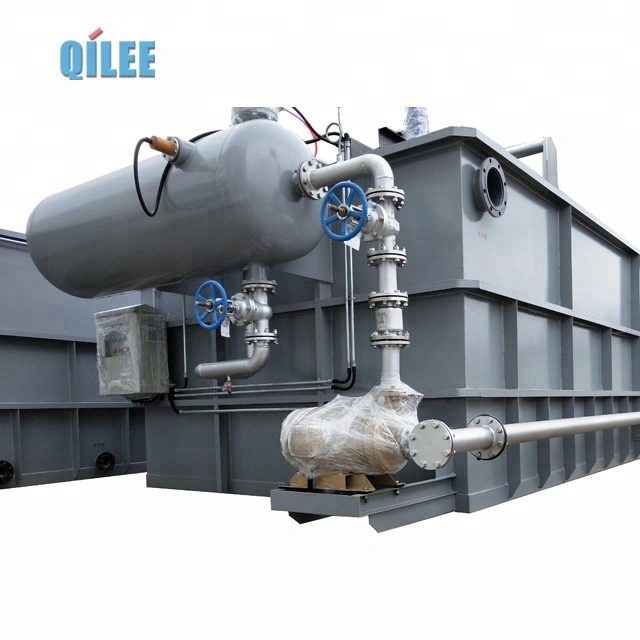
The CAF Cavitation Air Flotation System uses cavitation-generated microbubbles to attach to oil droplets and suspended solids, lifting them to the surface for rapid, efficient separation and removal. Selling points: ultra-fine bubble technology for high removal of free, dispersed and emulsified oils; compact, modular design for easy installation and scaling; low energy and chemical use with automated controls and simple maintenance; and effective oil recovery for reuse. The system reduces treatment and disposal costs, cuts sludge volume, and helps operations meet discharge standards while improving sustainability.

5.0
brand name:
QILEE
Shipping:
Support Sea freight
Payments:
L/C,D/A,D/P,T/T,Western Union,MoneyGram,OA
Lead Time:
1-1(sets):60(days),>1(sets):To be negotiated(days)
Place of Origin:
China
design customization

    oops...!

    no product data.

    Go to homepage
    Total power(kw)
    2.57
    Scum skimmer(kw)
    0.37
    Aerator(kw)
    2.2
    Tank depth(m)
    1.8
    Tank width(m)
    1.6
    Tank length(m)
    6
    Treatment flow(m3/h)
    40
    Processing Type
    desalination
    Power(W)
    1 kW
    Product name
    caf wastewater treatment system
    Voltage
    220 V, 380 V
    weight (kg)
    100
    productivity
    500L/Hour
    warranty
    1 Year
    place of origin
    Shanghai, China

    Efficient Compact Oil Separation 

    Built for oily wastewater, the CAF Cavitation Air Flotation System delivers Dissolved Air Flotation-level removal of grease and suspended solids while cutting energy use and footprint with a compact, maintenance-free design. Hard-wearing stainless steel impellers, a streamlined rectangular tank shape, and industrial-grade electrical cabinets ensure reliable performance and consistent scum separation across petrochemical, dairy, and slaughterhouse effluents. Shipped in standard export cartons with fast 3–20 day delivery and modular model sizes, the simple packaging and proven quality minimize installation time and ongoing operating costs.

    1620183233g0e
    1620183233oxz

    Rapid Microbubble Oil Separation

    The CAF Cavitation Air Flotation System is a compact, maintenance‑free oily wastewater treatment unit that integrates a high‑speed aerator, flotation tank, skimmer and electric cabinet to generate 30–100 µm micro‑bubbles via cavitation for rapid separation of grease, jelly and suspended solids. By producing bubbles without circulating pumps, air compressors or pressure vessels, it delivers lower capital and operating costs, reduced footprint and simpler operation while achieving effective flocculation, surface scum removal and clarified effluent compared with conventional Dissolved Air Flotation approaches. Its specially designed bulk gas impeller and submerged perforated impeller harness centrifugal forces to continuously entrain and finely shear air into the water, providing consistent flotation performance, easy scalability across model sizes, and broad applicability in petrochemical, oilfield, meatpacking, dairy and pulp and paper industries.

    Efficient Cavitation Oil Removal 

    The CAF Cavitation Air Flotation system is a compact, low-maintenance solution for oily wastewater that produces 30–100 μm microbubbles via a high-speed bulk air impeller to separate grease, jelly and suspended solids. By eliminating circulating pumps, compressors and pressure vessels, it reduces operating costs and footprint while providing an effective alternative to traditional Dissolved Air Flotation methods. Typical applications include petrochemical and oil-extraction wastewater, dairy and meatpacking effluents, and pulp and paper process water, with models available for flows from 1 to 500 m3/h.


    ◎ High Efficiency Microbubbles 

    ◎ Compact Low Maintenance

    ◎ Versatile Industrial Applications

    16201832330io
    1620183233rje

    Efficient Cavitation Oil Separation

    Developed by CAF's engineering team from years of oily wastewater research, the CAF Cavitation Air Flotation System for Oily Wastewater blends cavitation microbubble generation with a durable, user-focused design and the brand’s history of sustainable water solutions. By combining cavitation-assisted microbubble formation with Dissolved Air Flotation, the system achieves faster oil–water separation, higher removal rates, and reduced sludge production across diverse industrial streams. Key features and advantages include high-efficiency microbubble cavitation, compact footprint, low energy consumption, automated controls for consistent performance, modular scalability, and easy maintenance to lower operational costs.

    Material introduction

    The CAF Cavitation Air Flotation system is constructed mainly from corrosion‑resistant stainless steel (SS304/SS316) for the flotation tank, perforated bulk air impeller and skimmer, with abrasion‑resistant alloy shafts and precision bearings to handle oily and particulate loads. Chemical‑resistant elastomer seals, anti‑fouling coatings on submerged parts and a powder‑coated, dust‑proof steel electric cabinet further protect components and simplify maintenance. Compared with conventional Dissolved Air Flotation systems, these material choices deliver improved durability and lower lifecycle costs in harsh industrial wastewater environments.


    ◎ Stainless Steel Core 

    ◎ Carbon Steel Structure

    ◎ Engineered Polymer Components

    1620183233lpr

    FAQ

    1
    What is the CAF Cavitation Air Flotation System and what kinds of oily wastewater can it treat?
    The CAF system is a dissolved/microbubble flotation unit that uses hydrodynamic cavitation to create fine air bubbles and attach them to oil droplets and flocs, bringing them to the surface for skimming. It is designed to handle a wide range of oily wastewaters including free oil, dispersed oil, emulsified oil (with pre-treatment), refinery and produced water, bilge and ballast water, metalworking fluids, food- and vegetable‑oil processing effluents, and general industrial process waters containing oil & grease and suspended solids.
    2
    How does the cavitation air flotation process work in practice?
    Feed enters the unit where a cavitation generator (venturi or rotor‑stator) creates intense shear and microbubbles, promoting coalescence of small oil droplets into larger aggregates. Air is entrained or dissolved and released as microbubbles that attach to the oil/floc particles, increasing buoyancy. The buoyant material rises to the surface and is removed by an automatic skimmer; clarified water overflows or is pumped out. Chemical dosing (coagulant/flocculant or demulsifier) is commonly used upstream to improve performance.
    3
    What operating conditions and feed characteristics are typical for effective performance?
    Typical operating considerations include stable flow and flow equalization, pH generally near neutral (commonly effective in pH 5–9, but dependent on chemistry), and operating temperatures from cool to moderately warm industrial ranges. Hydraulic retention times are often short (minutes to tens of minutes) but vary by model and loading. The system performs very well on free and dispersed oil; heavily emulsified oil or extremely high TSS loads may require pre‑treatment (demulsification, sedimentation, or filtration). Final removal efficiency depends on influent strength, chemistry control, and unit sizing, but CAF systems routinely achieve substantial reductions in oil & grease and turbidity to help meet discharge or reuse requirements.
    4
    What pre‑treatment, chemicals, or upstream equipment should be used with a CAF system?
    Common upstream measures include screening, grit removal, oil separators or coalescers for high free‑oil loads, and equalization tanks to smooth flow and concentrations. Chemical pretreatment often involves demulsifiers or coagulants/flocculants to destabilize emulsions and promote floc formation. pH adjusters may be required when chemistry performance is sensitive to acidity/alkalinity. For very high solid loads, a primary sedimentation or lamella clarifier ahead of the CAF may reduce wear and maintenance.
    5
    What routine operation and maintenance tasks are required?
    Daily or shift checks typically include monitoring feed flow and levels, skimmer operation and float removal, chemical dosing rates and tank levels, and air/compressor pressures. Weekly/monthly tasks include inspecting and cleaning the cavitation generator/nozzles, checking pumps, valves and seals, verifying control panel alarms, and inspecting sludge and oil discharge lines. Periodic tasks include compressor service, replacement of wear parts, and sludge dewatering/disposal according to local regulations. Following the supplier’s maintenance schedule will maximize uptime and performance.
    6
    What are common problems and troubleshooting steps if separation performance declines?
    Common causes of poor performance include overloaded or highly emulsified feed, incorrect or insufficient chemical dosing, blocked nozzles or lines, failing air compressors, or large variations in flow or pH. Troubleshooting steps: check and stabilize feed flow and equalization; inspect and clean cavitation and air lines; verify compressor and air supply; review and optimize coagulant/demulsifier dosing and mix points; remove excess solids upstream; and increase retention or recycle rates if possible. If issues persist, collect representative samples (influent, effluent, sludge) and consult the manufacturer or process engineer for tailored adjustments.
    Tell Us More About Your Project !
    If you have any questions about water treatment systems, please feel free to contact QILEE.
      Stable equipment
      Mature technology
      Automated operation
      Simple operation

    Do You Have any Questions? Welcome to Leave Us a Message.

    Related Products
    no data
    Contact Us

    Tel: +86 13370035529

    Business What's App: +86 13636655908

    E-mail: qilee@qileegroup.com

    Add: No. 351 Wenqu Road, Fengxian District, Shanghai

    Your trusted Water Treatment System Partner
    no data
    Copyright © 2026 Shanghai QILEE Environmental Protection Equipment Co., Ltd | Sitemap
    Customer service
    detect