
loading
Electric Heat-Pump Vacuum Evaporator for Wastewater. 1
Electric Heat-Pump Vacuum Evaporator for Wastewater. 2
Electric Heat-Pump Vacuum Evaporator for Wastewater. 3
Electric Heat-Pump Vacuum Evaporator for Wastewater. 4
Electric Heat-Pump Vacuum Evaporator for Wastewater. 5
Electric Heat-Pump Vacuum Evaporator for Wastewater. 6
Electric Heat-Pump Vacuum Evaporator for Wastewater. 1
Electric Heat-Pump Vacuum Evaporator for Wastewater. 2
Electric Heat-Pump Vacuum Evaporator for Wastewater. 3
Electric Heat-Pump Vacuum Evaporator for Wastewater. 4
Electric Heat-Pump Vacuum Evaporator for Wastewater. 5
Electric Heat-Pump Vacuum Evaporator for Wastewater. 6

Electric Heat-Pump Vacuum Evaporator for Wastewater.

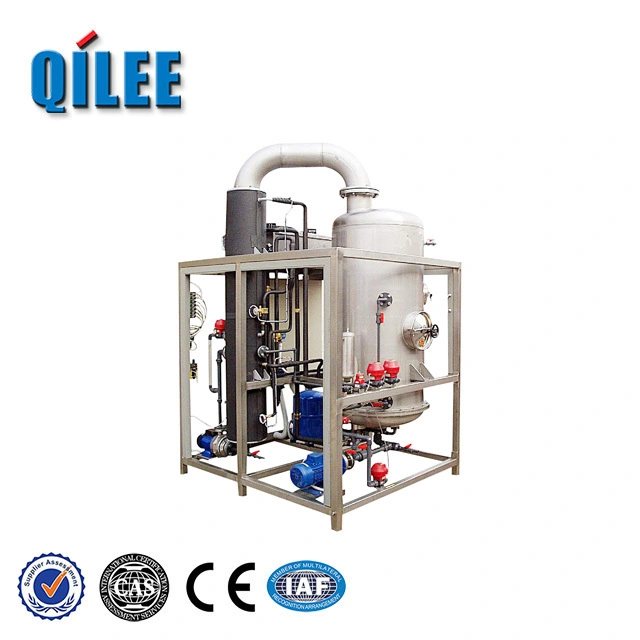
In the hush of a plant floor, the Electric Heat-Pump Vacuum Evaporator for Wastewater hums like a quiet guardian, turning dirty water into warm, rising mist. A clever heat pump is its heart, using little power while the vacuum pulls away the bad stuff, saving clean water and cutting waste. Compact, low-noise, and easy to run, it makes a messy problem vanish into reuse-ready water — a smart, green choice that cares for your site and the planet.

5.0
brand name:
QILEE
Shipping:
Support Sea freight
Payments:
L/C,D/A,D/P,T/T,Western Union,MoneyGram,OA
Lead Time:
1-1(pieces):60(days),>1(pieces):To be negotiated(days)
Place of Origin:
China
design customization

    oops...!

    no product data.

    Go to homepage
    Temperature(℃)
    38
    Vacuum(Pa)
    8000
    Electric consumption(KW/L)
    0.25
    Evaporation capacity(L/h)
    10
    Power(w)
    250
    Processing
    Vacuum Distillation
    Power Source
    Electric
    Weight (KG)
    1
    Material
    Stainless Steel
    voltage
    220/380V
    Product name
    Vaccum Evaporator
    warranty
    1 Year
    place of origin
    China

    Efficient Skid-Mounted Corrosion-Resistant Recovery 

    The Vacuum Heat Pump Evaporator delivers up to 90% energy savings and ultra-low temperature vacuum evaporation (down to 32°C at 45 mbar) to protect heat-sensitive wastewater streams while cutting operating and cooling-water costs. Its compact, modular skid or cabinet-style build, German core components assembled in China, corrosion-resistant materials and fully automatic controls provide reliable, low‑maintenance performance and fast installation for small-to-medium plants. Shipped in standard export cartons and factory-tested for quality, this space-saving, high-quality system simplifies procurement and rapid deployment for wastewater treatment and industrial concentration needs.

    1620183233g0e
    1620183233oxz

    Here are six four-word subtitle options:

    The Vacuum Heat Pump Evaporator uses heat-pump compression and high vacuum to evaporate and condense wastewater at ultra-low temperatures, enabling efficient evaporation, crystallization and drying of heat-sensitive materials. Its modular, compact structure with imported core components assembled domestically provides fully automatic, low‑maintenance operation with minimal cooling water needs and a low failure rate. Running solely on electricity and cutting energy consumption by up to 90%, it offers a cost‑effective, environmentally friendly wastewater treatment solution ideal for space‑constrained small and medium enterprises.

    Energy-Efficient Wastewater Evaporation Solution 

    The Vacuum Heat Pump Evaporator is an electric, modular system that uses heat-pump compression and high vacuum (down to 45 mbar, enabling evaporation around 32°C) to concentrate wastewater and treat heat-sensitive materials with minimal corrosion. By recovering condensation heat and eliminating the need for steam, it can cut energy consumption by up to 90%, reduce cooling water use, and simplify supporting equipment compared with traditional and MVR systems. Fully automated and assembled with German core components in China, the compact unit is optimized for small-to-medium plants (under 1000 kg/h) for fast installation, low maintenance, and environmentally friendly operation.


    ◎ Ultra Low Vaporization 

    ◎ Energy Efficient Operation

    ◎ Modular Compact Design

    16201832330io
    1620183233rje

    Efficient Compact Sustainable Recovery

    Built after years of R&D and strict quality control, the Vacuum Heat Pump Evaporator combines an electric heat-pump core with vacuum operation to create a compact, durable system designed for efficient industrial wastewater concentration and resource recovery. It quickly concentrates wastewater and reclaims clean water and salts by lowering boiling points under vacuum while the heat pump recovers thermal energy, delivering high recovery rates with low power consumption and minimal scaling. Key features and advantages include a modular footprint, automated PLC control, corrosion-resistant materials, low maintenance and noise, compliance with zero-liquid-discharge goals, and significant reduction in disposal costs.

    Material introduction

    The Vacuum Heat Pump Evaporator is constructed from corrosion‑resistant stainless steels and engineered alloys for all wetted parts, with hygienic finishes where required for pharmaceutical and food industries. Key components such as evaporator shells, condensers and vacuum chambers use high‑grade 316L or duplex stainless steel, while compressors, refrigerant piping and seals employ refrigerant‑compatible metals and durable elastomers designed for low‑temperature, high‑vacuum operation. Modular assemblies combine factory‑tested German core components with protective coatings and replaceable wear parts to ensure long service life, easy maintenance and chemical compatibility with aggressive wastewater streams.


    ◎ 316L Stainless Standard 

    ◎ Duplex Titanium Hastelloy

    ◎ Sanitary Food Biotech

    1620183233lpr

    FAQ

    1
    What is an electric heat-pump vacuum evaporator and how does it work for wastewater treatment?
    An electric heat-pump vacuum evaporator combines a mechanical vapor-compression or electric heat pump with a vacuum evaporation chamber. The vacuum lowers the boiling point of the wastewater so it evaporates at low temperatures. The heat pump recovers and upgrades latent heat from vapor condensation to supply thermal energy back to the evaporator, making the process energy-efficient. The result is condensed distilled water (condensate) and a reduced-volume concentrate containing the contaminants.
    2
    What types of wastewater and contaminants can it treat?
    These systems are versatile and commonly used for high-salinity brines, industrial process wastewater (chemical, pharmaceutical, food & beverage), landfill leachate, textile dyeing effluent, electroplating rinse waters, and mining or oilfield produced waters. They handle dissolved salts, organics with low volatility, heavy metals (which concentrate), and suspended solids when combined with appropriate pre-treatment. They are less suitable alone for streams with high concentrations of volatile organic compounds (VOCs) unless vapor treatment or secondary controls are added.
    3
    Do I need pre-treatment before feeding wastewater to the evaporator?
    In most cases yes. Typical pre-treatment removes large solids, oils/greases, and biological material and may include oil-water separation, filtration, chemical dosing to control scaling, and pH adjustment. For feeds prone to scaling or fouling (e.g., high hardness, silica), antiscalants, softening, or crystallization control strategies are recommended to protect heat transfer surfaces and maintain performance.
    4
    What are typical water recovery rates, energy use, and operating costs?
    Recovery rates are high—many installations achieve 80–95%+ water recovery depending on feed composition and desired concentrate dryness. Energy consumption is much lower than conventional thermal evaporation because the heat pump recycles latent heat; typical system coefficients of performance (COP) vary with design and duty, often in the range of 2–6. Actual electricity use and operating costs depend on feed load, recovery target, and local energy prices; a site-specific energy and economic assessment is recommended.
    5
    How is the concentrate and condensate handled, and what about emissions?
    Condensate is typically close to distilled water quality and can be reused in processes, discharged subject to local permits, or sent to further polishing. Concentrate is reduced-volume, which lowers disposal costs—options include further concentration/crystallization, landfilling, solidification, or offsite disposal depending on contaminants. Because the system is closed and operated under vacuum, air emissions are minimal; however, vapor-phase VOCs or azeotropes may require carbon adsorption, condensers, or scrubbers to meet regulatory limits.
    6
    What are key installation, maintenance, and operational considerations?
    Installation needs include a stable electrical supply, adequate space, access for concentrate/condensate piping, and suitable foundation for pumps and compressors. Materials should be corrosion-resistant (stainless steel, lined vessels) for aggressive feeds. Routine maintenance covers cleaning heat-exchange surfaces, checking vacuum pumps and seals, refrigerant system inspection, and monitoring fouling/scaling. Operators should be trained on start/stop sequences, vacuum control, and safety protocols. With proper care, systems reliably support continuous or batch operation and are well suited for Zero Liquid Discharge (ZLD) goals.
    Tell Us More About Your Project !
    If you have any questions about water treatment systems, please feel free to contact QILEE.
      Stable equipment
      Mature technology
      Automated operation
      Simple operation

    Do You Have any Questions? Welcome to Leave Us a Message.

    Related Products
    no data
    Contact Us

    Tel: +86 13370035529

    Business What's App: +86 13636655908

    E-mail: qilee@qileegroup.com

    Add: No. 351 Wenqu Road, Fengxian District, Shanghai

    Your trusted Water Treatment System Partner
    no data
    Copyright © 2026 Shanghai QILEE Environmental Protection Equipment Co., Ltd | Sitemap
    Customer service
    detect