
loading
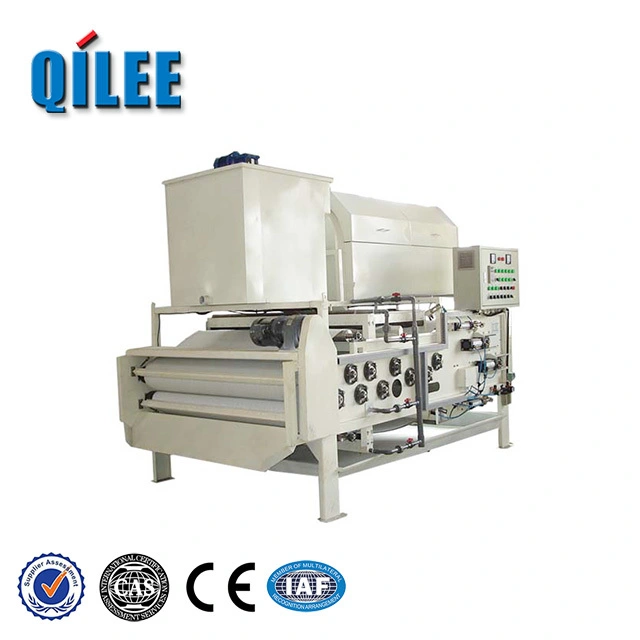
Imported Filter Press Cloth w/ Motor & PLC, 13.5-49 kg/h 1
Imported Filter Press Cloth w/ Motor & PLC, 13.5-49 kg/h 2
Imported Filter Press Cloth w/ Motor & PLC, 13.5-49 kg/h 3
Imported Filter Press Cloth w/ Motor & PLC, 13.5-49 kg/h 4
Imported Filter Press Cloth w/ Motor & PLC, 13.5-49 kg/h 5
Imported Filter Press Cloth w/ Motor & PLC, 13.5-49 kg/h 6
Imported Filter Press Cloth w/ Motor & PLC, 13.5-49 kg/h 1
Imported Filter Press Cloth w/ Motor & PLC, 13.5-49 kg/h 2
Imported Filter Press Cloth w/ Motor & PLC, 13.5-49 kg/h 3
Imported Filter Press Cloth w/ Motor & PLC, 13.5-49 kg/h 4
Imported Filter Press Cloth w/ Motor & PLC, 13.5-49 kg/h 5
Imported Filter Press Cloth w/ Motor & PLC, 13.5-49 kg/h 6

Imported Filter Press Cloth w/ Motor & PLC, 13.5-49 kg/h

At dawn the plant wakes; the imported filter press cloth, with a strong motor and smart PLC, hums to life and turns a muddy mix into clear flow. It runs smooth and sure at 13.5–49 kg/h, like a calm river that never stops. Easy to use, tough and precise — bright output, less waste, and real peace of mind for your team.

5.0
brand name:
QILEE
Shipping:
Support Sea freight
Payments:
L/C,D/A,D/P,T/T,Western Union,MoneyGram,OA
Lead Time:
1-1(sets):15(days),>1(sets):To be negotiated(days)
Place of Origin:
China
design customization

    oops...!

    no product data.

    Go to homepage
    Reference Weight(kg)
    1420~3150
    Powder Consumption(kw)
    1100~2800
    Water Content's Rate(%)
    75~85
    Inlet Consistency(%)
    s.s.0.4~0.8%
    Dried Sludge(kg/hr)
    84~450
    Treating Capacity(kg/h)
    13.5~49
    Processing Type
    desalination
    Power(W)
    1 kW
    Product name
    filter press cloth
    Voltage
    220 V, 380 V
    weight (kg)
    1420
    productivity
    13.5~49
    warranty
    1 Year
    place of origin
    Shanghai, China
    core components
    Motor, PLC
    machinery test report
    Provided
    video outgoing-inspection
    Provided

    Durable, Efficient, Compact, Automated 

    The QTBH sludge dewatering machine delivers reliable 13.5–49 kg/h drying capacity using Swiss-imported filter cloth and SUS304 stainless-steel construction for consistent low-moisture cakes and long service life. With a motor-driven PLC, air-chamber deviation correction and safety monitoring, it provides stable, low-energy operation (≤75 dB(A)), simple automated control and reduced maintenance. Packaged in standard export cartons and available in multiple belt-width models (1000–2000 mm) with a compact stainless-steel frame, it enables fast delivery and easy on-site installation to suit diverse industrial needs.

    1620183233g0e
    1620183233oxz

    Imported Cloth Precision Filtration

    The QTBH sludge dewatering machine features a SUS304 stainless steel frame, high-quality Swiss-imported filter press cloth, motor drive with PLC control and an air-chamber automatic deviation correction device, giving corrosion resistance, stable operation and precise cloth alignment. It is built for continuous sludge dewatering in municipal, industrial and agricultural settings, offering high efficiency, low energy consumption, low noise (≤75 dB(A)), low moisture cake, flexible operation and easy maintenance with handling capacity in the 13.5–49 kg/h range depending on model. Structural options such as multiple belt widths, drum thickener choices, safety monitoring with automatic stop and compatibility with auxiliary equipment (sludge pump, dosing pumps, washing pump, air compressor) add value and make it a reliable solution for slurry–water separation and wastewater treatment.

    Imported PLC-Controlled Filter Press 

    The QTBH sludge dewatering machine combines a high-strength SUS304 stainless steel frame with a Swiss-imported filter press cloth, plus motor and PLC control for reliable, automated operation. It features an air-chamber automatic deviation correction, low energy consumption, low noise (≤75 dB(A)), safety monitoring with automatic stop, and delivers low moisture content in the dewatered cake for flexible, low-maintenance performance. Available in multiple belt widths, the unit handles typical processing capacities from 13.5 to 49 kg/h and is suitable for industrial, municipal, and food & beverage sludge dewatering applications.


    ◎ product nicety 1 

    ◎ all descriptions presented as four numbered lines (1–4)?

    ◎ 

    16201832330io
    1620183233rje

    Efficient Automated Durable Filtration

    Crafted with high-quality imported filter press cloth, a robust motor and PLC control, the QTBH sludge dewatering machine reflects a decades-long commitment to durable engineering and precision manufacturing from our reputable brand. It automates solids-liquid separation to deliver stable 13.5–49 kg/h throughput, fast cake formation, low maintenance and energy-efficient operation for municipal and industrial sludge treatment. Key advantages include precise PLC control, premium cloth for higher filtration efficiency, reliable motor drive, compact footprint, easy cloth replacement, consistent cake dryness and cost-effective operation.

    Material introduction

    The QTBH sludge dewatering machine features a corrosion-resistant SUS304 stainless steel frame and structural components for high strength and long-term rust-free operation. Its filtration media is a high-performance Swiss-imported filter press cloth engineered for superior cake dryness, reliable washing and extended service life. Rugged drive motors and an enclosed PLC control cabinet complete the assembly, delivering low-noise, low-energy operation with easy maintenance.


    ◎ SUS304 Stainless Steel 

    ◎ Swiss Imported Cloth

    ◎ Motor and PLC

    1620183233lpr

    FAQ

    1
    What is the "Imported Filter Press Cloth w/ Motor & PLC, 13.5–49 kg/h" and what does it do?
    It is a complete filter press cloth assembly supplied with an electric motor and PLC-based control for automated solid–liquid separation. The unit is designed to capture suspended solids on the cloth while allowing filtrate to pass, producing dewatered filter cake. The motor drives the mechanical parts (squeezing, cake discharge, plate shifting) and the PLC automates cycles, timing, alarms and basic process parameters for consistent operation.
    2
    Which industries and application scenarios are best suited for this filter press cloth package?
    Typical applications include municipal sludge dewatering, industrial wastewater treatment (chemical, textile, electroplating), mining and mineral tailings, food and beverage clarifications, pharmaceutical filtration, oil and grease separation, battery manufacturing, and small-to-medium recycling plants. It is especially useful where throughput is modest (13.5–49 kg/h solids) and automated, repeatable cycles and reliable cake formation are needed.
    3
    How do I install and integrate the motor and PLC with my existing equipment?
    Mechanically mount the cloth/plate assembly to the filter frame per supplier instructions and secure the motor to the drive unit. Electrically connect the motor and PLC to a suitable power supply and earth/ground; route sensors (pressure, level, limit switches) into the PLC I/O. Configure basic PLC settings (cycle time, motor direction, emergency stop, alarm thresholds) and, if required, integrate with plant SCADA via available communication ports. Always follow the manufacturer’s wiring diagrams, local electrical codes, and have qualified electricians perform the connections.
    4
    What filter cloth materials and specifications are available, and how do I choose the right one?
    Common cloth materials include polypropylene, polyester, nylon, and PTFE-coated fabrics in monofilament or multifilament weaves. Options vary in pore size, chemical/temperature resistance, and abrasion tolerance. Choose based on slurry properties: use finer weave/low micron rating for fine particles, PTFE or chemically resistant fabrics for aggressive chemistries, and higher-abrasion fabrics for gritty slurries. Your supplier can recommend a cloth grade based on solids type, particle size distribution, pH, temperature and desired cake moisture.
    5
    How should I operate, clean and maintain the cloth to maximize lifespan?
    Operate according to the PLC cycle settings and avoid overloading the feed. Routine maintenance includes inspecting for tears/holes, checking sealing surfaces, and ensuring proper alignment. Clean cloths by mechanical shaking or brushing, backwashing if compatible, and periodic chemical washing (alkali, acid or detergents as recommended) to remove embedded solids. Replace cloths when filtration performance degrades or physical damage appears. Frequency depends on slurry abrasiveness and operating hours — from weeks to many months.
    6
    The product lists throughput 13.5–49 kg/h — what does that mean and how can I achieve consistent throughput?
    The stated range refers to the typical solids dewatered per hour under common operating conditions. Actual throughput depends on feed solids concentration, particle size, viscosity, plate area, cycle time and flocculation. To maintain consistent throughput: stabilize feed concentration, use appropriate flocculants and dosing, optimize PLC cycle times, monitor cake formation and adjust pressure or feed rate, and keep the cloth clean. For precise performance estimates, run a bench or pilot test with your slurry and consult the manufacturer for recommended plate selection and cycle settings.
    Tell Us More About Your Project !
    If you have any questions about water treatment systems, please feel free to contact QILEE.
      Stable equipment
      Mature technology
      Automated operation
      Simple operation

    Do You Have any Questions? Welcome to Leave Us a Message.

    Related Products
    no data
    Contact Us

    Tel: +86 13370035529

    Business What's App: +86 13636655908

    E-mail: qilee@qileegroup.com

    Add: No. 351 Wenqu Road, Fengxian District, Shanghai

    Your trusted Water Treatment System Partner
    no data
    Copyright © 2026 Shanghai QILEE Environmental Protection Equipment Co., Ltd | Sitemap
    Customer service
    detect