
loading
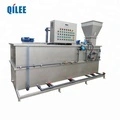
Automatic Chemical Injection PAC/Polymer Dosing System 1
Automatic Chemical Injection PAC/Polymer Dosing System 2
Automatic Chemical Injection PAC/Polymer Dosing System 3
Automatic Chemical Injection PAC/Polymer Dosing System 4
Automatic Chemical Injection PAC/Polymer Dosing System 5
Automatic Chemical Injection PAC/Polymer Dosing System 6
Automatic Chemical Injection PAC/Polymer Dosing System 7
Automatic Chemical Injection PAC/Polymer Dosing System 1
Automatic Chemical Injection PAC/Polymer Dosing System 2
Automatic Chemical Injection PAC/Polymer Dosing System 3
Automatic Chemical Injection PAC/Polymer Dosing System 4
Automatic Chemical Injection PAC/Polymer Dosing System 5
Automatic Chemical Injection PAC/Polymer Dosing System 6
Automatic Chemical Injection PAC/Polymer Dosing System 7

Automatic Chemical Injection PAC/Polymer Dosing System

Automatic Chemical Injection PAC/Polymer Dosing System

This compact system meters powdered activated carbon (PAC) and polymer automatically into water or wastewater streams. It combines storage hoppers, controlled feeders or metering pumps, mixers, and a PLC/HMI to dose the right amount on schedule or in response to sensors. The result is consistent flocculation and adsorption, reduced chemical waste, lower labor needs, and improved clarity and pollutant removal.

Usage scenarios (about 3 sentences)

Used in drinking water plants to remove taste, odor, micropollutants and to control turbidity by dosing PAC and coagulant polymers. Employed in municipal and industrial wastewater treatment for coagulation/flocculation, improved solids separation, and enhanced sludge dewatering. Also valuable in industries such as paper, mining, food processing, and power plants to protect downstream equipment and optimize process effluent quality.

5.0
brand name:
QILEE
Shipping:
Support Sea freight
Payments:
L/C,D/A,D/P,T/T,Western Union,MoneyGram,OA
Lead Time:
1-1(sets):15(days),>1(sets):To be negotiated(days)
Place of Origin:
China
design customization

    oops...!

    no product data.

    Go to homepage
    Materia
    SUS304
    Machine Weight
    320 1280
    Machine Dimensions
    2000 1150 1650
    Powder Metering Feeder Speed ariable
    1 4HP
    Powder Feeding Hopper Volume
    42-320
    Chemical Solution Production Capacity
    500-8000
    Processing Type
    desalination
    After Warranty Service
    Online support
    Power(W)
    1 kW
    Product name
    Pac Dosing System
    Voltage
    220 V, 380 V
    weight (kg)
    1280
    productivity
    500L/Hour
    warranty
    1 Year
    place of origin
    Shanghai, China
    core components
    Motor, PLC
    machinery test report
    Provided
    video outgoing-inspection
    Provided

    Precise, Reliable, Compact, Durable 

    The QPL3 powder dosing machine delivers automated, highly accurate PAC/polymer dosing to guarantee consistent sludge treatment, reduce chemical waste, and simplify operator workflow. Constructed from SUS304 with imported components, a compact rectangular footprint and touchscreen controls, its quality materials and attractive industrial styling ensure durability, easy maintenance and reliable performance. Packed in standard export cartons, offered in multiple capacity models with flexible delivery times, it provides scalable, ready-to-install solutions that lower operating costs and match diverse plant requirements.

    1620183233g0e
    1620183233oxz

    Accurate Automated Polymer Dosing

    The QPL3 powder dosing machine is an automatic PAC/polymer dosing system with SUS304 construction, precision powder metering, variable-speed feeders, touch-screen output and a range of capacity models to suit 500–8000 L/hr needs. Functionally it dissolves and injects PAM/PAC powders for sludge dewatering and wastewater treatment, delivering accurate solution concentrations to minimize waste and ensure consistent treatment performance. Extended attributes include imported components, corrosion-resistant design, compact footprint and easy maintenance, providing lower operating costs, reliable dosing and flexible selection based on feed rate and concentration requirements.

    Automatic PAC Polymer Dosing 

    The QPL3 powder dosing machine is an automatic chemical injection and polymer dosing system engineered for precise feeding and dissolution of powders such as PAM and PAC, built in SUS304 with imported components and a user-friendly touchscreen interface. Models cover production capacities from 500 to 8000 L/hr with variable-speed powder metering feeders and large hoppers to guarantee accurate dosing, efficient chemical use, and an attractive appearance. Commonly applied to city and industrial sewage coagulation and sludge disposal, the unit operates automatically to improve treatment effectiveness and minimize waste.


    ◎ product nicety 1 

    ◎ product nicety 2

    ◎ product nicety 3

    16201832330io
    1620183233rje

    Precise, Efficient, Reliable, Scalable

    From a legacy of industrial water-treatment engineering, the QPL3 powder dosing machine was engineered with precision stainless-steel construction, modular feed hoppers and corrosion-resistant metering screws to deliver reliable PAC/polymer dosing under continuous operation. Equipped with PLC control, touchscreen HMI, adjustable feed rates and anti-bridging agitators, it automates chemical injection with high-accuracy metering, clog-resistant delivery and real-time process feedback. The QPL3 powder dosing machine reduces chemical waste, lowers maintenance downtime through easy-cleaning components, supports remote monitoring and compliance reporting, and improves treatment consistency and operator safety for municipal and industrial plants.

    Material introduction

    The QPL3 powder dosing machine is built with a SUS304 stainless steel crust and offers polypropylene (PP) components where chemical compatibility requires, delivering robust corrosion resistance and structural strength for PAC and polymer powders. Critical wetted parts and the powder feeding system use high-quality imported components and precision metering to ensure accurate dosing, easy cleaning, and long service life. Choose SUS304 for heavy-duty, high-temperature or abrasive environments, or PP when extra chemical resistance and contamination control are needed.


    ◎ SUS304 Stainless Steel 

    ◎ Polypropylene (PP) Components

    ◎ Hybrid SUS304 + PP Option

    1620183233lpr

    FAQ

    1
    What is an Automatic Chemical Injection PAC/Polymer Dosing System and what are its main components?
    The system automates safe, accurate delivery of powdered activated carbon (PAC) and dry polymer into process water streams. Typical components include a dry-feed hopper and metering feeder, slurry/makeup tank with agitator, recirculation line and inline mixer, chemical dosing pumps (diaphragm, peristaltic or progressive cavity), level and flow sensors, control panel/PLC with proportional dosing logic and alarms, and dust suppression/venting. It converts dry powder into a controlled slurry and injects it into the process at a programmed rate.
    2
    Which chemicals and physical forms can this system handle?
    It is designed primarily for dry powdered PAC and dry polymer powders (coagulant aids/flocculants) that are formulated to form stable slurries. It can also handle many powdered adsorbents and some granular materials if the feeder is compatible. It is not intended for strongly hygroscopic powders without special conditioning, highly abrasive materials that rapidly wear feeders, or liquids unless specific liquid-feed modules are provided. Always check manufacturer compatibility for specific chemistries.
    3
    In what application scenarios is this system typically used?
    Common applications include potable water treatment (TOC, taste/odor, disinfection byproduct precursor control), wastewater tertiary treatment (micropollutant and color removal), industrial effluent polishing, landfill leachate treatment, sludge conditioning and dewatering (polymer dosing), and process water clarification in food, chemical and power plants. It’s used where precise, continuous or batch-added dosing of PAC or polymer improves solids capture, adsorption or dewatering performance.
    4
    How is dosing controlled and how do operators set the correct dose?
    Dosing is controlled by the PLC using inputs such as plant flow, time schedules, or feedback from online sensors (turbidity, TOC, residual polymer concentration). Operators set target concentrations or feed rates (e.g., mg/L or kg/h). The system uses proportional dosing algorithms to scale feed with flow and can pulse or ramp doses for boost/blend scenarios. Determining the correct dose normally requires jar tests, pilot trials and periodic verification sampling; control parameters are then tuned accordingly.
    5
    What routine operation and maintenance tasks are required to keep the system reliable?
    Daily/shift checks: verify hopper levels, feeder operation, slurry tank level and mixer function, pump pressures and injection points, and alarm status. Weekly/monthly tasks: clean hopper screens and dust filters, inspect and replace worn feeder screws or pump diaphragms, check calibration of flow meters and sensors, and confirm mixing/suspension quality. Keep spare wear parts on hand, follow safe powder handling procedures (PPE, ventilation), and schedule preventive maintenance per supplier guidance.
    6
    What are common problems and how can they be resolved?
    Common issues include inconsistent dosing (causes: feeder slip, air in pump, poor slurry concentration) — resolve by checking feeder calibration, bleeding pumps, and verifying slurry makeup; clogging or bridging in hopper — use agitators, vibration, or proper hopper design and keep powders dry; slurry settling and stratification — increase recirculation/mixing or shorten slurry residence time; foaming or poor polymer performance — check polymer grade, dilution procedure and prepare fresh solution; alarms for low level or pump faults — confirm sensor function and investigate mechanical faults. For process performance issues, re-run jar tests/pilots and adjust dose and injection location. When in doubt, consult the system vendor for diagnostics.
    Tell Us More About Your Project !
    If you have any questions about water treatment systems, please feel free to contact QILEE.
      Stable equipment
      Mature technology
      Automated operation
      Simple operation

    Do You Have any Questions? Welcome to Leave Us a Message.

    Related Products
    no data
    Contact Us

    Tel: +86 13370035529

    Business What's App: +86 13636655908

    E-mail: qilee@qileegroup.com

    Add: No. 351 Wenqu Road, Fengxian District, Shanghai

    Your trusted Water Treatment System Partner
    no data
    Copyright © 2026 Shanghai QILEE Environmental Protection Equipment Co., Ltd | Sitemap
    Customer service
    detect