
loading
Automatic Dosing System for Polymer Prep Unit, Precise Feed 1
Automatic Dosing System for Polymer Prep Unit, Precise Feed 2
Automatic Dosing System for Polymer Prep Unit, Precise Feed 3
Automatic Dosing System for Polymer Prep Unit, Precise Feed 4
Automatic Dosing System for Polymer Prep Unit, Precise Feed 5
Automatic Dosing System for Polymer Prep Unit, Precise Feed 6
Automatic Dosing System for Polymer Prep Unit, Precise Feed 7
Automatic Dosing System for Polymer Prep Unit, Precise Feed 1
Automatic Dosing System for Polymer Prep Unit, Precise Feed 2
Automatic Dosing System for Polymer Prep Unit, Precise Feed 3
Automatic Dosing System for Polymer Prep Unit, Precise Feed 4
Automatic Dosing System for Polymer Prep Unit, Precise Feed 5
Automatic Dosing System for Polymer Prep Unit, Precise Feed 6
Automatic Dosing System for Polymer Prep Unit, Precise Feed 7

Automatic Dosing System for Polymer Prep Unit, Precise Feed

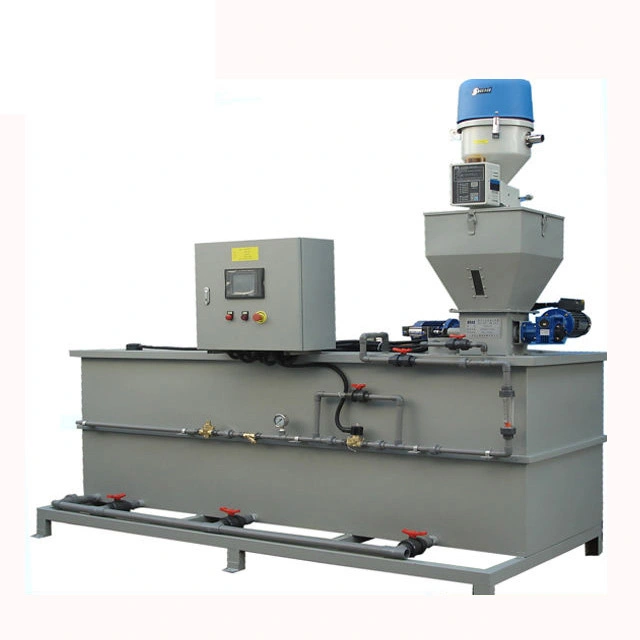
The Automatic Dosing System for Polymer Prep Unit, Precise Feed is an automated metering solution that delivers exact quantities of polymers and additives into prep lines to keep mixes consistent and production running smoothly. Its selling points include high-precision feed control, recipe-based PLC/HMI operation with remote monitoring, compact easy integration, and low-waste, dust-minimizing design. That yields consistent product quality, lower material costs and downtime, safer operation, and simpler maintenance for higher plant efficiency.

5.0
shipping:
Ocean freight
brand name:
QILEE
Payments:
L/C,D/A,D/P,T/T,Western Union,MoneyGram,OA
Place of Origin:
China
design customization

    oops...!

    no product data.

    Go to homepage
    Brand:
    QILEE
    Origin:
    China / Shanghai
    Reference Weight:
    410 kg
    Allocation:
    three tanks wth three agitators
    Volume of hopper:
    42L
    Chemical solution production capacity:
    1000 L/h
    type:
    dosing system
    Operation:
    automatic
    Power:
    0.75KW
    Material:
    SUS304/PP
    place of origin
    Shanghai, China

    Precise Reliable Compact Durable 

    The QPL3 powder dosing machine delivers automatic, precise polymer feeding with SUS304 construction and all-imported components to ensure reliable treatment performance and reduced chemical waste. Its touchscreen output, attractive compact design and variable-speed metering feeder simplify operation for PAM/PAC preparation while guaranteeing exact powder dosing. Packaged in standard export cartons and shipped within 3–20 days, this durable unit supports sludge and sewage conditioning and can be matched to your required hourly solution capacity.

    1620183233g0e
    1620183233oxz

    Precision Automated Polymer Dosing

    The QPL3 powder dosing machine is an automatic dosing system for polymer preparation that delivers precise powder feed and repeatable metering through a variable-speed feeder and digital touch control, constructed with SUS304 (or optional PP) and high-quality imported components for robust corrosion resistance. It dissolves chemical powders such as PAM and PAC to produce consistent polymer solutions, improving sludge dewatering and wastewater condensation while minimizing chemical waste and ensuring stable treatment effect. Available in multiple capacities with calibrated hoppers, adjustable feeder speed and clear output interfaces, the QPL3 powder dosing machine’s compact, attractive structure simplifies installation and maintenance across municipal and industrial sludge applications.

    Automatic Precise Polymer Feed 

    The QPL3 powder dosing machine is an automatic dosing system for polymer preparation units that delivers precise, variable-speed powder feeding with SUS304 construction and imported components for durable, reliable operation. User-friendly touch outputs, accurate metering, and a range of models with different hopper volumes and capacities ensure effective treatment while minimizing waste. It is ideal for dissolving powders like PAM and PAC for municipal and industrial sewage treatment, sludge dewatering and drying, and can be selected based on powder type, hourly solution capacity and concentration.


    ◎  

    ◎ 

    ◎ 

    16201832330io
    1620183233rje

    Precise Efficient Reliable Dosing

    Born from a decade of polymer processing research and precision engineering, the QPL3 powder dosing machine delivers reliable, repeatable feed control tailored for polymer prep units. It combines an intelligent gravimetric feeder, closed-loop feedback control, anti-clogging agitator and seamless PLC/SCADA integration to ensure stable, low-pulsation dosing and easy commissioning. Key advantages include ±0.5% dosing accuracy, automatic calibration, modular low-maintenance design, real-time monitoring, and energy-efficient operation that minimizes material waste and downtime.

    Material introduction

    The QPL3 powder dosing machine is built with a SUS304 stainless steel shell to provide corrosion resistance, easy cleaning, and hygienic handling of polymer powders. For highly corrosive or moisture‑sensitive chemicals, key wetted parts and hoppers can be specified in PP (polypropylene) to prevent degradation and contamination. Critical components such as the powder metering feeder and feed paths use imported precision materials and robust construction to deliver accurate, wear‑resistant dosing over continuous operation.


    ◎ SUS304 stainless steel 

    ◎ Optional PP components

    ◎ Imported wear‑resistant metering parts

    1620183233lpr

    FAQ

    1
    What is the Automatic Dosing System for a Polymer Prep Unit and where is it typically used?
    The system automatically meters polymer (liquid or powder after hydration) into a preparation unit to produce consistent polymer solutions/slurries for downstream processes. It is commonly used in water and wastewater treatment, mining (thickening/clarification), paper and pulp, oil and gas solids control, and industrial wastewater flocculation where precise polymer feed improves performance and reduces chemical costs.
    2
    Which types of polymers and feed conditions can the system handle?
    These systems are designed to handle a wide range of polymers — anionic, cationic and nonionic — in liquid form or as hydrated powder solutions prepared in the prep unit. They cope with low- to high-viscosity polymer solutions and variable concentrations; however, extreme viscosities, abrasive additives, or unusual chemistries may require specific pump types, agitation, heating or vendor guidance to ensure reliable operation.
    3
    How precise and repeatable is the dosing, and what affects accuracy?
    Automatic dosing systems provide high repeatability and tighter control than manual dosing, typically maintaining a stable setpoint suitable for process control and chemical savings. Actual accuracy depends on the pump technology, polymer viscosity and concentration, feed pressure, and the presence of entrained air. Closed-loop control with flow or concentration feedback further improves precision and consistency.
    4
    How does the dosing system integrate with existing plant controls and operations?
    Integration is typically achieved through PLC/HMI interfaces, standard industrial fieldbus protocols (Modbus, ProfiBus, OPC UA, etc.), and hardwired I/O for start/stop, alarms and interlocks. Systems can run in manual, automatic or recipe-driven modes, synchronizing dosing with upstream flow meters, batch cycles or clarifiers to adapt feed rates in real time.
    5
    What routine maintenance and cleaning are required to keep the system reliable?
    Regular maintenance includes checking pump seals and diaphragms, cleaning and inspecting feed lines, strainers and nozzles, verifying level sensors and agitators, and flushing lines to prevent polymer build-up. Frequency depends on usage but weekly visual checks and monthly functional checks are common; scheduled preventive maintenance and having spare wear parts on hand minimize downtime. CIP (clean-in-place) or automated flush routines are recommended for systems that handle sticky or fast-setting polymers.
    6
    What common problems occur and how can they be resolved?
    Typical issues include clogging or bridging in hoppers, inconsistent feed due to air entrainment, foaming, rate drift from worn pump components, and incorrect polymer hydration. Remedies include ensuring proper agitation and hopper design, purging air and venting lines, using anti-foam agents or degassing where needed, recalibrating or replacing pumps and seals, and verifying polymer concentration and preparation procedures. If problems persist, contact supplier support for diagnostics and recommended modifications.
    Tell Us More About Your Project !
    If you have any questions about water treatment systems, please feel free to contact QILEE.
      Stable equipment
      Mature technology
      Automated operation
      Simple operation

    Do You Have any Questions? Welcome to Leave Us a Message.

    Related Products
    no data
    Contact Us

    Tel: +86 13370035529

    Business What's App: +86 13636655908

    E-mail: qilee@qileegroup.com

    Add: No. 351 Wenqu Road, Fengxian District, Shanghai

    Your trusted Water Treatment System Partner
    no data
    Copyright © 2026 Shanghai QILEE Environmental Protection Equipment Co., Ltd | Sitemap
    Customer service
    detect