
loading
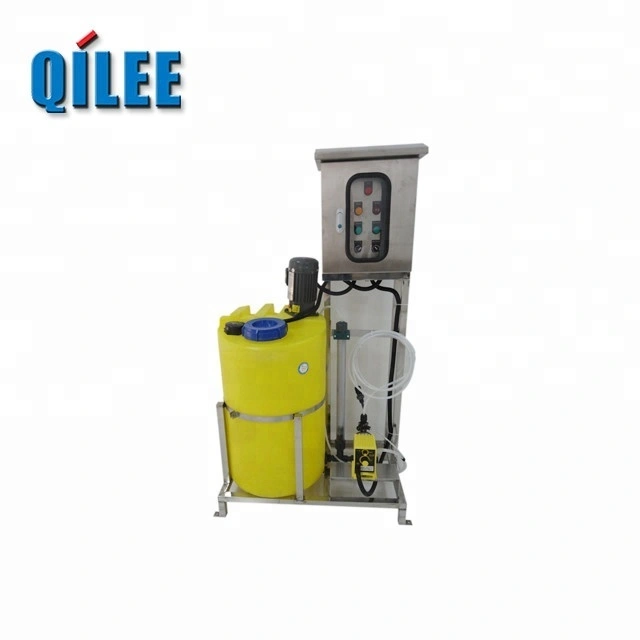
Polymer Powder Dosing Machine for Water Treatment 1
Polymer Powder Dosing Machine for Water Treatment 2
Polymer Powder Dosing Machine for Water Treatment 3
Polymer Powder Dosing Machine for Water Treatment 4
Polymer Powder Dosing Machine for Water Treatment 5
Polymer Powder Dosing Machine for Water Treatment 6
Polymer Powder Dosing Machine for Water Treatment 1
Polymer Powder Dosing Machine for Water Treatment 2
Polymer Powder Dosing Machine for Water Treatment 3
Polymer Powder Dosing Machine for Water Treatment 4
Polymer Powder Dosing Machine for Water Treatment 5
Polymer Powder Dosing Machine for Water Treatment 6

Polymer Powder Dosing Machine for Water Treatment

A Polymer Powder Dosing Machine for Water Treatment is a compact, automated device that meters and feeds dry polymer powder into water systems to aid coagulation and flocculation. It combines a sealed hopper, controlled feeding (screw or vibratory), and a dispersion/mixing unit to ensure accurate, dust-free dosing and rapid polymer hydration. Typical features include PLC or microcontroller control, adjustable dosing rate, anti-humidity design, and easy-clean components, delivering consistent polymer concentration, reduced chemical waste, and improved solids separation.

Usage scenarios:

- Municipal and industrial wastewater treatment plants for coagulation/flocculation, improving sedimentation and clarifier performance.

- Sludge dewatering and thickening operations (centrifuges, belt presses) to enhance cake dryness and reduce disposal costs.

- Process water conditioning in industries such as paper, textile, mining, and food processing where controlled polymer dosing reduces turbidity and suspended solids.

5.0
brand name:
QILEE
Shipping:
Support Sea freight
Payments:
L/C,D/A,D/P,T/T,Western Union,MoneyGram,OA
Model:
QL-2000
Lead Time:
1-1(sets):15(days),>1(sets):To be negotiated(days)
Place of Origin:
China
design customization

    oops...!

    no product data.

    Go to homepage
    Metering pump flow range(L/Hr)
    0-260
    Agitation Power(kw)
    0.37
    Volume(L)
    2000
    Processing Type
    desalination
    Power(W)
    1 kW
    Material
    PP
    Application
    water treatment engineering
    Product name
    Polymer dosing equipment
    Voltage
    220 V, 380 V
    weight (kg)
    10
    productivity
    500L/Hour
    warranty
    1 Year
    place of origin
    Shanghai, China
    core components
    Motor
    machinery test report
    Provided
    video outgoing-inspection
    Provided

    Precise, Compact, Hygienic, Durable 

    The QL Small dosing system delivers precise, reliable polymer powder dosing for water treatment, reducing chemical waste and downtime while ensuring consistent flocculation performance with PAM and PAC. Its compact, skid-mounted packaging, cylindrical mixing tank shape and modular style house corrosion-resistant SUS304 or PP construction, plus a mobile mixer and dosing pump, for long life and low maintenance. Available in multiple models to match hourly solution capacity and concentration requirements, the system simplifies installation, operation and parts replacement to minimize operator time and keep treatment running continuously.

    1620183233g0e
    1620183233oxz

    Precision Polymer Dosing System

    The QL Small dosing system is a compact polymer powder dosing solution featuring a soluble mixing tank, corrosion-resistant mixer and metering pump assembly that provides accurate, mobile and flexible dosing for PAM, PAC and other water-treatment powders. Available in SUS304 or PP construction across multiple capacities (100–2000 L) with adjustable metering flow and dedicated agitator motors, it combines robust structural design and low-maintenance components to ensure long service life and reliable operation under continuous use. Designed to simplify on-site preparation and control, the system delivers consistent solution concentration, easy model selection by required hourly capacity and concentration, and measurable savings in chemical usage and operator time for water treatment projects.

    Accurate Polymer Powder Dosing 

    The QL Small dosing system is a compact polymer powder dosing solution for water treatment that combines a soluble medicine chest, mixer and corrosion-resistant metering pump for mobile, flexible operation and long service life. Models range from QL-100 to QL-2000 with tank volumes of 100–2000 L, metering pump flows of 0–12 to 0–260 L/hr and agitator powers suited for dissolving PAM, PAC and similar chemicals. Constructed from SUS304 or PP depending on powder properties and selected by required hourly solution capacity and concentration, it is widely applied across various water treatment engineering projects.


    ◎ Compact Mobile System 

    ◎ Corrosion Resistant Construction

    ◎ High Capacity Metering

    16201832330io
    1620183233rje

    Precise, Efficient, Reliable Dosing

    Built on decades of water-treatment expertise, the QL Small dosing system combines precision metering with a robust polymer feed design to ensure consistent flocculation and low maintenance. Its automated weighing, sealed powder hopper, adjustable feed rate and PLC control deliver accurate, repeatable dosing and easy integration into municipal or industrial treatment lines. Compact footprint, corrosion-resistant materials, easy-clean components and an energy-efficient drive lower operating costs while improving sludge dewatering and chemical savings.

    Material introduction

    The Polymer Powder Dosing Machine is constructed from corrosion-resistant SUS304 stainless steel or chemically inert polypropylene (PP), with material selection tailored to the type of powder to ensure chemical compatibility and long service life. Key components such as the soluble medicine chest, mixer and dosing pump are fabricated in these materials to resist abrasion and chemical attack when dissolving PAM, PAC and similar coagulants. The QL Small dosing system leverages these material choices to provide a mobile, durable and low-maintenance solution for diverse water treatment applications.


    ◎ PP Contact Components 

    ◎ SUS304 Structural Elements

    ◎ Hybrid Material Strategy

    1620183233lpr

    FAQ

    1
    What is a polymer powder dosing machine and what does it do in water treatment?
    A polymer powder dosing machine meters and feeds dry polymer (flocculant/coagulant) into a dissolution or mixing system or directly into process streams. It provides accurate, repeatable powder delivery to make polymer solutions or to dose dry polymer for flocculation, improving solids separation, clarification, and sludge dewatering in water and wastewater treatment.
    2
    Which water treatment applications commonly use this machine?
    Typical applications include municipal wastewater clarification and sludge conditioning, industrial effluent treatment (textile, food & beverage, chemical, mining, pulp & paper), sludge dewatering with centrifuges or belt filter presses, stormwater treatment, and some potable water clarification processes where approved polymers are used. It is used wherever controlled polymer addition improves settling or dewatering performance.
    3
    How do I select the correct polymer type and dosing rate for my process?
    Choose polymer charge (anionic, cationic, nonionic) based on the waste stream chemistry and the target separation (e.g., cationic for sludge dewatering). Determine dosing by jar tests or pilot trials to identify optimum concentration and feed point. The machine provides precise feed so you scale the selected lab dose to plant flow; actual feed ranges depend on model but commonly span from grams per hour for pilot systems to kilograms per hour for full-scale plants.
    4
    How is the dosing machine installed and integrated into an existing treatment line?
    Mount the unit on a stable, dry surface near the polymer storage and make-down or feed point. Connect the powder outlet to the dissolution tank or feed chute, and provide power, compressed air or vacuum (if required), and any dust extraction. Integrate controls with the plant PLC or feed controllers via analog/digital signals or enable flow-proportional dosing using a flowmeter or level/turbidity feedback for automatic adjustment.
    5
    What common operational problems should I watch for and how do I troubleshoot them?
    Common issues include inconsistent feed (caused by bridging or caking in the hopper), dusting, motor overloads or worn feed screws, and incorrect polymer selection. Troubleshooting steps: check hopper for moisture or compaction and dry or replenish polymer; inspect and clean feed screws/augers; verify drive and motor functioning; recalibrate feed rate; confirm polymer type and batch compatibility. Use agitation, vibration, or level sensors to prevent bridging.
    6
    What maintenance and safety practices are recommended for these machines?
    Routine maintenance: clean feed pathways, inspect and replace wear parts (augers, liners, seals), calibrate metering periodically, and service bearings and drives per manufacturer schedule. Safety: minimize dust exposure with local extraction, use personal protective equipment (PPE) — masks, goggles, gloves — and ensure proper grounding to prevent static. Store polymers in dry, cool conditions to avoid clumping, label chemicals clearly, and follow MSDS guidance for handling and disposal.
    Tell Us More About Your Project !
    If you have any questions about water treatment systems, please feel free to contact QILEE.
      Stable equipment
      Mature technology
      Automated operation
      Simple operation

    Do You Have any Questions? Welcome to Leave Us a Message.

    Related Products
    no data
    Contact Us

    Tel: +86 13370035529

    Business What's App: +86 13636655908

    E-mail: qilee@qileegroup.com

    Add: No. 351 Wenqu Road, Fengxian District, Shanghai

    Your trusted Water Treatment System Partner
    no data
    Copyright © 2026 Shanghai QILEE Environmental Protection Equipment Co., Ltd | Sitemap
    Customer service
    detect