
loading
Polymer Automatic Dosing Device for Cooling, Wastewater, pH 1
Polymer Automatic Dosing Device for Cooling, Wastewater, pH 2
Polymer Automatic Dosing Device for Cooling, Wastewater, pH 3
Polymer Automatic Dosing Device for Cooling, Wastewater, pH 4
Polymer Automatic Dosing Device for Cooling, Wastewater, pH 5
Polymer Automatic Dosing Device for Cooling, Wastewater, pH 1
Polymer Automatic Dosing Device for Cooling, Wastewater, pH 2
Polymer Automatic Dosing Device for Cooling, Wastewater, pH 3
Polymer Automatic Dosing Device for Cooling, Wastewater, pH 4
Polymer Automatic Dosing Device for Cooling, Wastewater, pH 5

Polymer Automatic Dosing Device for Cooling, Wastewater, pH

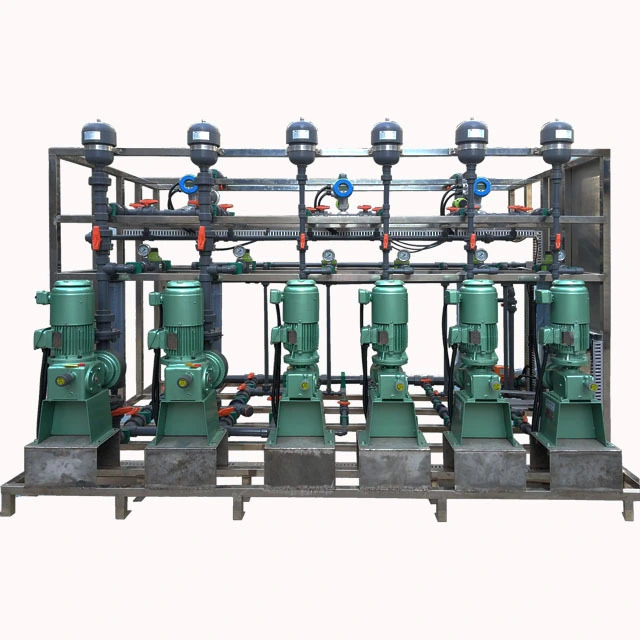
The Polymer Automatic Dosing Device for Cooling, Wastewater, pH is a compact system that measures key water signals and adds precise amounts of polymer or pH chemicals. It uses sensors, a controller, and metering pumps to keep dosing steady and timed, cutting chemical waste and manual work. The unit protects equipment, improves clarity and treatment efficiency, and can be set to automatic or manual modes.

Usage scenarios:

- In cooling towers and chillers it automatically feeds polymer to prevent scale and biofouling, lowering downtime and maintenance.

- In wastewater treatment plants it doses flocculants and pH adjusters to speed solids separation and help meet discharge limits.

- In food processing, aquaculture, pools, and labs it keeps water quality steady by precise dosing, reducing chemical use and labor.

5.0
brand name:
QILEE
Shipping:
Support Sea freight
Payments:
L/C,D/A,D/P,T/T,Western Union,MoneyGram,OA
Lead Time:
1-1(sets):30(days),>1(sets):To be negotiated(days)
Place of Origin:
China
design customization

    oops...!

    no product data.

    Go to homepage
    After-sales Service Provided:
    Engineers available to service machinery overseas
    Usage:
    chemical, petrochemical, feed, water treatment, etc
    Packaging:
    Wooden package
    Driven Type:
    Electric
    Processing Type
    desalination
    Power(W)
    2 kW
    Application:
    Metering
    Voltage
    220 V, 380 V
    weight (kg)
    100
    productivity
    500L/Hour
    warranty
    1 Year
    place of origin
    Shanghai, China

    Precise Reliable Compact Dosing 

    This Chemical dosing system provides precise, automated polymer metering for cooling water, wastewater and pH control, reducing chemical use, ensuring regulatory compliance, and cutting operating costs. Packaged in a compact, weatherproof, corrosion-resistant enclosure with a modular, space-saving layout and industrial-grade pumps and valves, it delivers durable, high-quality performance. With intuitive controls, easy-access piping and clear labeling, it enables simple installation, low maintenance and reliable sterilization, flocculation and acid-base neutralization across power plants, petrochemical, municipal and textile applications.

    1620183233g0e
    1620183233oxz

    Automated Polymer Dosing Control

    The Polymer automatic dosing device is a Chemical dosing system that delivers precise, automated polymer and reagent metering for cooling water, circulating systems, wastewater treatment, pH control and sterilization. With a compact, modular structure of corrosion‑resistant materials and programmable control with flow and level feedback, it performs reliable acid–base neutralization, flocculant precipitation and disinfectant dosing to reduce chemical consumption, downtime and operating costs. Suited to thermal power, petrochemical, municipal waterworks, swimming pools, paper and textile plants, this system offers scalable metering capacity, easy maintenance and accurate pH management to enhance process stability and regulatory compliance.

    Automatic Polymer Dosing System 

    The polymer automatic dosing device is a Chemical dosing system designed for precise addition of polymers and additives in cooling water treatment for thermal power plants, circulating cooling systems, central air conditioning and raw water pretreatment. It is also used for wastewater treatment, sterilization and pH control in petrochemical, medical, electronics and municipal water supply applications, including swimming pools and water plants. The unit supports acid-base neutralization, flocculant precipitation and automated proportioning for papermaking and textile dyeing to ensure stable, efficient process control.


    ◎ Reliable Chemical Dosing 

    ◎ Precise pH Control

    ◎ Compact Versatile Proportioning

    16201832330io
    1620183233rje

    Accurate Automated Chemical Control

    Developed by a brand with decades of water-treatment expertise, the Polymer Automatic Dosing Device for Cooling, Wastewater, pH is engineered for reliable polymer delivery and precise pH control as part of a Chemical dosing system. It automatically meters polymers and additives, monitors pH, and integrates with cooling and wastewater lines to optimize flocculation, corrosion control, and effluent quality while reducing chemical consumption and labor. Key features include digital dosing control, corrosion-resistant pumps, self-priming suction, programmable alarms, and easy maintenance—delivering consistent treatment performance, lower operating costs, and scalable deployment across industrial sites.

    Material introduction

    The polymer automatic dosing device is built from chemical-resistant polymers like PVDF and PTFE-lined components, with HDPE tanks and optional 316 stainless steel fittings for structural strength and corrosion resistance. Seals, diaphragms and O-rings use PTFE, Viton or EPDM, while metering pumps and tubing employ reinforced PVC or fluoropolymers to tolerate acids, alkalis and flocculants. These material choices ensure durable, low-contamination performance for a Chemical dosing system used in cooling water, wastewater treatment and pH control across power, petrochemical and municipal applications.


    ◎ material introduction 1 

    ◎ material introduction 2

    ◎ material introduction 3

    1620183233lpr

    FAQ

    1
    What is the Polymer Automatic Dosing Device and in which application scenarios is it typically used?
    The Polymer Automatic Dosing Device is an automated chemical feed system designed to dispense liquid polymers and other treatment chemicals accurately into process lines. Typical applications include cooling water treatment (scale, corrosion and biofouling control), wastewater treatment (coagulation/flocculation of suspended solids, sludge dewatering), and pH control/neutralization in industrial effluents. It is suitable for continuous metering to clarifiers, thickening tanks, influent streams, or batch dosing points.
    2
    How does the device control dosing for cooling systems, wastewater and pH adjustment?
    The unit can operate in several control modes depending on the model and fitted sensors: time-based (timers or scheduled pulses), flow-proportional (using flowmeter input to dose per m3), and feedback control (pH probe for neutralization or turbidity/conductivity for process control). Pumps typically used are dosing diaphragm or peristaltic types; the controller adjusts stroke/frequency or pump speed to meet the target setpoint. Alarms and interlocks (low tank, pump fault) are usually available for safe operation.
    3
    What must I consider when installing the dosing device on site?
    Key considerations: secure mounting near the chemical tank and injection point; proper electrical supply and grounding per local code; correct suction line run (minimize suction lift—follow pump specs), install non-return/check valves at the injection point and back-pressure if required, and provide adequate ventilation and secondary containment for the chemical storage. Place pH probes upstream/downstream as required, allow sufficient mixing length after injection, and ensure frost protection if outdoor. Follow the manufacturer’s piping and wiring diagrams.
    4
    How should polymer solutions be prepared and what concentrations/viscosities are acceptable?
    Prepare polymer according to the polymer manufacturer’s instructions—common working concentrations for high molecular weight polymers are low (e.g., 0.05–1.0% w/v) to avoid excessive viscosity; exact concentration depends on polymer type and application. Always add polymer slowly into agitated water (or use a dedicated hydration unit) to prevent lumping. Use clean, decanted water and strain the solution to remove solids. Avoid very viscous or gelled mixes that exceed the pump’s capability — consult the dosing pump spec for maximum allowable viscosity/solids. Prepare only the volume you will use within the recommended pot life (often 24–72 hours) and store in a shaded, temperature-stable area.
    5
    What routine maintenance and calibration does the device require?
    Regular tasks include: inspect and replace worn pump tubing or diaphragms per schedule, clean suction strainers and check valve seats, verify and recalibrate flowmeters and pH probes (pH probe calibration typically weekly-to-monthly depending on use), test pump output by measuring displaced volume (graduated cylinder) and adjust stroke/frequency if needed, check alarm functions and low-level sensors, and clean the controller enclosure. Keep spare tubing, valves and sensor electrodes on hand. Follow the manufacturer’s suggested maintenance intervals.
    6
    What are common problems I might encounter and how can I troubleshoot them?
    Common issues and actions: - No or low flow: check power, priming/air in suction line, clogged suction strainer, collapsed/old tubing, or pump wear. Re-prime, clean filters, replace tubing, or service pump head. - Inaccurate dosing: verify pump stroke and tubing condition, recalibrate flowmeter/controller, check for slip in peristaltic pumps, and confirm correct chemical concentration. - pH/target not holding: check pH probe calibration and location, ensure adequate mixing, verify chemical strength and dosing point, and confirm control logic (PID/proportional settings). - Polymer clumping/foaming: improve hydration practice, reduce concentration, add anti-foaming agents if compatible. - Leaks or corrosion: inspect fittings, use compatible materials of construction, and ensure secondary containment. If problems persist, collect operating data (pump settings, measured outputs, sensor readings) and contact the supplier or service technician with that information. Always follow safety data sheets and use PPE when handling chemicals.
    Tell Us More About Your Project !
    If you have any questions about water treatment systems, please feel free to contact QILEE.
      Stable equipment
      Mature technology
      Automated operation
      Simple operation

    Do You Have any Questions? Welcome to Leave Us a Message.

    Related Products
    no data
    Contact Us

    Tel: +86 13370035529

    Business What's App: +86 13636655908

    E-mail: qilee@qileegroup.com

    Add: No. 351 Wenqu Road, Fengxian District, Shanghai

    Your trusted Water Treatment System Partner
    no data
    Copyright © 2026 Shanghai QILEE Environmental Protection Equipment Co., Ltd | Sitemap
    Customer service
    detect