
loading
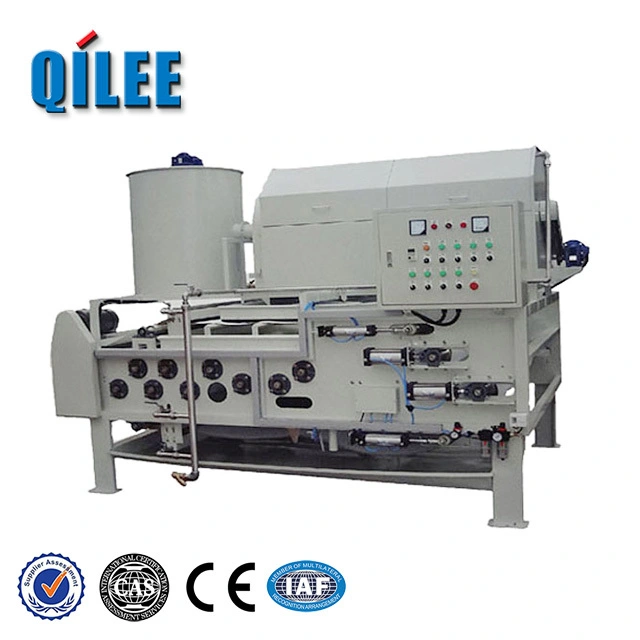
Rotary Drum Thickener Sludge Belt Press w/ Motor & PLC 1
Rotary Drum Thickener Sludge Belt Press w/ Motor & PLC 2
Rotary Drum Thickener Sludge Belt Press w/ Motor & PLC 3
Rotary Drum Thickener Sludge Belt Press w/ Motor & PLC 4
Rotary Drum Thickener Sludge Belt Press w/ Motor & PLC 5
Rotary Drum Thickener Sludge Belt Press w/ Motor & PLC 6
Rotary Drum Thickener Sludge Belt Press w/ Motor & PLC 1
Rotary Drum Thickener Sludge Belt Press w/ Motor & PLC 2
Rotary Drum Thickener Sludge Belt Press w/ Motor & PLC 3
Rotary Drum Thickener Sludge Belt Press w/ Motor & PLC 4
Rotary Drum Thickener Sludge Belt Press w/ Motor & PLC 5
Rotary Drum Thickener Sludge Belt Press w/ Motor & PLC 6

Rotary Drum Thickener Sludge Belt Press w/ Motor & PLC

The Rotary Drum Thickener Sludge Belt Press w/ Motor & PLC is an automated machine that thickens and presses sludge continuously to cut volume and make drier cake for easier disposal. With a sturdy motor and PLC control it gives reliable, easy operation, adjustable speeds and automatic fault alerts so fewer hands are needed. Selling points: high dewatering efficiency and throughput, lower energy and chemical use, low maintenance and long life, consistent cake quality that reduces disposal costs and helps meet environmental rules.

5.0
brand name:
QILEE
Shipping:
Support Sea freight
Payments:
L/C,D/A,D/P,T/T,Western Union,MoneyGram,OA
Lead Time:
1-1(sets):15(days),>1(sets):To be negotiated(days)
Place of Origin:
China
design customization

    oops...!

    no product data.

    Go to homepage
    Reference Weight(kg)
    1420~3150
    Powder Consumption(kw)
    1100~2800
    Water Content's Rate(%)
    75~85
    Inlet Consistency(%)
    s.s.0.4~0.8%
    Dried Sludge(kg/hr)
    84~450
    Treating Capacity(kg/h)
    13.5~49
    Processing Type
    desalination
    Power(W)
    1 kW
    Product name
    Sludge Belt Filter Press Equipment
    Voltage
    220 V, 380 V
    weight (kg)
    1420
    productivity
    13.5~49
    warranty
    1 Year
    place of origin
    Shanghai, China
    core components
    Motor, PLC
    machinery test report
    Provided
    video outgoing-inspection
    Provided

    Efficient Automated Compact Durable 

    The QTBH sludge dewatering machine delivers high-capacity, low-moisture sludge separation with low energy consumption, low noise (≤75 dB(A)), and automatic safety and cloth-deviation controls to keep operations efficient and reliable. Built from SUS304 stainless steel with Swiss-imported filter cloth, rotary drum thickener design, motor and PLC control, and a compact durable style, it offers corrosion resistance, long service life, and easy cleaning for minimal maintenance. Available in multiple belt widths, packaged in standard export cartons with typical delivery in 3–20 days, it simplifies procurement and onsite installation while reducing operating costs and downtime.

    1620183233g0e
    1620183233oxz

    Here are five 4-word subtitle options:

    The QTBH sludge dewatering machine Rotary Drum Thickener Sludge Belt Press with motor and PLC integrates a SUS304 stainless steel drum thickener and belt filter press, Swiss-imported filter cloth, PLC control and low-noise drives, with an air-chamber automatic belt-tracking device and safety-stop monitoring for stable, corrosion-resistant operation. It provides efficient sludge thickening and dewatering for municipal and industrial wastewater, achieving typical cake moisture of 75–85% across model capacities (QTBH-1000 to QTBH-2000) while minimizing energy use and disposal volume. Its modular, compact structure with integrated washing, agitation and drive systems makes installation, maintenance and integration with dosing pumps or downstream equipment simple, delivering a low-maintenance, high-value continuous solids–liquid separation solution.

    Automated Rotary Sludge Dewatering 

    The QTBH sludge dewatering machine is a rotary drum thickening and belt filter press system with motor and PLC control, built from stainless steel for high strength and corrosion resistance. It features imported Swiss filter cloth, an air-chamber automatic deviation correction device for stable belt operation, and a low-energy drive that delivers efficient dewatering with low cake moisture, low noise and easy maintenance. Available in multiple belt widths and capacities, the unit is suitable for municipal, industrial and agricultural sludge dewatering and integrates with polymer dosing pumps, sludge pumps and washing systems for turnkey wastewater treatment.


    ◎  

    ◎ 

    ◎ 

    16201832330io
    1620183233rje

    Efficient, Reliable Automated Dewatering

    Built by a manufacturer with decades of wastewater treatment experience, the Rotary Drum Thickener Sludge Belt Press with Motor & PLC was engineered as the QTBH sludge dewatering machine to deliver consistent solids capture and energy-efficient operation. It combines a rotary drum thickener and precision belt press controlled by PLC and a robust motor to reduce sludge volume, improve cake dryness, and enable automated, low-maintenance operation. Key features and advantages include modular stainless-steel construction, adjustable belt tension, high throughput, chemical dosing compatibility, easy PLC integration, and low power consumption for reliable, continuous dewatering.

    Material introduction

    The QTBH sludge dewatering machine is constructed mainly from SUS304 stainless steel, providing high strength, corrosion resistance and long service life. Its Swiss-imported filter cloth and robust drive components, including motor and PLC-compatible parts, deliver durable, stable filtration with precise cloth tracking. Corrosion-proof materials and thoughtful component selection minimize maintenance, reduce noise and ensure efficient, long-term dewatering performance.


    ◎ SUS304 stainless steel 

    ◎ Swiss filter cloth

    ◎ Corrosion‑resistant drive

    1620183233lpr

    FAQ

    1
    What is a Rotary Drum Thickener Sludge Belt Press with Motor & PLC used for?
    It’s used to thicken and dewater sludge from wastewater treatment processes by removing water and increasing solids concentration. Common applications include municipal sewage plants, industrial effluent (food & beverage, pulp & paper, textiles, chemical), landfill leachate treatment, and sludge handling after MBR/SBR clarifiers. The integrated motor drives the drum and belt, while the PLC provides automated control, monitoring and alarm functions for continuous operation.
    2
    How do I operate the machine on a daily basis?
    Start by checking power, hydraulic/motor oil levels and belt/drum condition, then turn on the PLC and select the appropriate program. Ensure feed sludge is conditioned (screened, flocculated if required) and feed pumps are running at the designated rate. Monitor PLC displays for belt speed, motor load, drum speed, cake thickness and alarms; adjust polymer dosing and belt tension as needed. Daily tasks include inspecting for leaks, clearing any blockages and recording key parameters.
    3
    What sludge types and concentrations can it handle, and what dewatering performance should I expect?
    It handles a wide range of sludge: primary, secondary, activated, industrial sludges and some mixed slurries. Feed solids typically range from 0.5% to 6% for effective thickening, though performance depends on sludge character and conditioning. Dewatered cake moisture typically lands in the 60–85% range (40–60% dry solids) depending on sludge type, polymer dosing and machine model—exact figures vary by plant conditions and configuration.
    4
    How does the PLC and motor integration benefit operation and control?
    The motor provides reliable mechanical drive while the PLC enables automated sequencing, speed control, interlocks, remote monitoring and data logging. PLC logic can control feed rates, belt and drum speeds, polymer pumps, start/stop routines, and safety interlocks. It also provides alarms for overcurrent, high belt tension or low feed and can integrate with plant SCADA for centralized control and reporting—reducing manual intervention and improving consistency.
    5
    What routine maintenance and servicing does the unit require?
    Regular checks include belt inspection and tensioning, drum surface cleaning, scraper/blade wear checks, bearing lubrication, motor and gearbox inspections, electrical/PLC backups and polymer pump maintenance. Replace worn belts, seals and scrapers as needed, and verify alignment and foundation anchoring periodically. Follow the manufacturer’s preventive maintenance schedule and keep spare consumables (belts, scrapers, seals) on hand to minimize downtime.
    6
    What common operational problems occur and how can they be resolved?
    Common issues include poor dewatering (often due to inadequate polymer dosing, incorrect feed concentration or improper belt speed), belt clogging or carryover (fix by adjusting tension, cleaning scrapers or reducing feed solids), and motor overloads (check for mechanical binding, misalignment or excessive feed rate). Use the PLC alarms and logs to diagnose faults, optimize polymer type/dose and flocculation, and consult the supplier for tuning parameters or on-site support when persistent issues arise.
    Tell Us More About Your Project !
    If you have any questions about water treatment systems, please feel free to contact QILEE.
      Stable equipment
      Mature technology
      Automated operation
      Simple operation

    Do You Have any Questions? Welcome to Leave Us a Message.

    Related Products
    no data
    Contact Us

    Tel: +86 13370035529

    Business What's App: +86 13636655908

    E-mail: qilee@qileegroup.com

    Add: No. 351 Wenqu Road, Fengxian District, Shanghai

    Your trusted Water Treatment System Partner
    no data
    Copyright © 2026 Shanghai QILEE Environmental Protection Equipment Co., Ltd | Sitemap
    Customer service
    detect